
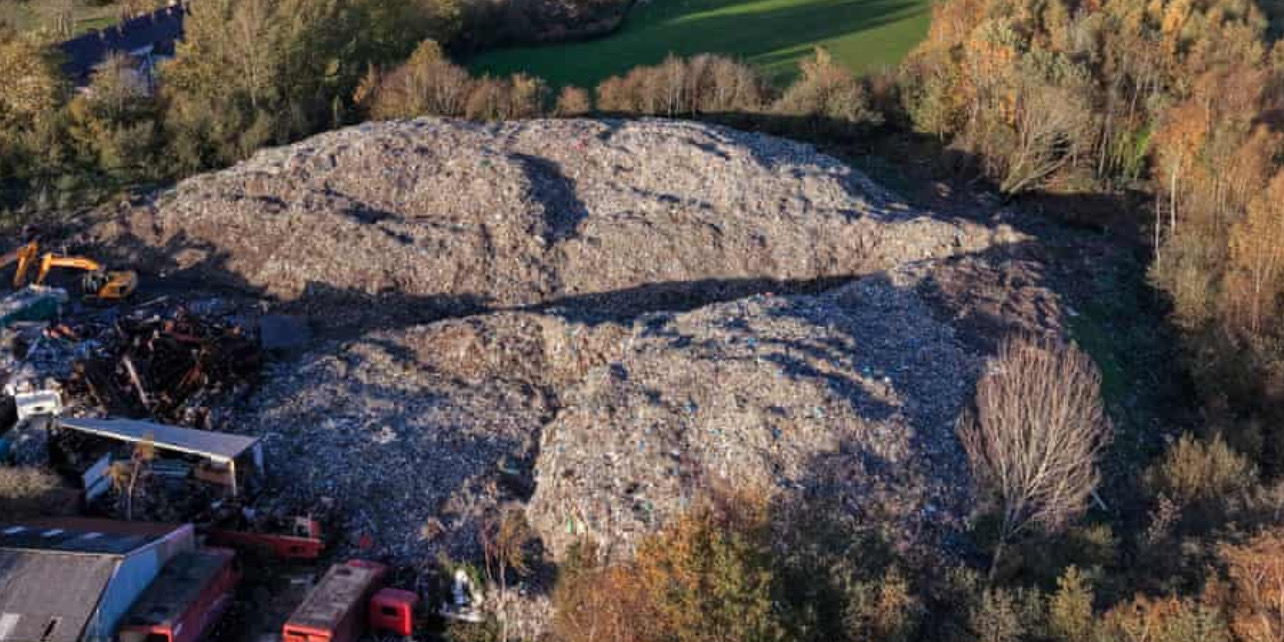
Millions of pounds in landfill tax owed to the government must be paid by the Environment Agency (EA) whenever it clears illegal waste sites, adding a major financial barrier to tackling thousands of dumps across the UK. Of the £15m cost of clearing the only site the EA has so far committed to clean up—a vast illegal landfill in Hoad’s Wood, Kent—£4m is landfill tax alone. Critics say the rules make it harder for the agency to act quickly, even when communities are exposed to severe environmental and health risks.
Liberal Democrat peer John Russell, who pushed for the cleanup at Hoad’s Wood, said the situation was “ludicrous” and urged the Treasury to urgently rethink the regulations. He warned that forcing the EA to pay tax on waste dumped illegally by criminals is discouraging action at a time when waste crime is rising and costing taxpayers an estimated £1bn a year.
Stalled Action
Campaigners and MPs say the landfill tax burden is one reason the EA often refuses to clear even the most hazardous illegal sites. In Wigan, local MP Josh Simons has been pressing the agency to remove 25,000 tonnes of rubbish dumped by criminal gangs near a primary school, but the EA has declined to intervene. Instead, it has launched a criminal investigation and issued notices to landowners, instructing them to remove the waste or face legal action.
The Bolton House Road dump sits partly on a field once used by children for sports. Now it is an environmental hazard, with rat infestations, thick air pollution, and an overpowering stench drifting into homes and classrooms. One parent said children must walk to school “with that stench and air pollution every day” and can no longer use the field. The estimated cleanup cost is £4.5m, including the landfill tax.
Another resident said the community felt abandoned, overshadowed by national attention on another large illegal waste pile recently uncovered in Kidlington, Oxfordshire. The resident described constant smells, flies, and rats invading homes. “This is a serious environmental and public health failure,” she said.
Escalating Risks
In July, the Wigan waste mountain caught fire and burned for nine days, forcing a school to close and residents to stay indoors to avoid toxic fumes. Simons said he warned the EA in January when the dumping began at a rate of 20 trucks a day, yet no action was taken. “From lost school days to closed windows on blisteringly hot days, residents shouldn’t have to put up with this,” he said.
Waste crime has become lucrative for organised criminal groups, who exploit the landfill tax system. With landfill tax at £126 a tonne, gangs can make around £2,500 per lorryload by collecting legitimate waste fees and dumping illegally instead of paying tax at regulated disposal sites.
Calls for Reform
Russell said requiring the EA to pay landfill tax on illegal dumps shows “a complete lack of joined-up government” and leaves criminals profiting while vulnerable communities suffer. He has called for full transparency about the scale of illegal dumping, including the locations, sizes, and types of waste involved, arguing that “we cannot effectively fight that which we do not know.”
An EA spokesperson confirmed that a criminal investigation is under way in Wigan and described the situation as a “critical incident.” The agency said it is using all enforcement tools available to identify offenders and ensure they are held financially responsible. “Our skilled officers are on site frequently and the impact on the community is at the forefront of our minds,” the spokesperson said.
Local Response
Wigan council said it is working with Greater Manchester Police and the EA to block further criminal activity and manage risks to residents. “We understand the impact this site is having on the local community and want the site cleared as a matter of urgency,” the council said, but stressed that the legal and financial framework for clearing illegal waste sites “is complex.”
Across the UK, pressure is now building for a review of landfill tax rules as illegal dumping expands and communities face worsening pollution, fires, and health hazards linked to waste crime.
