
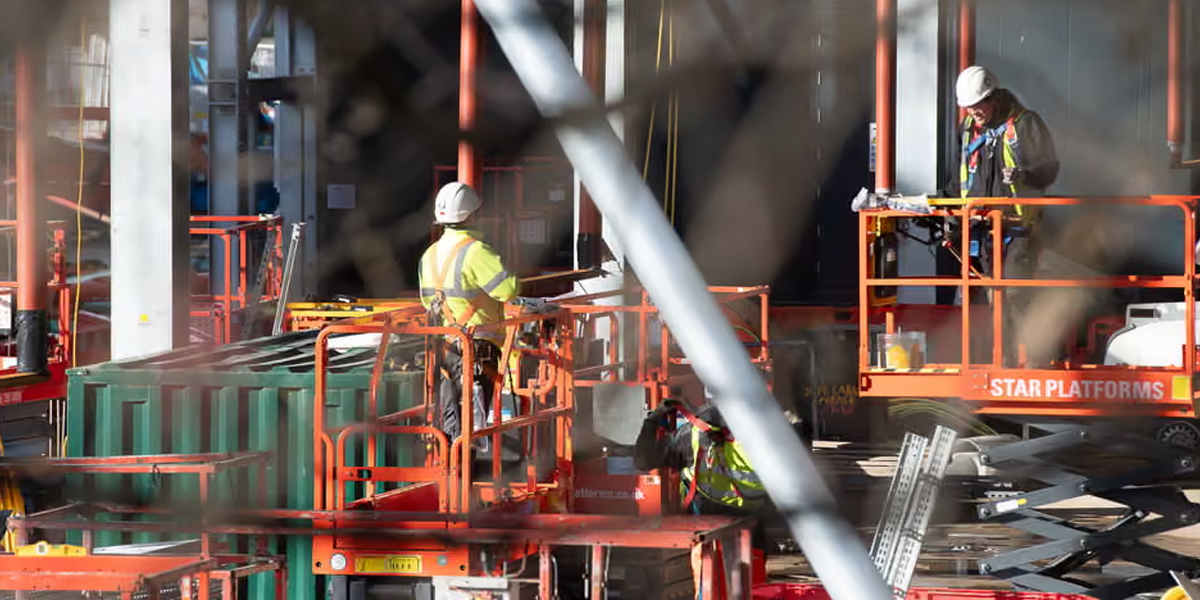
The UK construction sector recorded its steepest decline in activity since the first Covid-19 lockdown, with major building projects scaled back and firms cutting jobs amid deep uncertainty surrounding budgets and the economic outlook. The latest industry survey indicates a significant setback for Labour’s plans to accelerate infrastructure upgrades and deliver 1.5 million new homes by 2030.
New figures from the purchasing managers’ index (PMI) for construction showed output shrinking in November at the fastest rate since May 2020, when sites across the country came to a halt during the pandemic. The PMI dropped to 39.4 last month, down sharply from 44.1 in October and below the 44.6 expected by economists. A reading below 50 signals contraction.
The only other period in which the survey has captured such severe declines was during the 2009 financial crisis, when the collapse of the housing market triggered widespread project cancellations.
Residential, Commercial and Infrastructure Work Pulled Back
Builders have been scaling down residential construction for over a year, reflecting a subdued housing market, higher borrowing costs and rising prices for materials. The November data shows that weakness has spread across the industry, with infrastructure and commercial development also experiencing sharp contractions.
Construction firms reported clients delaying or cancelling projects due to uncertainty ahead of the autumn budget and “pervasive worries” about the wider economic climate. Many companies cited reluctance among investors to commit to large-scale projects until there is more clarity on government spending and policy direction.
Bank of England Survey Shows Fastest Job Cuts in Four Years
Additional Bank of England research indicates UK businesses cut jobs at the fastest rate in four years during November. The decision maker panel survey, which collects responses from chief financial officers, showed employment falling by 1.8% year-on-year—the sharpest drop since July 2021. CFOs also anticipate employment declining further next year, with expectations of a 0.7% fall, the weakest outlook since October 2020.
The Bank closely monitors this survey as part of its assessment of labour market pressures and interest rate decisions. The findings suggest businesses are cautious about staffing levels as they brace for slow growth, inflation risks and potential policy shifts.
Economists Caution Data May Be Distorted by Budget Speculation
Robert Wood, chief UK economist at Pantheon Macroeconomics, said both the construction PMI and the Bank’s survey may have been skewed by what he described as “chaotic” speculation in the weeks leading up to the autumn budget. He questioned whether conditions were genuinely comparable to a full national lockdown but acknowledged that sentiment across the sector had weakened noticeably.
Sector Still Battling Higher Costs and Slow Demand
The construction industry has faced sustained pressure throughout 2024 and 2025, including elevated materials prices, labour shortages, declining housing transactions and higher financing costs for developers. Mortgage rates—though now easing—have remained above pre-pandemic averages, dampening buyer demand and putting further strain on housebuilding targets.
Labour’s pledge to speed up large-scale infrastructure projects and boost housebuilding faces growing challenges as developers warn that confidence will not return without stable economic policy and predictable funding commitments.
