
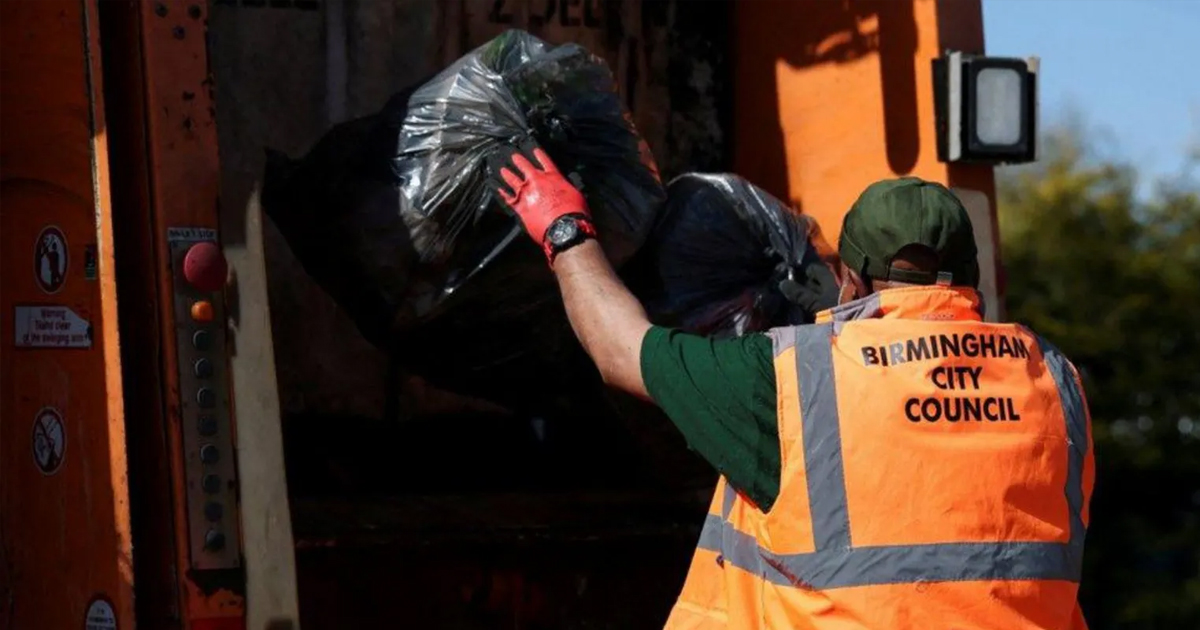
Birmingham City Council has confirmed it will introduce fortnightly waste and recycling collections across the city, even as a nine-month bin strike continues to disrupt services. The shift will replace weekly general waste collections and reintroduce recycling services, including mandatory weekly food waste collections. Recycling services have been suspended since February due to ongoing industrial action.
The council said its “transformed” service includes supplying residents with a second 180-litre recycling bin. The plan will go before cabinet for approval on 9 December.
A council spokesperson said the current system “has not been good enough”, citing poor performance, rising missed collections and one of the lowest recycling rates in England.
National Rules Taking Effect
From 1 April next year, every local authority in England must legally collect food waste unless granted an extension. Birmingham has not confirmed whether it received permission to delay the rollout, although several nearby councils say they will miss the deadline.
A Birmingham City Council spokesperson said ongoing discussions with Defra are focused on ensuring the city can meet the legislative requirements. If approved, the new system will be phased in, with 20,000 households switching to fortnightly collections at a time.
Poor Performance Record
The city provides waste services to more than 1.14 million residents across 470,000 homes. A council report found the service has long required “major improvement”. Even before industrial action, Birmingham’s recycling rate was just 23%, among the lowest of any unitary authority. In 2024/25, residents logged 121,437 missed bin collections.
Commissioners reviewing the system said it has been “expensive, inefficient and characterised by low productivity and poor customer satisfaction”. They urged the council to acknowledge its history of underperformance.
Council Response
Councillor Majid Mahmood, cabinet member for environment and transport, said residents will “see a real difference”. He highlighted improvements already made, including a new council-owned fleet that reduces reliance on hired vehicles and improves reliability.
According to the council, more than 1,100 new routes have been designed, and it expects future recycling levels to rise to 30%. Mahmood said the changes will “bring Birmingham into line with other councils” and provide a service residents “need and deserve”.
Impact of Strike
Industrial action has heavily affected waste collections since March, when Unite members walked out over pay and job concerns. Recruitment agency workers hired to support the service later staged their own walkout over alleged bullying and harassment.
The council said the strike has delayed the rollout of the new system but confirmed it intends to begin the phased service in June 2026 “regardless of the strike situation”.
Despite the disruption, the council claims productivity has improved, reporting a 52% reduction in missed collections and a 22% increase in tonnage collected per employee.
Commissioners, however, warned in their latest report that the “much-needed transformation” of Birmingham’s waste service has been held back by the ongoing dispute. They stressed that reliable waste and recycling services are essential to public confidence in the council.
