
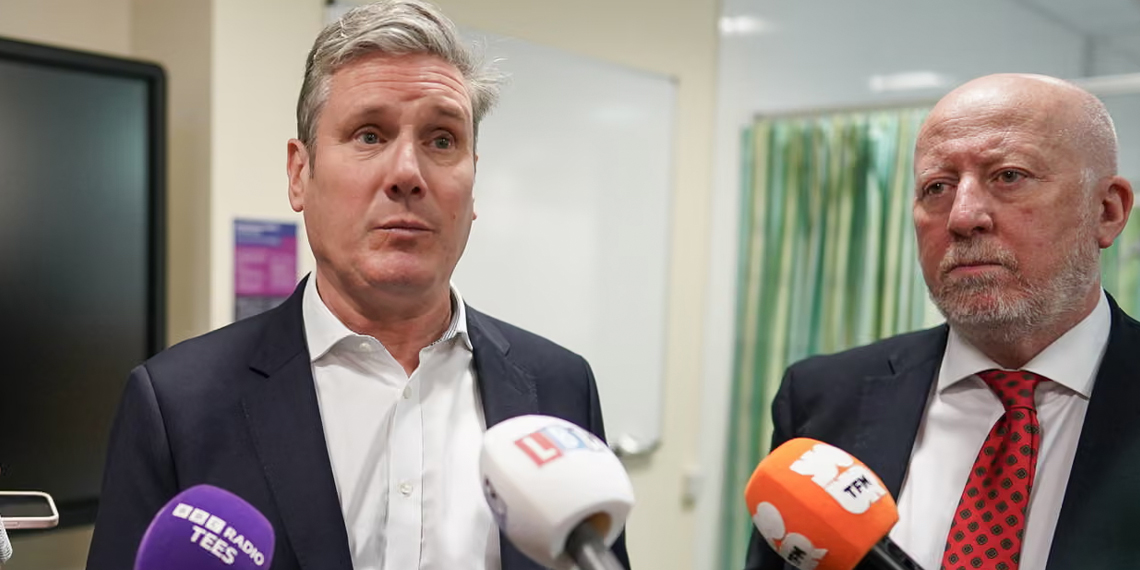
Keir Starmer is facing mounting anger from Labour backbenchers after ministers abandoned a key manifesto pledge to give workers protection from unfair dismissal from their first day in a new job.
The shift marks a major U-turn on one of Labour’s headline workers’ rights commitments and has sparked criticism from MPs who accuse the government of retreating under political pressure.
The government confirmed that it would no longer scrap the existing 24-month qualifying period required for employees to bring an unfair dismissal claim. Instead, ministers plan to introduce protection after six months of service in an attempt to get the workers’ rights bill through parliament. The original bill — developed by former employment minister Justin Madders alongside ex-deputy leader Angela Rayner — had become gridlocked due to disagreements between MPs and peers, particularly over day-one dismissal rights and the proposed ban on what Labour has called “exploitative” zero-hours contracts.
Under revised plans, workers will still receive day-one rights to sick pay and paternity leave, which are due to take effect in April 2026. However, the removal of day-one unfair dismissal protection has prompted outrage from Labour MPs.
Andy McDonald, Labour MP for Middlesbrough and Thornaby East, condemned the government’s decision, calling it a “complete betrayal” and saying: “We cannot support that halfway measure.” He added: “This is a wrong-headed move and I will campaign to have this concession reversed.”
Neil Duncan-Jordan, Labour MP for Poole, expressed frustration at the lack of consultation, saying: “There has been no discussion with the PLP about this. The Lords don’t have primacy over a manifesto commitment, so why have we capitulated?”
Rachael Maskell, Labour MP for York Central, argued that the policy shift left workers exposed, stating: “Employers have nothing to fear from day-one rights, but workers have everything to fear from an employer who doesn’t want day-one rights.”
Justin Madders, who was removed from his ministerial role in Starmer’s recent reshuffle, said the change “definitely is a manifesto breach”.
Labour’s manifesto had pledged to “consult fully with businesses, workers, and civil society” on implementing its employment reforms, which included “banning exploitative zero-hours contracts; ending fire and rehire; and introducing basic rights from day one to parental leave, sick pay and protection from unfair dismissal”.
Education secretary Bridget Phillipson defended the government’s decision, saying there was a “very real prospect” the employment rights bill would have been delayed if ministers had not modified their plans. She told Sky News that discussions between businesses, unions and government had produced an agreed way forward.
Phillipson said: “It means that the time limit will come down from two years to six months, and that runs alongside important day-one rights around sick pay and around parental leave. But the risk here was that if we didn’t make progress, those important rights wouldn’t come into force from April next year.”
When asked directly whether the shift was a broken promise, Phillipson argued that Labour had committed both to implementing stronger rights and consulting widely. “In the manifesto, what we said was that we would work with trade unions, with business, with civil society, in consulting on those protections that we’d be bringing forward. So, there are both parts to that, within the manifesto, the important rights and the consultation.”
