
The co-founder of the activist group Palestine Action is launching a major High Court challenge against the UK government’s decision to ban the organisation under anti-terror laws, a move that has triggered widespread debate about the future of protest rights in Britain. The legal challenge, brought by Huda Ammori, begins on Wednesday and is expected to run for two days, with a third date to be scheduled later.
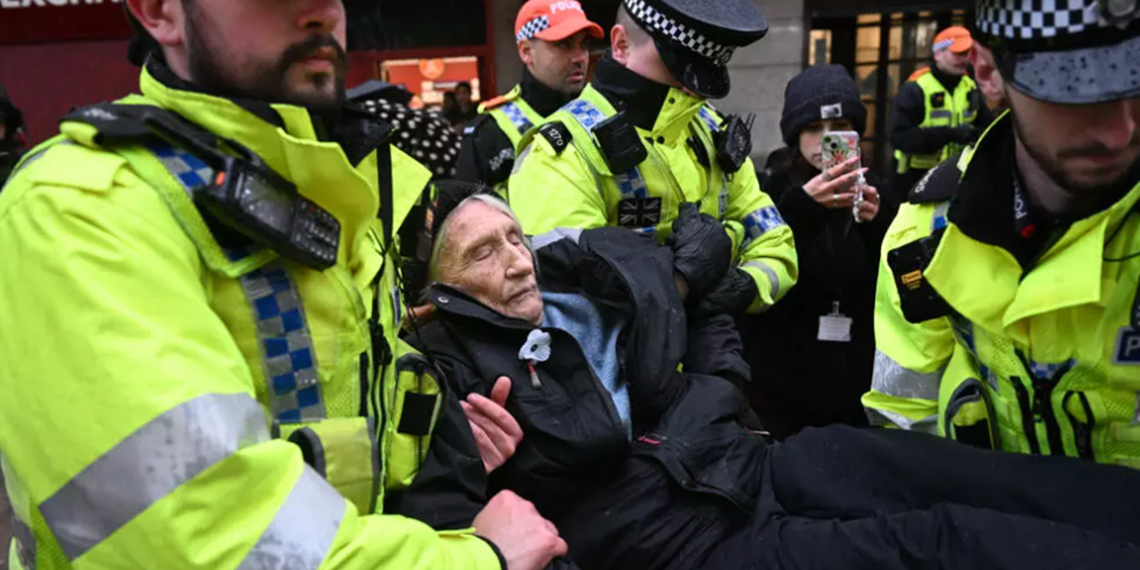
The proscription was introduced in July under the Terrorism Act 2000 and effectively criminalises membership or public support for the group, with penalties of up to 14 years in prison. Since the ban came into force, protest organisers say at least 2,300 people have been arrested at rallies linked to Palestine Action, ranging from students and teachers to pensioners, including an 83-year-old retired vicar. According to the Metropolitan Police, 254 individuals have been charged so far with a lesser protest-related offence carrying a possible six-month sentence.
International Bodies Warn of “Excessive” Restrictions
The ban has drawn criticism from major international human rights institutions. UN human rights chief Volker Türk said the measure “appears disproportionate and unnecessary,” while the Council of Europe accused the UK of imposing “excessive limits” on the right to protest.
The controversy comes as the UK faces ongoing scrutiny over its handling of pro-Palestinian demonstrations since the war in Gaza escalated in late 2023. Policing of marches in London has repeatedly prompted debate between ministers who argue tougher action is needed to maintain order, and rights groups who warn of a shrinking civic space.
UK Government Defends Ban as a National Security Measure
The Home Office says Palestine Action has engaged in an “escalating campaign” involving sustained criminal damage, intimidation and alleged violence, including attacks on national security infrastructure. The group was added to the same list of proscribed organisations as Al-Qaeda and Hezbollah.
Foreign Secretary Yvette Cooper said in August that some supporters “don’t know the full nature of this organisation” due to reporting restrictions covering ongoing prosecutions. She insisted the government had received “clear security assessments and advice” before approving the ban, adding: “No-one should be in any doubt that this is not a non-violent organisation.”
Prosecutors Cite Serious Incidents Involving Activists
At a hearing on Thursday, prosecutors claimed a Palestine Action member used a sledgehammer to strike a police officer after breaking into the premises of an Israel-based defence company in Bristol in August. Security services argue such incidents justify the proscription.
The group, founded in 2020, has primarily targeted sites operated by the Israeli defence firm Elbit Systems, arguing its mission is to end UK support for Israel’s military actions in Gaza. Its website, now blocked, described its goal as ending “global participation in Israel’s genocidal and apartheid regime.”
Civil Liberties Groups Say Ban Threatens UK Democracy
Civil society organisations and prominent public figures warn the ban sets a dangerous precedent for policing dissent in the UK. Oscar-winning director Ken Loach called the proscription “absurd” and accused the government of being complicit in Israel’s “incredible crimes” in Gaza.
Defend Our Juries, which has tracked arrests, said: “This level of political repression is not what we expect in a democracy — it is the kind of tactic typically associated with authoritarian regimes.”
Areeba Hamid, co-executive director of Greenpeace UK, said the government had broken earlier assurances that the Terrorism Act would not be used against non-violent activists. She warned: “Classifying a protest group as a ‘terrorist organisation’ should send a chill down your spine. Removing our right to protest is an erosion of democracy.”
Growing UK Debate Over Protest Rights
The case comes at a time of heightened tension over protest freedoms in the UK, following the introduction of new public order laws that expanded police powers to restrict demonstrations deemed disruptive. Human rights organisations say the ruling on Palestine Action could shape future legal boundaries around civil resistance, particularly on issues involving foreign policy and arms exports.
