
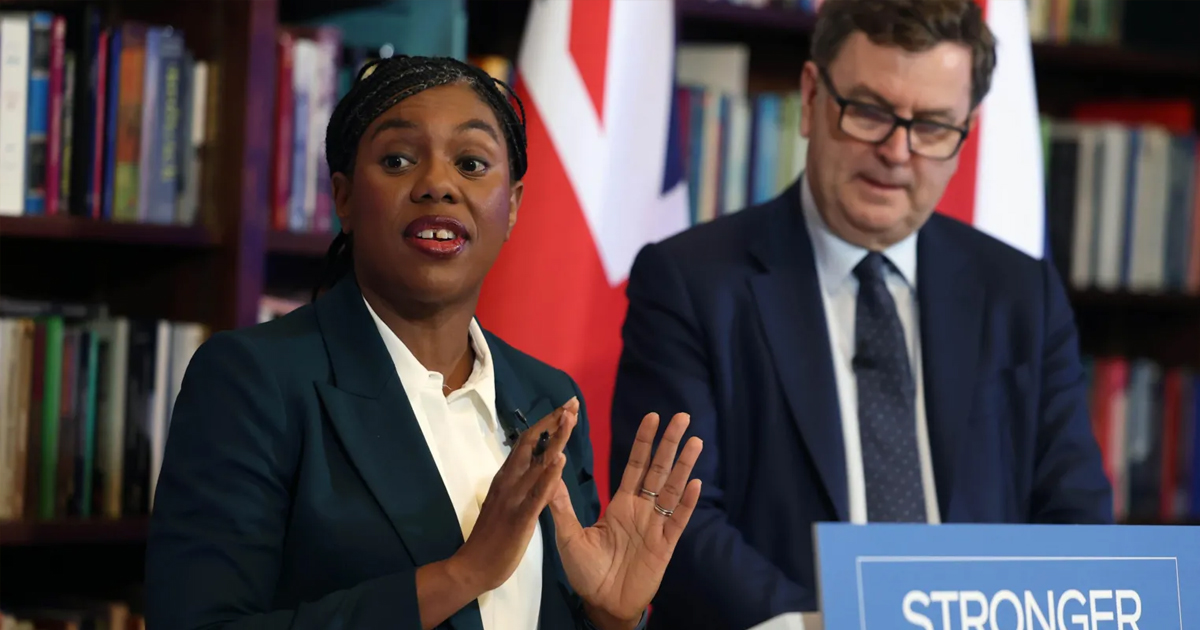
Conservative leader Kemi Badenoch has issued a stark warning that the UK risks “bankruptcy” if the Labour government raises taxes while failing to cut welfare spending.
Speaking ahead of next week’s Budget, Badenoch accused Chancellor Rachel Reeves of preparing a “stealth tax bombshell” to fund rising welfare costs, which she said had grown due to Labour’s refusal to reduce benefits. “If she comes back for more taxes without having serious cuts in public spending, especially on welfare, then she is going to ruin our economy,” Badenoch said.
Labour dismissed the claims, warning that Badenoch’s plans would mean a return to austerity and painful cuts to schools, hospitals and policing.
Two-Child Benefit Cap Set to Be Scrapped as Welfare Debate Intensifies
Reeves is widely expected to scrap the two-child benefit cap, which currently prevents low-income families from receiving additional support for a third or subsequent child. The move is aimed at tackling child poverty, but has triggered a fierce political battle.
The chancellor is also expected to freeze income tax thresholds to fill a gap in her spending plans — a move that would push more workers into higher tax brackets as wages rise.
Badenoch said her party would oppose the threshold freeze “every single step of the way”.
In a speech outlining Tory economic priorities, she claimed that Labour’s reversal of welfare reforms, along with the possible scrapping of the two-child cap, would leave Reeves searching for an additional £8.5 billion.
“If Labour do scrap the two-child benefit cap, the future Conservative government would bring it back,” she told reporters. “The cap makes sure people on benefits have to make the same decisions about having children as everyone else. This is fairness.”
Badenoch Says Reeves Should Be Fired for Raising Taxes
Badenoch repeated her demand for Reeves to be sacked if she breaks her pledge not to introduce further tax rises. “If she puts up tax she should get the axe,” she said.
She also framed spending cuts as a moral duty, saying it was “the Christian thing to do” because failing to reduce debt would “leave burdens for the next generation”.
The Tory leader criticised the new Archbishop of Canterbury, Dame Sarah Mullally — who previously opposed the two-child cap — offering to send her “a briefing on the facts”.
“If we keep this spending going I am afraid we are going to go bankrupt,” Badenoch added. “There isn’t going to be any money for people in need.”
Farage Sets Out Rival Plan as Right-Wing Spending Clash Deepens
Reform UK leader Nigel Farage, who supports ending the two-child benefit cap, delivered a rival economic speech at the same time as Badenoch, outlining his party’s plan to save £25 billion a year through spending cuts.
Badenoch criticised one of Farage’s key proposals — ending universal credit for EU citizens living in the UK — calling it “completely ridiculous”.
Speaking later on BBC Radio 5, she said Farage did not understand that these rights were “hard-fought reciprocal agreements” that protect both EU citizens in Britain and British citizens abroad. Renegotiating them, she said, would risk “re-opening Brexit”.
Opposition Parties Accuse Tories of Austerity and “Broken Promises”
Labour Party chair Anna Turley said the Conservative and Reform parties were competing over “who will return us to austerity faster”, adding that their plans “would be a disaster for Britain”.
She said Tory proposals amounted to £47 billion in spending cuts, which would mean “money drained out of your local hospital, your child’s school, and your local police”.
Liberal Democrat Treasury spokesperson Daisy Cooper said the Conservatives’ “irony meter” was broken after they “hammered people with years of stealth taxes and broken promises”.
She added that both Labour and the Conservatives were “punishing the public instead of unleashing growth through a better trade deal with the EU”.
Pre-Budget Tensions Rise as UK Faces Slow Growth and High Borrowing
The row comes at a sensitive moment for the government, as the Treasury faces pressure to balance public finances amid sluggish growth, rising welfare costs and international market scrutiny.
The Office for Budget Responsibility (OBR) recently warned that long-term borrowing pressures — driven by ageing demographics, disability claims and NHS demand — are mounting.
Labour’s expected move to ease child poverty by scrapping the two-child cap has drawn strong reactions from economists, faith groups and anti-poverty charities, while tax threshold freezes — used heavily by previous Conservative governments — remain politically divisive.
Next week’s Budget is set to be one of the most closely watched in years, with both Labour and the Conservatives attempting to define their economic credibility ahead of future elections.
