
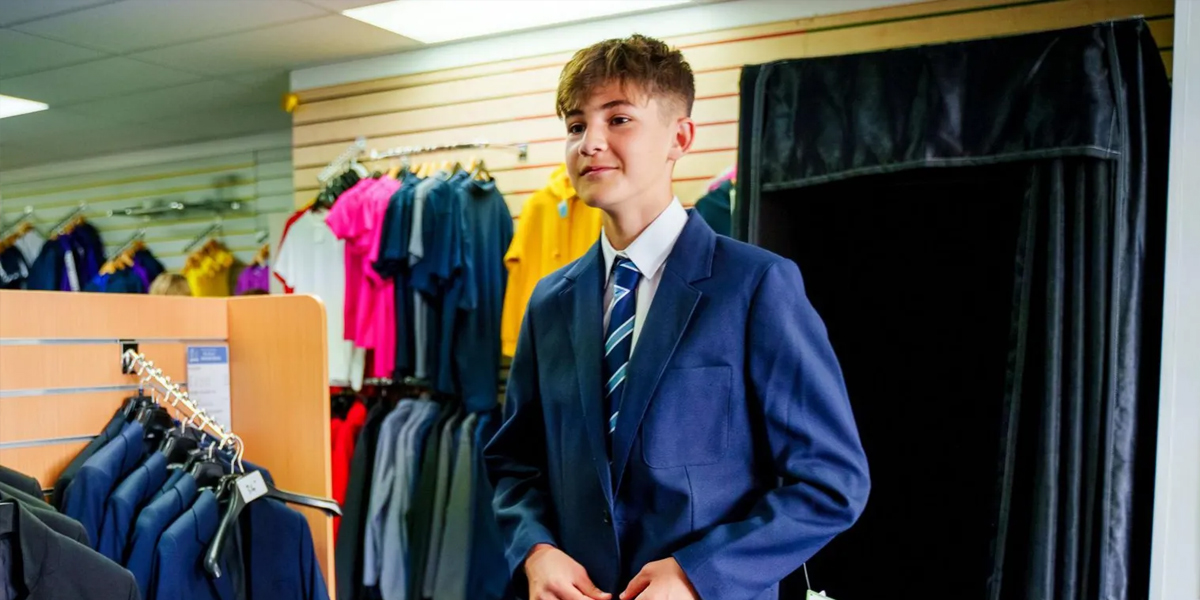
New guidance from the Department of Education (Northern Ireland) (DE) recommends that the cost of school uniforms should not exceed 5 % of a family’s monthly income, as part of a broader drive to keep uniforms affordable and transparent. While the guidance does not enforce a legal price ceiling for uniform sets, it sets clear expectations for schools to reduce branded items, avoid single-supplier arrangements and consult parents and pupils on policy.
The move comes alongside legislation introduced by Paul Givan to regulate uniform costs ahead of the 2026/27 school year and reflects growing concerns about the burden of school clothing on household budgets.
Why the Uniform Guidance Was Issued
Parents in Northern Ireland have long flagged the high cost of school uniforms, with branded PE kits and exclusive retailer requirements often driving up prices. The new guidance accompanies the School Uniforms (Guidelines and Allowances) Bill introduced in the Assembly in February 2025, which will place uniform-cost guidelines on a statutory footing once it receives royal assent.
The legislation builds on a 2024 consultation, in which 78 % of surveyed parents said the cost of uniforms was a significant financial burden and 65 % believed schools did not do enough to keep costs down.
Education Minister Paul Givan said the bill and guidance “will ensure affordability becomes a key consideration for school uniform policies.” Some MLAs opposed the legislation, arguing it would not go far enough and raised concerns about gender equality, particularly the lack of guaranteed right for girls to wear trousers.
Key Elements of the DE Guidance for Schools
The guidance sets out 16 separate requirements for schools. Major provisions include:
• Ensuring uniform costs are affordable for families and policies “do not impose unfair costs”.
• Schools must consult with parents and pupils when drafting or revising their uniform policy.
• Schools are encouraged to use plain colours (eg black trousers, white shirts) and items that can be purchased from supermarkets or high-street retailers rather than specialist suppliers.
• Schools should avoid separate summer and winter uniforms and use lower-cost materials (eg acrylic rather than wool blazers).
• Primary schools must not require branded PE kits, and post-primary schools must limit branded sports kits or single-supplier arrangements.
• Schools should support uniform banks or exchanges and avoid excluding pupils or stopping them from activities because of a breach of uniform policy.
The guidance also states that schools should supply kits for sports teams rather than expecting parents to buy expensive branded gear.
Enforcement and Accountability for Schools
Although the guidance is non-statutory until the Bill becomes law, the DE makes clear that schools may face consequences if they fail to comply. Parents or pupils can report a school to the department if they believe the school is using unnecessarily expensive uniform items without justification.
If the department finds a school is not adhering to the guidance, it will issue a formal direction naming the school publicly — often described as a “name-and-shame” warning — to force compliance. The guidance states: “To avoid this, schools should always aim to identify and use the lowest-cost version of each uniform item.”
The timing of this policy shift comes amid a broader cost-of-living squeeze in Northern Ireland, where families are under pressure from rising housing, energy and grocery costs. Uniforms have featured repeatedly in parental complaints and consultation responses about back-to-school expenses.
The Bill complements existing uniform grants administered via the Education Authority, which for example pay up to £67.20 for post-primary PE kit for eligible pupils.
Critics say the guidance lacks a hard cap on total uniform cost and that naming schools may not be sufficient deterrence. Others welcome the move as a meaningful step to bring uniform costs into line with family budgets. Schools will face scrutiny as they prepare for implementation ahead of the 2026/27 academic year.
