
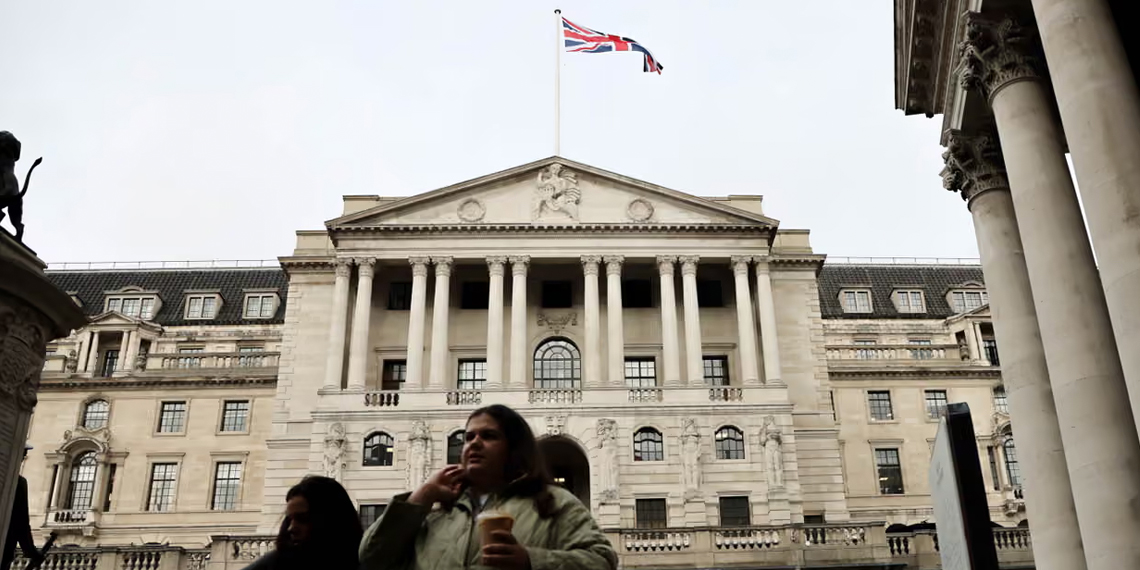
The Bank of England has decided to hold interest rates at 4%, warning that unemployment is increasing and economic growth remains sluggish, just weeks before Chancellor Rachel Reeves unveils her crucial budget.
In a close five-four vote, the Bank’s Monetary Policy Committee (MPC) opted to keep borrowing costs unchanged for the second consecutive meeting. Governor Andrew Bailey, who cast the deciding vote, said he preferred to “wait and see” whether inflationary pressures continue to ease and how Reeves’s upcoming fiscal measures will influence the economy.
“We held interest rates at 4% today. We still think rates are on a gradual path downwards, but we need to be sure that inflation is on track to return to our 2% target before we cut them again,” Bailey said.
Since Labour took office in July 2024, the Bank has cut rates five times to ease pressure on households and businesses. The most recent cut was in August, bringing rates to their current level. Inflation currently stands at 3.8%, nearly double the 2% target.
Reeves is set to deliver her fiscal statement on 26 November, where she is expected to raise taxes and introduce new measures to address the cost of living crisis—moves that could further slow the economy.
The Bank’s decision was widely anticipated by economists, with markets placing the probability of a rate cut at below 30%. However, the narrow vote and cautious tone of the Bank’s latest forecasts have fuelled speculation that a reduction may come in December, following Reeves’s budget announcement.
The Bank projected that unemployment will rise above 5% early next year amid weak hiring activity, signalling growing concerns over the strength of the economy. Inflation is forecast to have peaked at 3.8%, below earlier predictions of 4%, and is expected to drop to around 2.5% next year before reaching the 2% target by 2027.
Threadneedle Street also warned that uncertainty surrounding the upcoming budget has likely weighed on recent economic performance, with consumers holding back on spending and exports to the US weakening. The cyberattack on Jaguar Land Rover further disrupted Britain’s manufacturing sector, leading the Bank to revise its third-quarter growth forecast down to just 0.2%.
Despite the subdued outlook, policymakers remain cautious about underlying inflationary risks. Some MPC members warned that persistent inflation could continue to drive up wage and price expectations, though the Bank noted that the overall risks were “tilting to the downside.”
Bailey hinted at the potential for future rate cuts, stating: “Upside risks to inflation have become less pressing since August, and I see further policy easing to come if disinflation becomes more clearly established in the period ahead.”
