
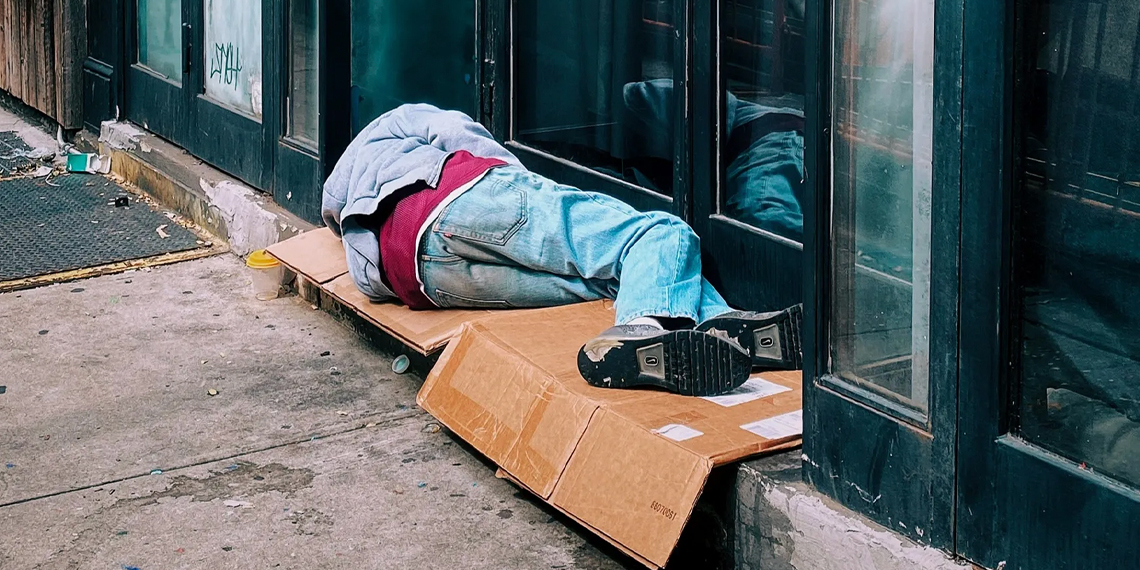
More than 4,700 people are currently homeless on the streets of London, according to the latest figures from the Combined Homelessness and Information Network (CHAIN).
While this marks the first year-on-year decrease in rough sleeping since 2022, homelessness charities have warned that the crisis remains severe and requires immediate government intervention.
Between July and September, outreach workers recorded 4,711 people sleeping rough across the capital — a 1% fall compared to the same period last year. However, the figure is still 7% higher than the total recorded between April and June, reflecting the seasonal rise during the summer months.
The data shows that 2,116 people were sleeping rough for the first time, though this number fell by 10% from the same period in 2024. Of these new rough sleepers, nearly three-quarters spent only one night on the streets, while just 4% became long-term homeless. However, there are still 759 people living permanently on the streets, an 11% increase from last year.
Mayor of London Sadiq Khan, who has pledged to end rough sleeping in the city by 2030, previously told *Big Issue* that he did not expect to see a decline in rough sleeping until 2026.
John Glenton, Chief Care and Support Officer at Riverside, described the small improvement as encouraging but warned that urgent funding is still needed. “It is heartening to see the first year-on-year fall in the number of people sleeping rough in London since 2022 and the first fall in the number of people sleeping rough in the summer months since 2017,” he said. “To further prevent rough sleeping, we desperately need to re-introduce ring-fenced funding for supported housing and homelessness services again.”
Jo Carter, CEO of Glass Door Homeless Charity, said the situation remains dire. “Every few months, new figures on homelessness are released, and we find ourselves repeating the same thing: that the situation is terrible, and that it will not get better until the government takes the steps necessary to address the root causes of the housing crisis.”
Carter said the charity’s winter shelters, the largest network of their kind in the UK, are preparing for another record season. “We will do what we do every year, and provide as many of these people as possible with a safe place to sleep, as well as advice and support to help them move towards more permanent, stable housing,” she added.
The CHAIN data also revealed that over half of London’s rough sleepers are UK nationals — up from 47% in the previous quarter — and 3% are former members of the armed forces. Around 7% of those sleeping rough are under 25, including two individuals under 18.
Luton Sinfield, Service Manager at the London Youth Hub run by Depaul UK, said demand for youth accommodation is rising sharply. “Our 26-bed pan-London service provides emergency accommodation for 18–24-year-olds at imminent risk of sleeping rough, yet demand far exceeds capacity,” he explained. “With rents sky-high, and thousands fearing homelessness this winter, the government must act urgently.”
The homelessness figures were released shortly after City Hall and the government agreed to reduce affordable housing targets in new London developments. Under the new policy, builders can include just 20% affordable homes — down from 35% — in a bid to speed up construction.
Matt Downie, Chief Executive of Crisis, criticised the move. “The government has said they want to end the moral stain of homelessness. We back them to the hilt in that ambition – but we have real concerns that the solution they are presenting here doesn’t come close to addressing the scale of the problem.”
The Westminster government is expected to unveil a new long-term homelessness strategy before the end of the year. Fiona Colley, Director of Social Change at Homeless Link, said prevention must be at its core. “The best solution to rough sleeping is to stop it happening in the first place,” she said. “Preventing homelessness is everyone’s job – that’s why we need true cross-departmental accountability and responsibility to be baked into the new homelessness strategy.”
