
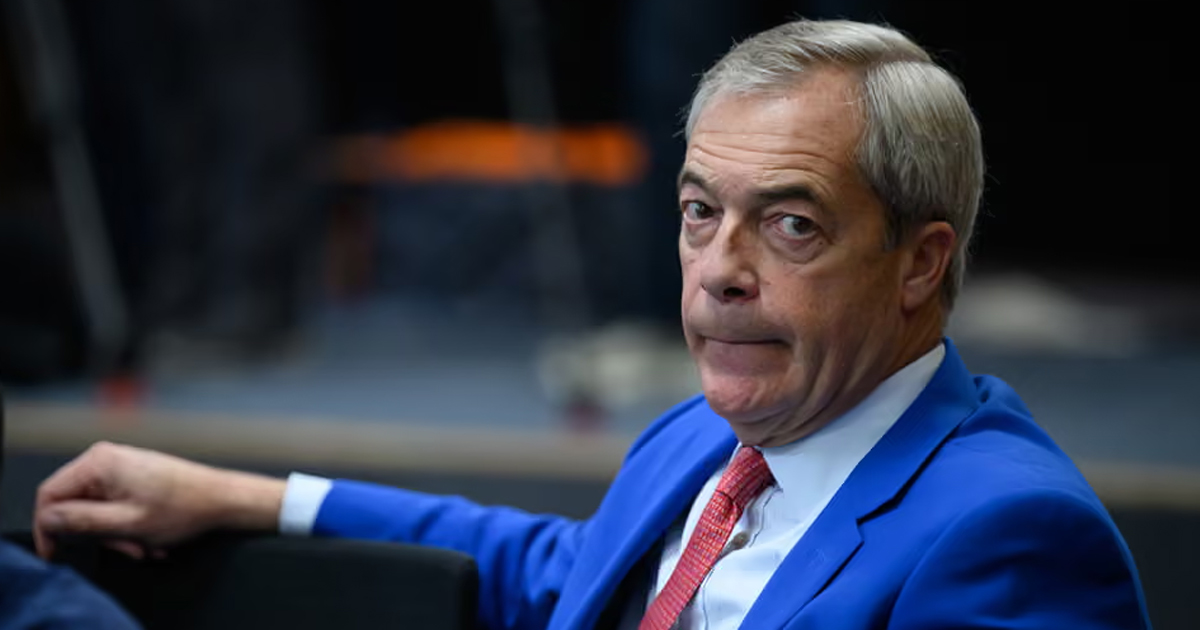
Five women who survived grooming gang abuse have demanded an apology from Reform UK leader Nigel Farage after he publicly questioned whether they were genuine victims of grooming networks. The survivors described his remarks as “degrading, humiliating, and ignorant,” saying his comments undermined their lived experiences and dismissed the trauma they had endured.
The dispute began after Farage suggested during a press conference that the women were victims of “other forms of child sexual abuse,” not grooming gangs. In a joint statement, the women said the comments forced them to “defend ourselves and prove that we are victims again.”
“Nigel Farage should apologise. What he said about us is categorically untrue,” they stated. “We are survivors of grooming and grooming gangs. His ignorance and assumptions about our experiences prove he should not have a platform to make decisions about us or our input.”
They accused Farage of spreading falsehoods and disregarding the inquiry’s purpose, saying his words “dismissed people who this inquiry is for.”
Government Inquiry and Survivor Backlash
The women are part of a panel advising the UK government’s inquiry into group-based child sexual exploitation, which was ordered in June following recommendations by Whitehall troubleshooter Louise Casey. Her earlier review found that “disproportionate numbers of men from Asian backgrounds” were suspects in some areas but warned that national data gaps made it difficult to draw broad conclusions.
The survivors had previously written to Prime Minister Keir Starmer, warning they would only remain on the advisory panel if Safeguarding Minister Jess Phillips kept her post and all survivor evidence was fully included. They have since accused the government of trying to “dilute the inquiry’s scope” beyond street-based grooming to include other forms of child sexual abuse.
Farage’s Comments Spark Outrage
Speaking at a press conference alongside another survivor, Ellie-Ann Reynolds — who resigned from the inquiry panel claiming it had become “more about a cover-up than truth” — Farage alleged that the government was “widening the inquiry’s scope” by including women who were victims of “a different kind of sexual abuse.”
“There are two very distinct groups of young people who were sexually abused,” Farage said. “The government has widened the scope from those who were victims of Pakistani grooming gangs and brought in other women. I’m not diminishing what they went through, but they are survivors of a different kind of abuse.”
The survivors rejected this claim, arguing that narrowing the focus solely to “street grooming” risks excluding many victims of organised exploitation that began online or through family networks. “There is no point holding an inquiry if the scope is so small the decision is already made before it begins,” they said.
Survivor Voices and Political Fallout
Several of the women — known publicly under pseudonyms such as Scarlett Jones and Caitlin Spencer — have written memoirs detailing abuse by predominantly Asian grooming gangs. Others, including survivors known as Claire, Katie, and Samantha Walker-Roberts, have spoken of severe exploitation and trafficking.
Walker-Roberts, who was kidnapped from a police station in Oldham at age 12 and trafficked around Greater Manchester, said she supports the inquiry but fears it will fail victims if the scope is limited.
Reform UK deputy leader Lee Anderson responded by saying the party would have “a proper, adult conversation” with the survivors and that Farage’s comments would be discussed internally. Reform UK has not yet issued an official apology.
Renewed Debate Over Inquiry’s Direction
The inquiry into group-based child sexual exploitation was launched to restore trust in how such cases are investigated after years of failures in towns like Rotherham, Rochdale, and Telford. However, tensions have grown between survivor advocates and government ministers over whether the inquiry should remain narrowly focused on “grooming gangs” or take a broader approach to all forms of organised child sexual abuse.
Farage’s intervention has reignited debate over political handling of the issue, raising questions about the balance between cultural sensitivity, accuracy, and survivor inclusion.
