
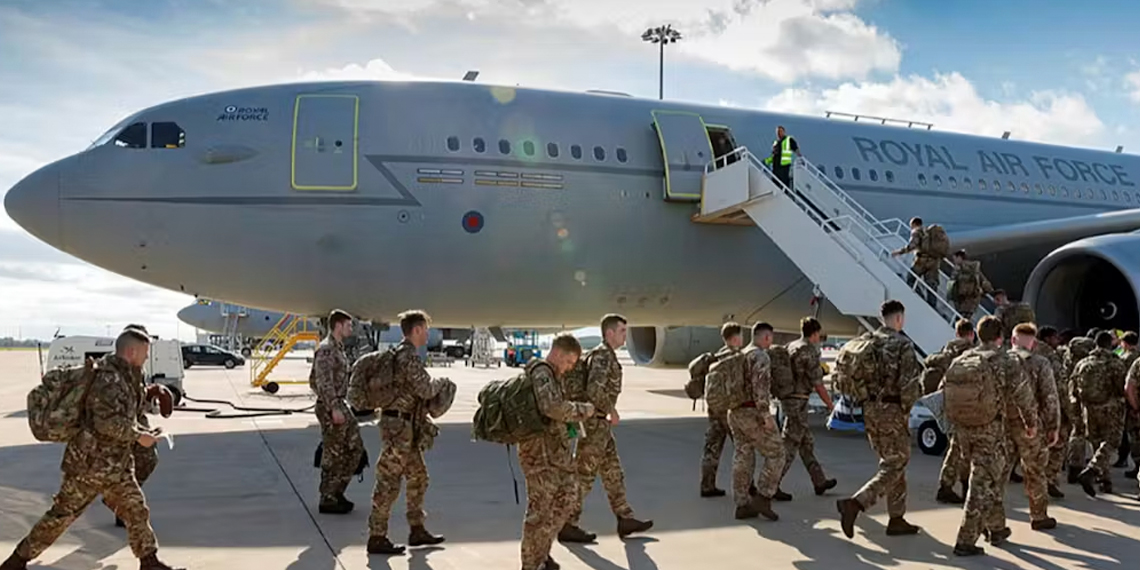
The United Kingdom has announced it will continue its role in NATO’s peacekeeping mission in Kosovo for at least another three years, reinforcing its long-standing commitment to security and stability in the Western Balkans.
In a statement released on 22 October, the Ministry of Defence confirmed that British support for the UN-mandated NATO Kosovo Force (KFOR) will now run until at least December 2028. The mission, which began in 1999 after NATO’s intervention to stop violence in Kosovo, currently includes troops from more than 30 nations.
The UK contributes a reserve force of several hundred soldiers who can deploy at short notice. The last significant British deployment took place in 2023, following an armed attack on police in northern Kosovo.
Prime Minister Keir Starmer said the decision underscored Britain’s “unwavering commitment to peace and security in the Western Balkans” and aligned with the country’s “NATO first” approach outlined in the Strategic Defence Review. He added that working closely with allies in the region was essential “not only for regional stability, but to ensure security here at home.”
Armed Forces Minister Al Carns praised the continued presence of British troops, noting that the UK remains one of KFOR’s most capable contributors. “Our troops have carried out hundreds of missions over the decades in support of KFOR, and this extension to our commitment will keep Kosovo and the Western Balkans safer,” he said.
Carns highlighted that British forces have enhanced KFOR’s intelligence, surveillance, and reconnaissance operations, providing commanders with greater situational awareness and improving civilian protection. The ongoing deployment is financed through the government’s Integrated Security Fund, which supports joint international security efforts.
The announcement comes alongside the Western Balkans Leaders’ Summit in London, where the UK unveiled new defence and security cooperation initiatives. Among them is a new training programme launching next year for regional defence institutions, focusing on civilian protection and promoting women’s roles in defence. Participating countries will include Albania, Bosnia and Herzegovina, Kosovo, Montenegro, North Macedonia, and Serbia.
This extended commitment highlights the UK’s strategic role in maintaining peace in the Western Balkans while deepening NATO’s influence in the region.
