
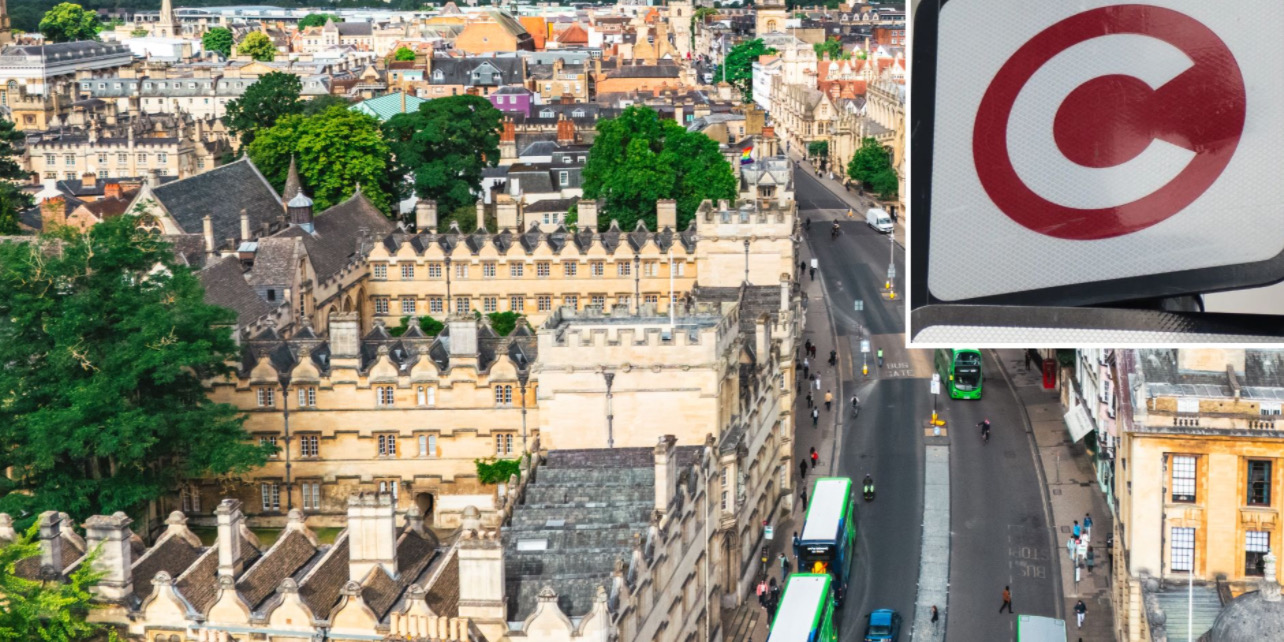
Drivers entering Oxford will soon be required to pay a £5 daily congestion fee, as Oxfordshire County Council prepares to roll out a temporary scheme on 29 October.
The initiative, aimed at cutting traffic congestion, improving air quality, and supporting public transport efficiency, will affect all motorists travelling into key areas of the city.
Automatic Number Plate Recognition (ANPR) cameras are currently being installed, along with updated road signage to alert drivers of the new fee.
The council said the measure is designed to create a cleaner, more accessible Oxford, with a free park-and-ride service available to help residents and visitors adjust to the change.
Councillor Andrew Gant, Cabinet Member for Transport Management, said the charge will “help reduce queues, improve air quality, and make public transport more reliable.” He added that, combined with the park-and-ride service, it would support “local businesses as we head into the busy Christmas period.”
However, the move has sparked backlash from residents and local business owners, who argue it will worsen financial pressures during the cost-of-living crisis.
Open Roads for Oxford, a group opposing the plan, has threatened legal action, claiming the council ignored public feedback. The group has sent a pre-action protocol letter demanding a response by 21 October.
Paul Major, chair of Open Roads for Oxford, said: “We had hoped the county council would listen to the very real and evidence-based concerns being raised about this scheme, but they continue to ignore them.”
Emily Scaysbrook, owner of a city centre shop, added that the group is ready to “pursue all legal avenues necessary” if the council refuses to reconsider.
Meanwhile, motorists across the UK are also facing new driving restrictions this month. A 50mph speed limit is being introduced on the M5 motorway around junction 26 for Wellington as part of a £5.9 million drainage and resurfacing project designed to tackle flooding and improve safety.
The National Highways scheme will run until February 2026, with drivers warned that breaching the limit could result in fines of up to £1,000.
