
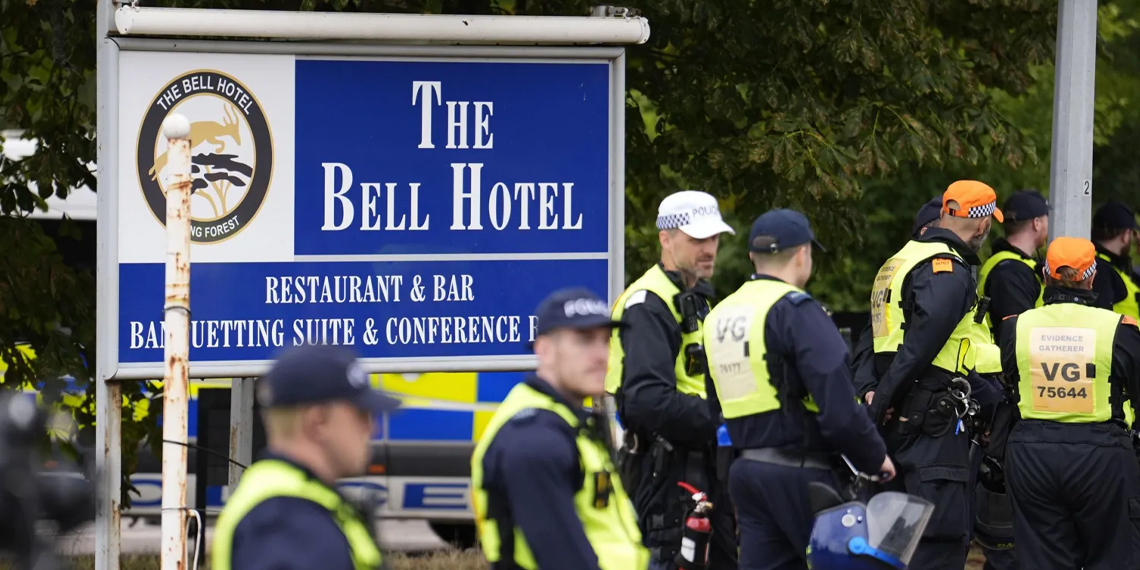
A hotel housing asylum seekers in Essex has been branded a “feeding ground for unrest and protest” in court filings as Epping Forest District Council battles to block further migrant lodging at The Bell Hotel. The council contends the hotel’s use has changed without planning approval and triggered extended protests. Meanwhile, the Home Office insists any closure must proceed in a “structured” and gradual manner.
Lawyers for Epping Forest argue that the owners, Somani Hotels, have “sidestepped” planning laws by converting the hotel’s use to asylum accommodation without seeking permission. In opening statements, Philip Coppel KC described the change as “serious, flagrant and continuing,” and warned of “significant adverse impact” on local residents, businesses, and visitors. He claimed that bookable room availability and public access have been effectively barred, asserting that the hotel now “attracts weekly protests and draws in unlawful activity.”
The Conservative-led council is pressing for a permanent injunction to prevent further asylum placements, arguing that the hotel no longer behaves as a conventional lodging facility but has become a locus of tension and conflict.
Defences: Hotel Still a Hotel, Closure Must Be Gradual
The Home Office, intervening in the case, argued that block booking rooms for asylum seekers does not alter its legal status as a hotel. James Strachan KC, representing the Home Office, said granting a hard injunction would be contrary to public interest—especially when dozens of local authorities are pursuing similar legal challenges.
Somani Hotels, through Jenny Wigley KC, countered that the business was already in decline and that no structural changes had been made to the building. She added that security fences were installed only in response to protests and did not amount to a change in usage.
Protests, Criminal Case, and Wider Fallout
Over the summer, The Bell Hotel became the center of repeated protests and counter-protests—some turning violent—after an asylum seeker housed there, Hadush Kebatu, was charged with two counts of sexual assault. Kebatu, an Ethiopian national who arrived in the UK via small boat, was later sentenced to a year in prison in September.
The hotel has intermittently lodged asylum seekers since October 2022. Local demonstrations have intensified, including occasions when rocks and eggs were thrown at police and arrests were made.
Legal Twist: Temporary Injunction Overturned
Previously, a High Court judge granted the council a temporary injunction ordering the removal of asylum seekers, but this was later quashed by the Court of Appeal. The appeals judges criticized the High Court for placing undue weight on protests—even unlawful ones—and for failing to consider the logistical challenges of rehoming many asylum seekers at short notice.
Despite this, the full legal battle is ongoing. The hearing before Mr Justice Mould is scheduled to conclude Friday, at which point the court may decide whether to issue a permanent injunction.
