
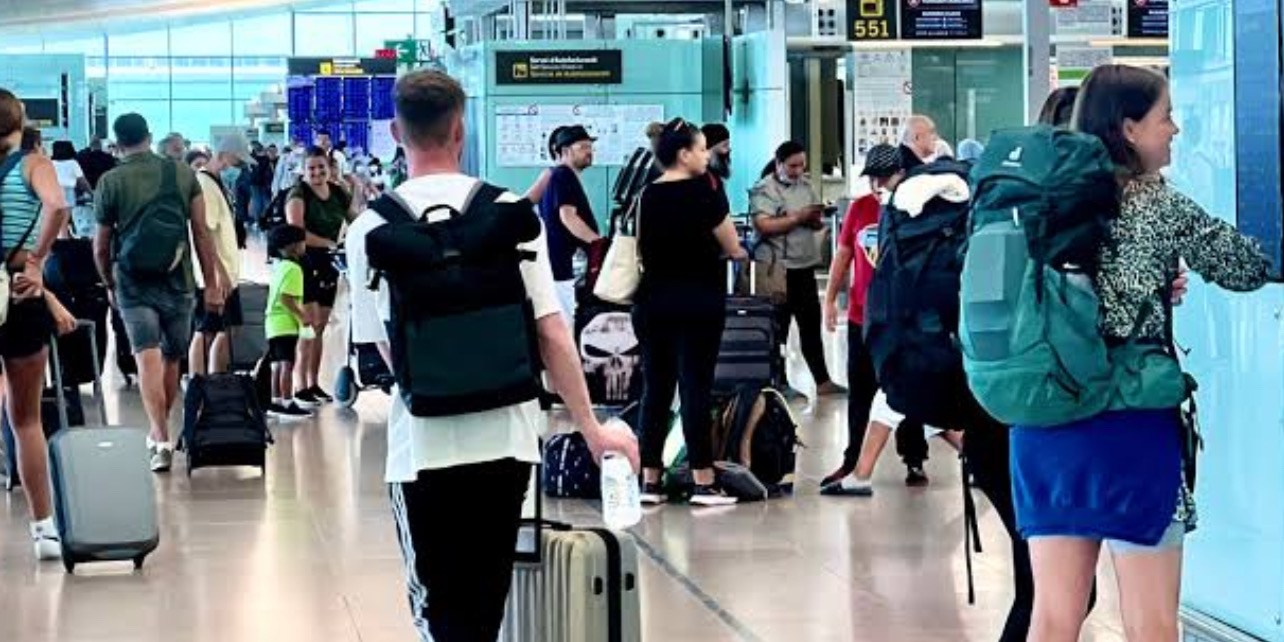
British travellers heading to Europe are being warned to expect long queues as the EU Entry Exit System (EES) begins operation on Sunday, marking one of the biggest changes to border control in years.
The new system requires non-EU visitors, including UK citizens, to register their fingerprints and have their photographs taken when entering the Schengen zone, which includes 29 European countries. The EES replaces passport stamping and aims to streamline border checks in the long term—but the short-term impact may be major congestion at airports.
Julia Lo Bue-Said, Chief Executive of the Advantage Travel Partnership, urged British tourists visiting Spain, Portugal, Italy, and other destinations to plan for significant delays. “We recommend travellers allocate up to four hours to navigate the new system during these early weeks,” she said, warning that multiple flights arriving simultaneously could cause severe bottlenecks.
EES Checks Begin Across the UK and Europe
Travellers boarding international trains or ferries from London’s St Pancras, the Port of Dover, and Eurotunnel’s Folkestone terminal will complete their EES registration before leaving the UK. New self-service kiosks have been installed at these locations, although not all passengers will need to use them immediately.
For British passengers flying to Europe, the EES process will take place at the destination airport. Early reports indicate that airports in southern Europe are likely to experience the worst congestion during the rollout phase.
Officials Say Delays Will Ease Over Time
The EU Entry Exit System is being introduced gradually, with participating countries only required to process part of their arrivals through EES initially. Full implementation is expected by April 10 next year. Once registered, a traveller’s data will remain valid for three years, though verification will still occur at each visit.
The UK Home Office said each EES registration should take “one to two minutes,” but acknowledged that processing at peak times “could lead to longer waits.”
Mark Tanzer, Chief Executive of travel trade body Abta, said: “In the longer term, EES should make travel to Europe quicker and simpler. However, in the early stages, some delays are inevitable—especially during peak travel times.”
Consumer experts like Rory Boland of Which? Travel have also advised passengers to “book later transfers or onward travel” to account for potential waiting times after landing.
