
The UK has been ranked the fifth-worst country in Europe for the loss of green space to development, according to a major cross-border investigation.
Between 2018 and 2023, nature and farmland equivalent in size to the New Forest – 604 sq km – was replaced by concrete, housing, and infrastructure projects. The Guardian, working with European partners including Arena+, the Norsk institutt for naturforskning (Nina), Norwegian broadcaster NRK, and nine other news outlets across 11 countries, found that natural areas across Europe the size of Cyprus were lost in the same period.
In England, Wales and Northern Ireland, even some of the most protected landscapes have been affected. National landscapes – formerly known as areas of outstanding natural beauty – lost 12 sq km of land, the equivalent of 1,680 football pitches.
The research, using satellite imagery and advanced machine learning developed by Nina, highlighted developments across beauty spots including the Chilterns, Kent Downs, Dorset, the Cotswolds, High Weald and Shropshire Hills. Many of these projects were large-scale housing expansions, transport links, or commercial developments, despite the legal protections in place.
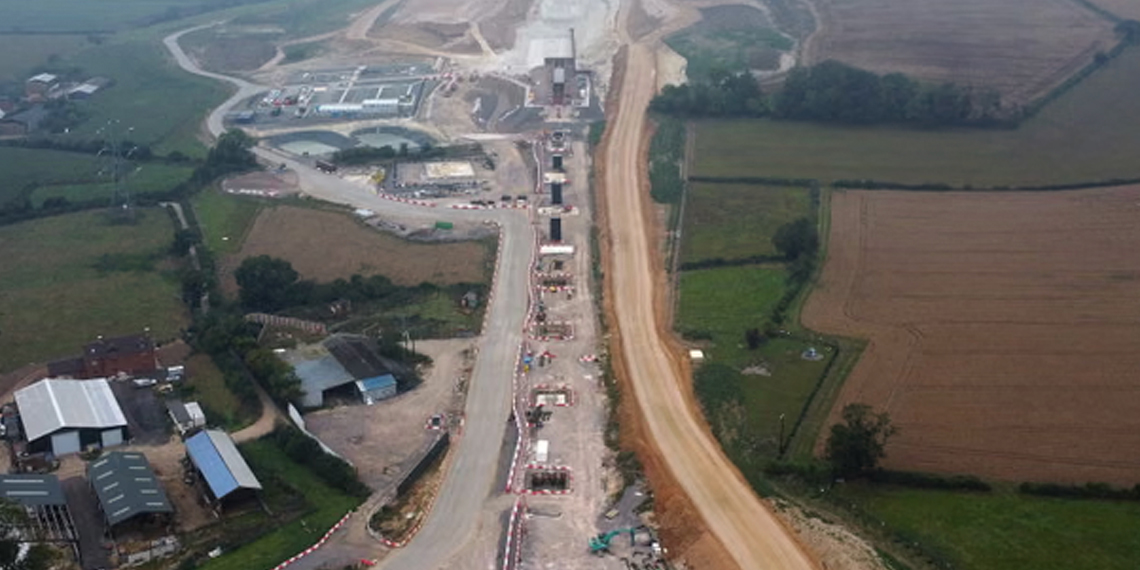
One of the most striking examples is the HS2 rail line, which cuts directly through the Chilterns national landscape. Other major projects include the expansion of Poundbury in Dorset and Lancaster Park near Hungerford, as well as numerous smaller encroachments such as barns, road widening schemes, and new housing estates.
Campaigners argue that much of this development is unnecessary, pointing out that England has enough brownfield land to build nearly all of the 1.5 million homes the government aims to deliver by the end of this parliament.
Roger Mortlock, chief executive of countryside charity CPRE, criticised the findings, stating: “For a small island we are still struggling with the idea that land is finite. It’s shameful to be so near the top of this list when the countryside in this country is so valued – second only to the NHS. It is also so unnecessary when brownfield land, even with planning permission, remains unused. We should rethink our towns and cities as compact sustainable places that celebrate the countryside on their doorstep.”
He added that instead, “land-hungry, car-dependent, identikit, unaffordable housing estates without proper infrastructure are taking green fields that could deliver the food we eat, power nature’s recovery and climate solutions.”
The investigation comes as the government’s new planning bill, currently going through parliament, threatens protections for 5,000 sites in England.
If passed, the legislation would allow developers to pay into a central fund to bypass existing environmental safeguards, which critics warn would be a major step backwards for environmental protection.
