
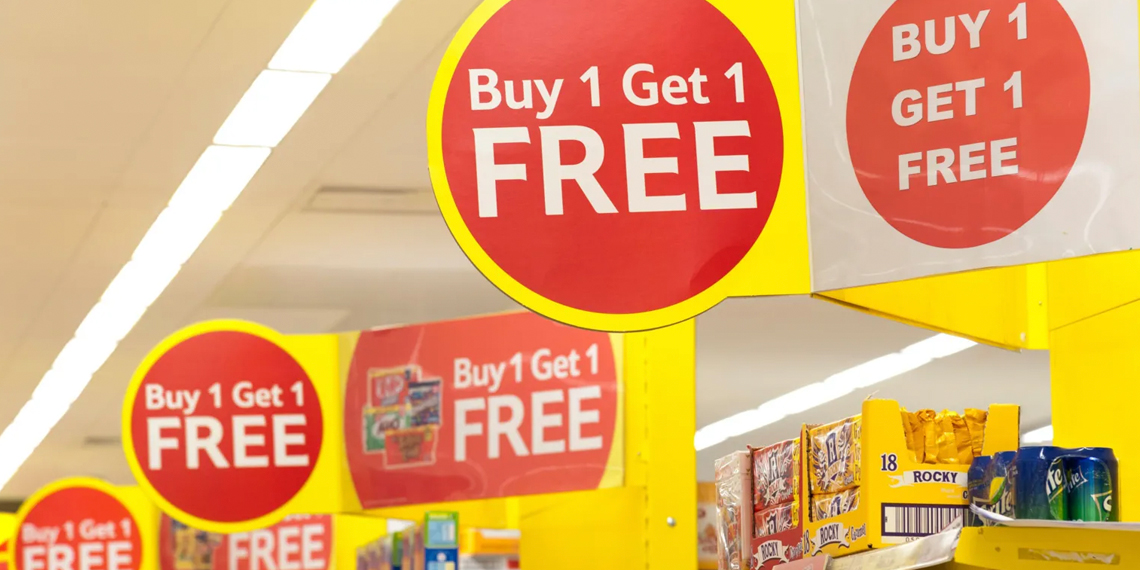
From Wednesday, multibuy promotions on unhealthy food and drink — such as “buy one, get one free” deals — will be banned in England. The new restrictions will apply to supermarkets, large high street retailers, and online shops as part of the government’s plan to cut rising obesity levels, particularly among children.
The ban, delayed due to the cost-of-living crisis, also prevents restaurants and cafés from offering free refills of sugary drinks. Additional measures are on the way, including a ban on television advertising of junk food before 9pm and a complete ban on online promotions starting in January.
A Department of Health and Social Care spokesperson called the move a “crucial step” in giving children a healthy start, warning that obesity costs the NHS billions and sets young people up for long-term health problems.
What Products Are Affected?
The government has created a classification system defining foods and drinks considered unhealthy, focusing on those linked to child obesity. Drinks such as cola and lemonade containing sugar are covered, alongside foods including crisps, sweets, chocolates, cakes, pastries, ice cream, pizzas, and even some frozen products like fish fingers.
Rising Obesity Rates in the UK
More than a quarter of UK adults and one in five children leaving primary school are now classed as obese. Greg Fell, president of the Association of Public Health Directors, welcomed the move as “long overdue,” arguing it should have been introduced in 2022. He noted that multibuy offers encourage impulsive purchases and overspending rather than saving money.
Fell added that obesity has become a “key driver” of health inequalities, with children in deprived areas nearly twice as likely to be obese. He urged further action, including tighter restrictions on sponsorship deals, better school meals, and more investment in active lifestyles.
Evidence on Impact
A University of Leeds study published earlier this year showed that the 2022 ban on placing unhealthy products near checkouts, aisle ends, and store entrances reduced purchases. Before the ban, 20 out of every 100 items sold were unhealthy; after, it dropped to 19 — equivalent to two million fewer products sold daily.
Industry Response and Next Steps
Retailers have long lobbied against these restrictions, but many big names such as Tesco and Sainsbury’s introduced their own policies in advance. The British Retail Consortium says most of its members are already compliant, focusing instead on calorie labelling, portion control, and reformulation of products.
Wales will introduce similar restrictions in 2026, while Scotland has pledged to follow. Former Prime Minister Boris Johnson first proposed the UK-wide crackdown in 2021, but delays pushed the junk food advertising ban to 2025 to allow businesses more time to prepare.
