
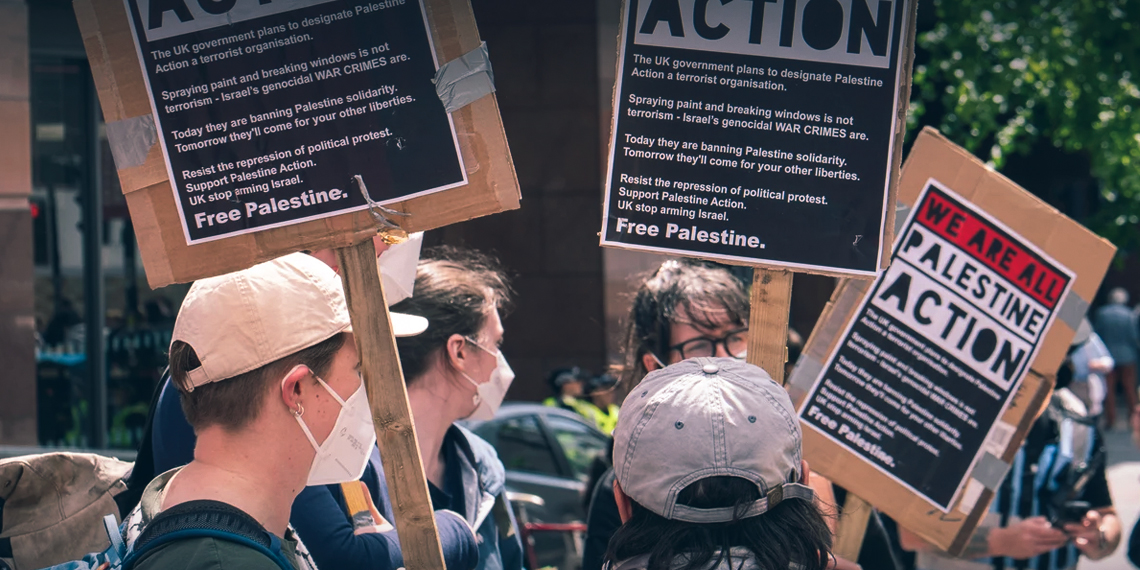
The High Court has granted Liberty and Amnesty International UK permission to intervene in a forthcoming judicial review of the government’s decision to proscribe Palestine Action as a terrorist organisation.
Under UK law, individuals or organisations with relevant expertise can apply to intervene in legal cases, offering evidence or arguments to assist the court’s deliberations.
In their submission, Liberty and Amnesty UK raised concerns over the UK’s legal definition of terrorism, describing it as “extremely broad” and claiming it “extends beyond international definitions”. They argued that proscribing a group whose activities fall within the “outer reaches” of this definition is disproportionate.
Both organisations also warned that broad counterterrorism powers and the lack of clarity on criminal liability are deterring people from exercising their right to protest. They highlighted that such measures could expose protesters to prison sentences of up to 14 years.
Liberty and Amnesty UK further argued that labelling protest groups as terrorist organisations undermines fundamental rights, including freedom of expression and freedom of association.
Since the proscription of Palestine Action, more than 700 protesters have been arrested, with over 100 charged under the Terrorism Act. The majority of arrests were linked to holding placards or signs regarded as supportive of the group.
The judicial review later this year is expected to examine whether the government’s decision meets the legal threshold for proscription, with the intervention from Liberty and Amnesty UK adding significant weight to the challenge.
