
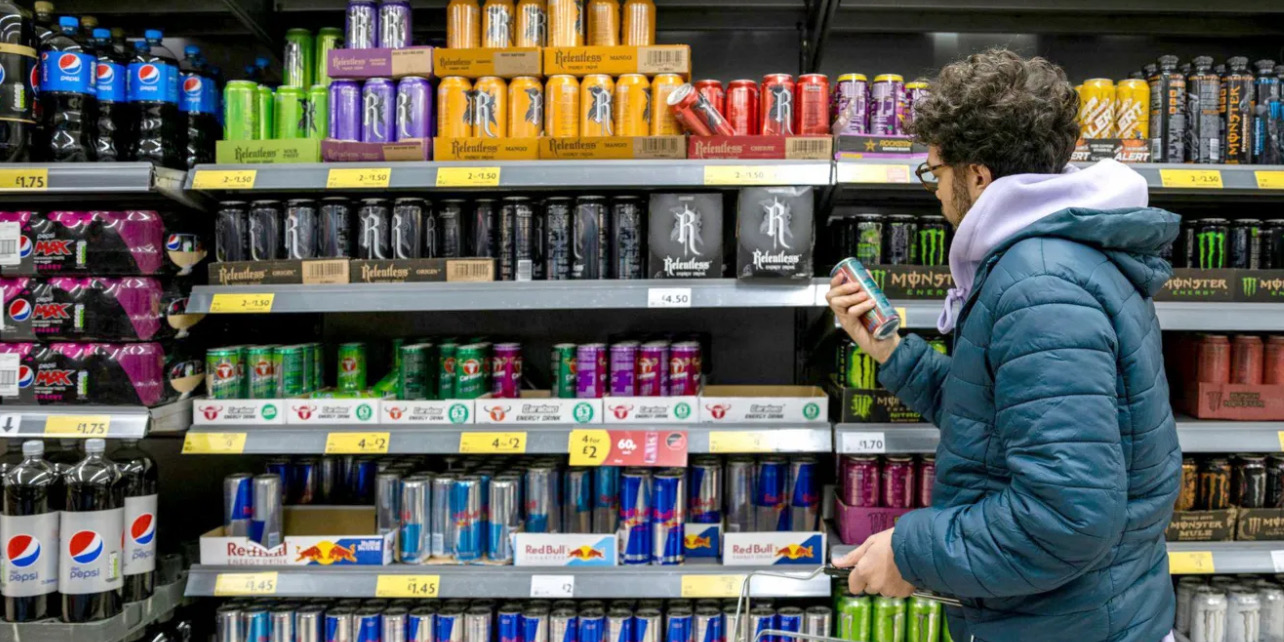
The UK government has announced plans to introduce a new law banning energy drinks for under-16s in England, in a move to protect children’s health from excessive caffeine and sugar consumption. The ban would cover sales in shops, cafes, restaurants, vending machines, and online platforms.
Currently, up to a third of children in the UK are believed to consume energy drinks like Red Bull, Monster and Prime every week, despite most supermarkets already operating a voluntary ban.
Health Risks of Energy Drinks
Some popular energy drinks contain more caffeine than two cups of coffee, raising serious concerns among health experts. Excessive intake has been linked to headaches, sleep problems, rapid heart rate, seizures, and in rare cases, deaths. Sugary versions also contribute to tooth decay and obesity, according to the Association of UK Dieticians.
Health and Social Care Secretary Wes Streeting said the decision comes after calls from parents, teachers, and children themselves. “You can see the impact on health, concentration and learning, and that is why we are acting,” Streeting told BBC Breakfast.
Consultation and Implementation Timeline
A 12-week consultation will now gather evidence from health professionals, educators, parents, and retailers. While no official date has been set, Streeting confirmed the ban will be implemented “a lot sooner” than the end of this parliament.
The move follows criticism of the previous Conservative government, which planned but later scrapped a similar ban in 2022. Streeting argued that while adults should make personal choices, children need stronger protections.
Youth Culture and Marketing Concerns
Campaigners warn that manufacturers use clever marketing, influencers, and appealing packaging to target young consumers. Carrera, 18, from the youth activist group Bite Back, said: “It’s no wonder energy drinks have become the social currency of the playground.”
TV chef Jamie Oliver has also repeatedly criticized the drinks, warning that children are arriving at school “bouncing off the walls” after consuming them for breakfast.
Expert Backing
Professor Steve Turner, president of the Royal College of Paediatrics and Child Health, said the ban is the “next logical step” in improving children’s diets. Professor Amelia Lake of Teesside University added that energy drinks have “no place in the diets of children” and highlighted significant mental and physical health consequences.
However, the British Soft Drinks Association argued that manufacturers had already taken voluntary steps, stressing that any regulation should be based on rigorous evidence.
Broader UK Impact
The proposed ban currently applies to England, but Northern Ireland, Scotland, and Wales are also considering similar restrictions. Lower-caffeine soft drinks such as Diet Coke, as well as tea and coffee, will not be affected.
