
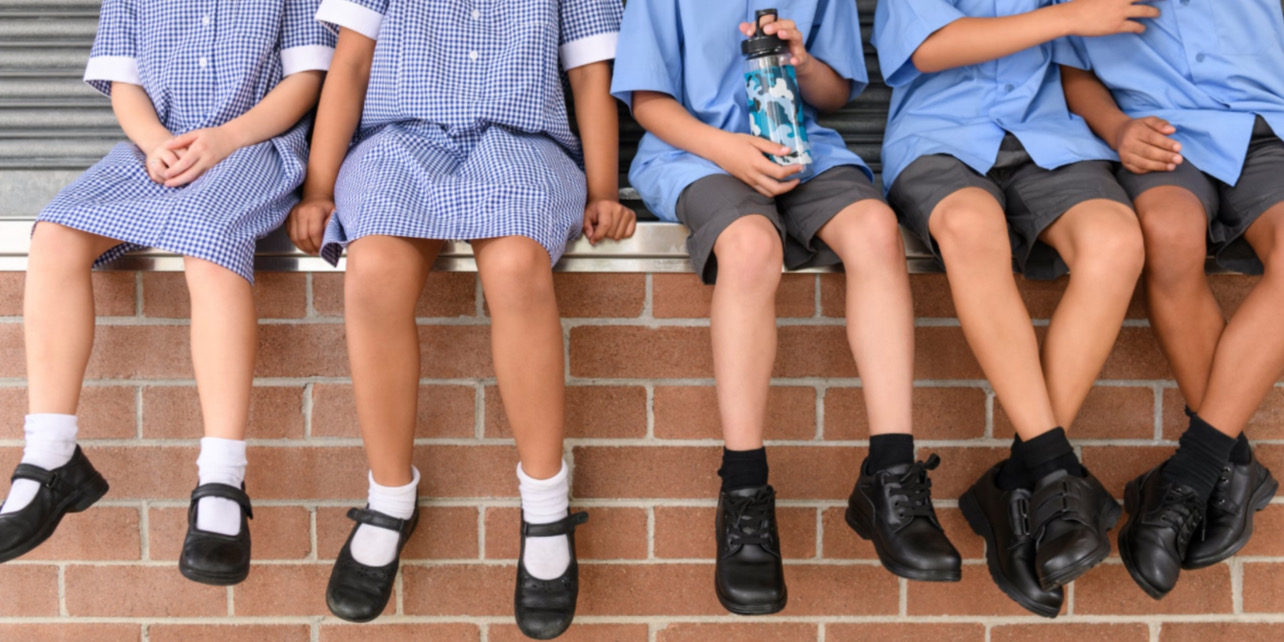
Parents across England are skipping meals and relying on buy-now-pay-later services such as Klarna to afford costly school uniforms ahead of the autumn term, according to new research.
A survey of 2,000 parents by the parenting charity Parentkind revealed the financial strain facing families. Nearly half of those questioned (47%) said they were worried about uniform costs, which often run into hundreds of pounds due to branded items. More than a quarter (29%) admitted they had gone without food or heating to cover the expense.
The poll highlighted how parents are being pushed into debt. Almost half (45%) planned to use credit cards to pay for their children’s school uniform, while a third (34%) said they would depend on delayed payment services such as Klarna.
Education secretary Bridget Phillipson urged schools to reduce the number of compulsory branded items immediately, ahead of a legal change due in September 2026. Under the new law, schools will be limited to three branded items plus a tie for secondary and middle school pupils.
Phillipson said school uniform should not force parents to choose between food and clothing. She encouraged schools to act voluntarily before the law comes into effect, arguing that parents want fewer costly branded items.
At present, many schools require more than five branded items, in some cases as many as ten, pushing uniform bills to as much as £400 including PE kit. This often forces parents to buy clothing from specialist suppliers instead of affordable retailers.
The upcoming legislation will allow families to purchase cheaper essentials such as shirts, trousers, and skirts from general shops including Aldi and Marks & Spencer.
Almost nine in ten parents (86%) who took part in the survey said branded uniforms make no difference to children’s behaviour. Parentkind’s chief executive Jason Elsom welcomed the reforms, noting that parents face thousands of pounds in costs each year for uniforms, books, trips, laptops and travel. He argued that reducing branded requirements would immediately cut costs and ease financial pressure.
Elsom added that 85% of parents believe the changes will save money, 71% prefer to buy plain items and add a logo later, and 83% say unbranded clothing is just as durable.
Pepe Di’Iasio, general secretary of the Association of School and College Leaders, pointed out that many families are struggling with wider financial pressures, adding that the level of child poverty in the UK remains appallingly high.
In a separate announcement, the government confirmed that millions of families will receive their benefit payments early ahead of the August bank holiday. Payments originally due between 23 and 25 August will instead be made on Friday 22 August.
Social security minister Stephen Timms said this measure is designed to ease pressure on families as the new school year approaches, ensuring no parent has to choose between putting food on the table and buying school supplies.