
Thames Water’s proposed Abingdon reservoir in Oxfordshire could cost as much as £7.5 billion, more than triple the original budget.
The increase in projected costs is expected to be passed on to water bill-payers across London and the South East, adding to already significant price rises.
The utility company, which is struggling with a £20 billion debt pile, originally estimated the project would cost £2.2 billion. However, a recent review factoring in ground testing, waterway assessments, and updated engineering requirements now places the figure between £5.5 billion and £7.5 billion.
If approved, around half of the costs will be covered by Thames Water’s 16 million customers, with the remainder shared between Affinity Water and Southern Water customers. Thames Water customers already face a 35% increase in bills over the next five years, while Affinity Water and Southern Water customers are set to see rises of 26% and 53% respectively.
The Abingdon reservoir is part of the government’s wider strategy to secure long-term water supply, with ministers committed to building nine major reservoirs nationwide – the first such projects in three decades. The Oxfordshire site would store up to 150 billion litres of water, roughly the size of Gatwick Airport, and is intended to address a forecast shortfall of one billion litres of water per day by 2050.
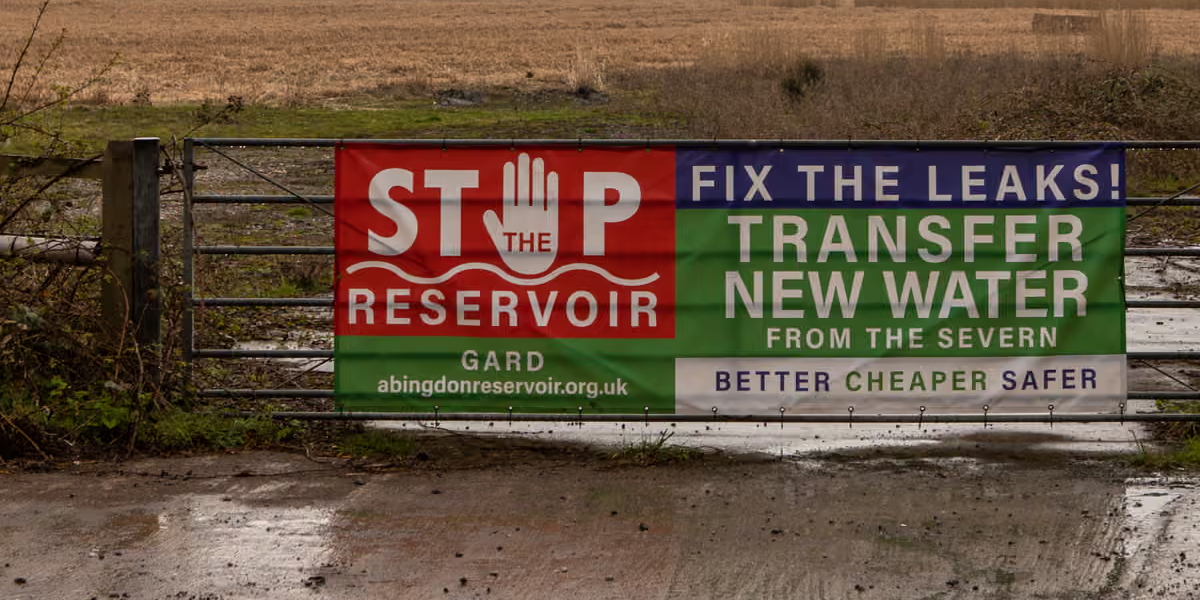
Despite being designated a nationally significant infrastructure project and fast-tracked through the planning process, the scheme has faced fierce local opposition. Concerns have been raised over the need to build 25-metre-high walls to contain the water, the redirection of local streams, and the increased risk of flooding in nearby villages. Campaigners argue the site’s geology, with limited clay deposits and no natural valley, makes construction more complex and costly.
The project remains one of Thames Water’s key priorities in its 50-year water resource management plan. The company says the updated cost estimate reflects lessons from other large-scale UK infrastructure projects and aims to address potential challenges before construction begins.
The review comes at a time of deep financial uncertainty for Thames Water. A planned £4 billion funding injection from private equity firm KKR collapsed in June, leaving the firm dependent on a rescue plan from creditors. The proposal requires regulatory approval to waive hundreds of millions of pounds in sewage pollution fines.
The UK government has prepared contingency plans for the potential collapse of Thames Water, including placing the company into a special administration regime – a temporary form of nationalisation. Reports suggest Hong Kong-based infrastructure giant CKI could be a frontrunner to acquire the company if this scenario unfolds.