
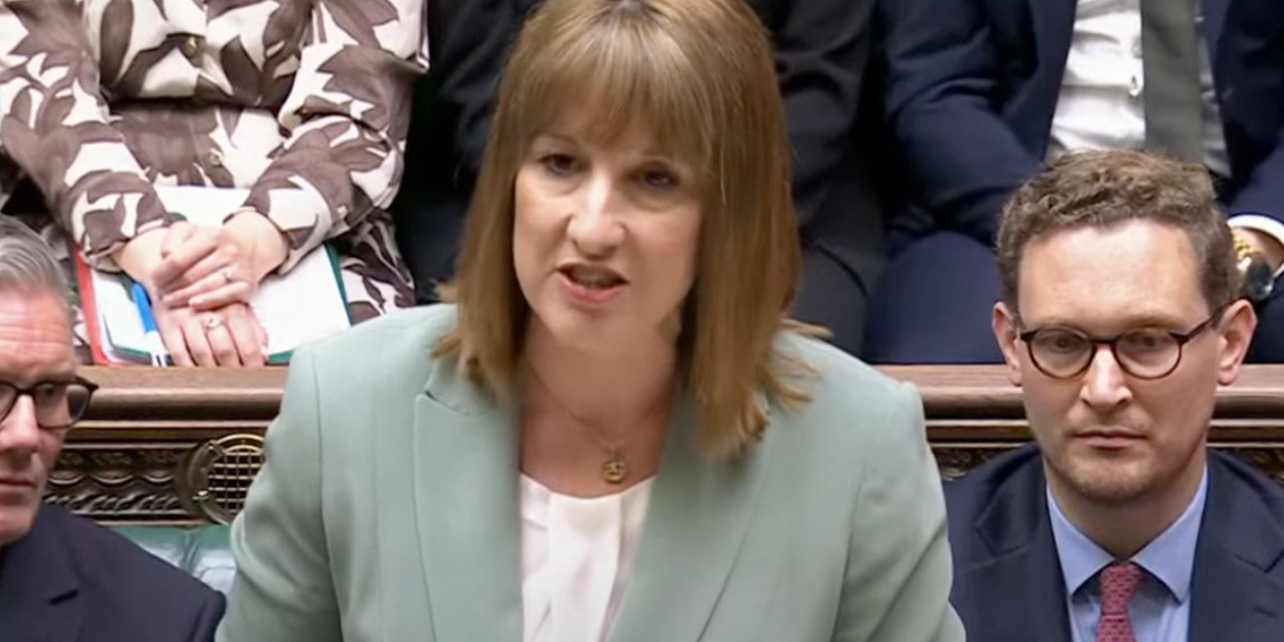
Rachel Reeves has called on the public to be patient with Labour’s efforts to stabilise the economy, stressing that the transformation promised in last summer’s election was never going to be achieved overnight.
The Chancellor acknowledged her own impatience to deliver change but insisted ministers have already taken steps to turn the economy around, while emphasising there is still much work ahead.
She placed responsibility for the country’s current financial challenges squarely on the previous Conservative government.
Her remarks come days after the Bank of England warned of several months of sharp price rises, largely driven by soaring food costs. The central bank highlighted how the recent hikes in national insurance contributions and the minimum wage have contributed to rising supermarket prices. To support the fragile economy, interest rates were cut to 4 percent.
Reeves is also facing warnings of a £50 billion gap in public finances, with economists suggesting she may need to consider raising taxes, reducing public spending, or revising her fiscal rules to address the shortfall. This financial pressure comes less than 24 hours after Labour leader Sir Keir Starmer promised that the autumn Budget would ensure “people feel better off.”
Writing in the Sunday Mirror, Reeves underlined that economic recovery would take time. Her mission, she said, is to end the cycle of decline, tackle economic inequality, and create opportunities for all communities, ensuring working people see tangible improvements.
She emphasised that although she is eager for change, it was clear from the start that results would not be immediate. The Chancellor criticised the previous Conservative government for leaving a £22 billion deficit, which Labour has been forced to manage since taking office.
Reeves said Labour stands firmly on the side of working people, who have endured years of unmet promises and political avoidance of tough decisions. She described the past decade under Tory rule as a period marked by “endless spirals of chaos.”
Progress so far includes securing trade agreements with major partners such as the United States, India, and the European Union.
Earlier this week, the Bank of England forecast inflation rising to 4 percent by September, with food prices expected to increase by 5.5 percent through to Christmas, placing further strain on household budgets.
Meanwhile, Sir Keir Starmer has not ruled out potential tax rises this autumn, stopping short of committing to Labour’s manifesto promise not to increase VAT, income tax, or corporation tax.
The National Institute of Economic and Social Research (NIESR) has suggested the Chancellor may need to consider spending cuts in the upcoming Budget to close a £41.2 billion shortfall in borrowing targets by 2029-30, linked to her own “stability rule.”
To rebuild the nearly £10 billion financial buffer maintained since last year’s Budget, Reeves would need to raise approximately £51.1 billion, according to NIESR’s analysis.
