
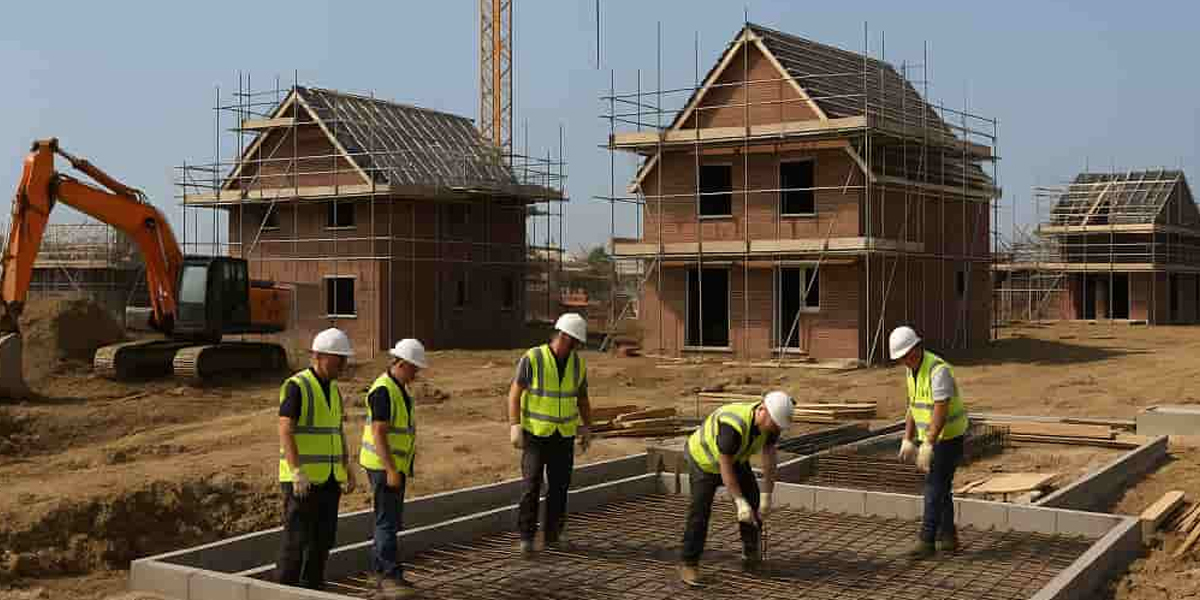
The UK construction sector has recorded its steepest decline in five years, as housebuilding activity continues to falter and wider industry demand weakens.
The S&P Global UK Construction Purchasing Managers’ Index (PMI) dropped to 44.3 in July, falling from 48.8 in June, marking the most severe downturn since the early months of the pandemic in May 2020.
A reading below 50 on the PMI indicates a contraction. The downturn spanned all major construction segments, with civil engineering experiencing the sharpest decline due to a notable reduction in public sector contracts.
Commercial and residential builders also reported diminishing workloads and persistent delays in project timelines, highlighting mounting uncertainty across the sector.
Economists noted that the sharp fall in output reflects growing hesitancy in the market. Construction firms are reacting by scaling back recruitment and cutting down on material purchases, anticipating tougher conditions in the months ahead.
July marked the seventh consecutive month of job losses in the industry, with many businesses opting not to replace departing staff, a clear indication of subdued confidence in near-term recovery.
While the short-term outlook remains bleak, some economic analysts suggest the potential for a future rebound. Forecasts of Bank of England interest rate cuts and planned infrastructure investments could offer renewed support for the sector. However, the timing and scale of these measures remain uncertain.
For now, the data paints a concerning picture of the construction industry’s sensitivity to broader economic pressures. As the housing crisis continues to affect the market, both skilled workers and construction firms face increasing volatility and financial strain across the UK.
