
Scottish ministers are facing growing pressure to increase measles vaccination rates after a child reportedly died from the virus during an outbreak in England.
The child is believed to have passed away at Alder Hey Children’s Hospital in Liverpool, where a surge in measles cases has led to a significant rise in seriously ill children being admitted. The tragic case has renewed calls for urgent action to prevent a similar situation in Scotland.
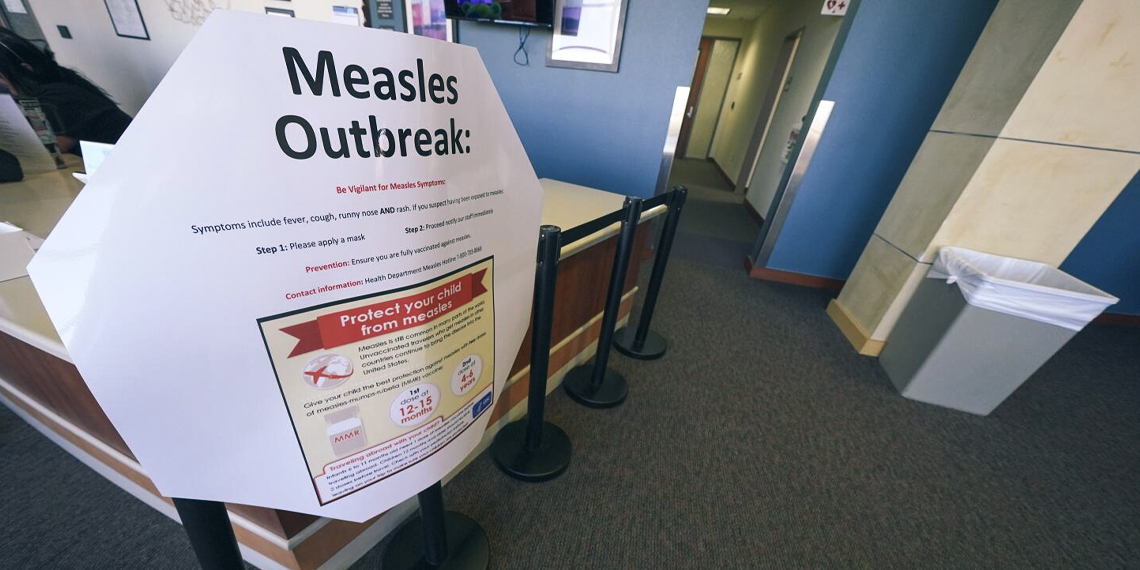
Health officials and opposition politicians are urging the Scottish Government to strengthen its efforts to promote routine childhood immunisations, particularly the combined measles, mumps and rubella (MMR) vaccine. The vaccine is widely regarded as the most effective protection against measles, a highly contagious disease that can lead to serious complications.
Recent figures from Public Health Scotland reveal a concerning drop in childhood vaccination coverage. In 2024, uptake of the first MMR dose by the age of five fell to 95.2%, the lowest rate recorded in a decade. Uptake of the second dose was even lower, at 89%. The gap in vaccination rates between the most and least deprived areas stood at 10.3 percentage points.
The United Nations recommends that 95% of the population should be immunised to prevent measles outbreaks. The NHS has consistently emphasised that receiving both doses of the MMR vaccine is the best defence against infection.
Measles typically begins with cold-like symptoms and a rash but can lead to serious complications. These may include brain swelling, permanent brain damage, blindness, severe diarrhoea and dehydration, ear infections, and potentially fatal respiratory issues such as pneumonia.
In response to rising concern, Public Health Minister Jenni Minto reaffirmed the government’s commitment to promoting childhood vaccination. She encouraged all parents and carers to ensure their children are fully immunised when invited, stressing the importance of both doses of the MMR vaccine, especially in light of growing global threats.
While childhood vaccination rates in Scotland remain relatively high overall, the recent decline has sparked renewed efforts by NHS Scotland and Public Health Scotland to raise awareness and close the immunisation gap across all communities.
