
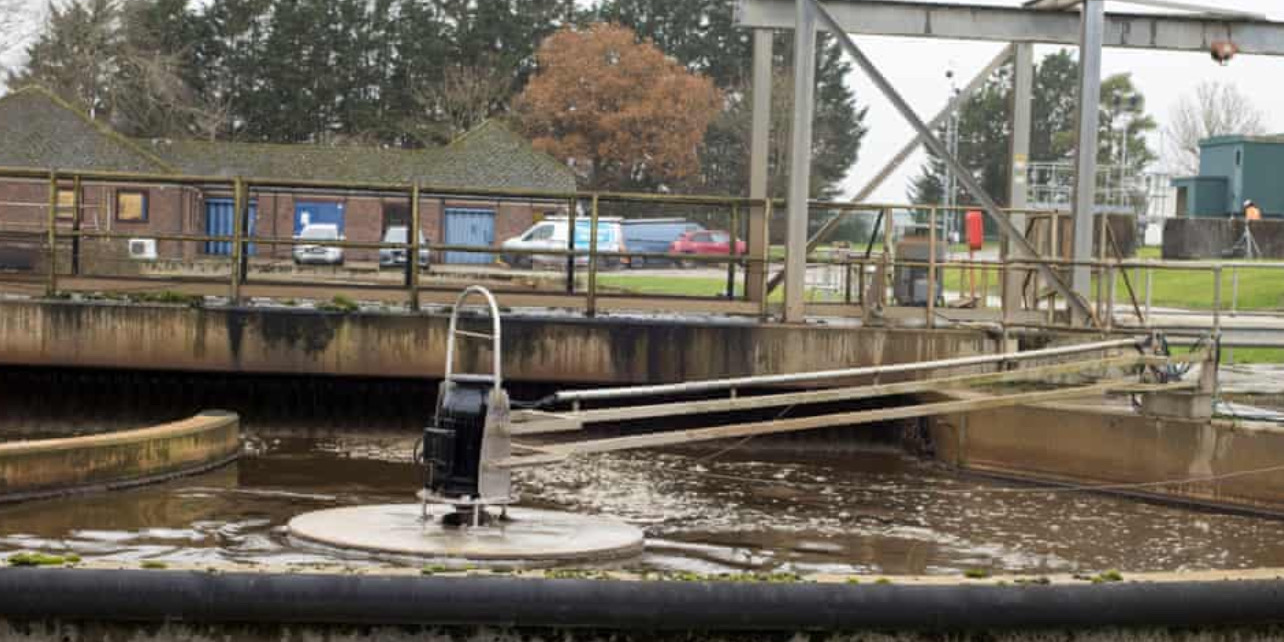
Millions of tonnes of sewage sludge containing toxic chemicals, microplastics, and hazardous waste are being spread across UK farmlands every year, under outdated regulations that experts say are failing to protect the environment and public health.
A joint investigation by The Guardian and Watershed revealed that sewage sludge, rebranded as “biosolids” by water companies, is widely applied as fertiliser despite being laden with PFAS “forever chemicals,” flame retardants, pharmaceuticals, heavy metals, and microplastics.
Although marketed as nutrient-rich, this sludge is barely monitored for hazardous substances. “It may appear as ‘black gold’ due to its nitrogen and phosphates, but it hides toxic materials like endocrine disruptors, PFAS, and pharmaceuticals,” said a water industry expert.
Sludge Spreading Across England’s Farmlands
Around 87% of the UK’s 3.6 million tonnes of sewage sludge ends up on agricultural land annually. In 2023 alone, over 768,000 tonnes were spread across 152,000 hectares. Key counties impacted include Hampshire, Lincolnshire, North Yorkshire, and Essex.
The Environment Agency (EA) revealed that about 34,000 sludge storage sites exist in England, with 33,000 located on farmland. Some of these sites are alarmingly close to rivers, raising concerns about pollution risks.
Outdated Rules, Minimal Enforcement
Current sludge regulations date back to 1989 and only require testing for a few heavy metals. Experts warn these rules are “not fit for purpose” as they ignore most modern contaminants.
Moreover, sludge-spreading is permitted under waste exemptions, requiring no environmental permit if basic conditions are met. However, enforcement is weak. “No one checks. No one cares,” said an EA insider.
Silent Pollution of Rivers and Soil
Research shows that sludge can severely contaminate the environment. Cardiff and Manchester universities estimate 31,000 to 42,000 tonnes of microplastics are spread on European farmland annually, with the UK among the worst affected.
One in 20 sludge storage sites in England is within 100 metres of a river, and more than 1,200 sites are near already polluted waters. In nitrate vulnerable zones (NVZs), where pollution risks are high, 73% of sludge sites are located.
In Scotland, a study found microplastic levels rose by 1,450% after four years of sludge spreading and remained elevated for decades.
Growing Calls for Stronger Sludge Regulations
Environmental groups and scientists are urging tougher sludge regulations. “Sludge mixes useful fertiliser with dangerous chemical residues,” said Richard Benwell of Wildlife and Countryside Link.
Professor Rupert Hough of the James Hutton Institute warned about chemicals entering the food chain, stating that current testing focuses solely on metals.
Water industry leaders argue they are constrained by limited research and costly disposal alternatives like incineration or landfilling. They are calling for coordinated action across Europe and polluter-pays policies, similar to France’s taxes on PFAS polluters.
Government Response Under Fire
The Environment Agency claims it conducted over 4,500 farm inspections last year, leading to 6,000 actions to reduce pollution. Meanwhile, the Department for Environment, Food and Rural Affairs has launched a review of the regulatory framework.
However, campaigners argue that urgent action is required to prevent farmlands from being poisoned further.