
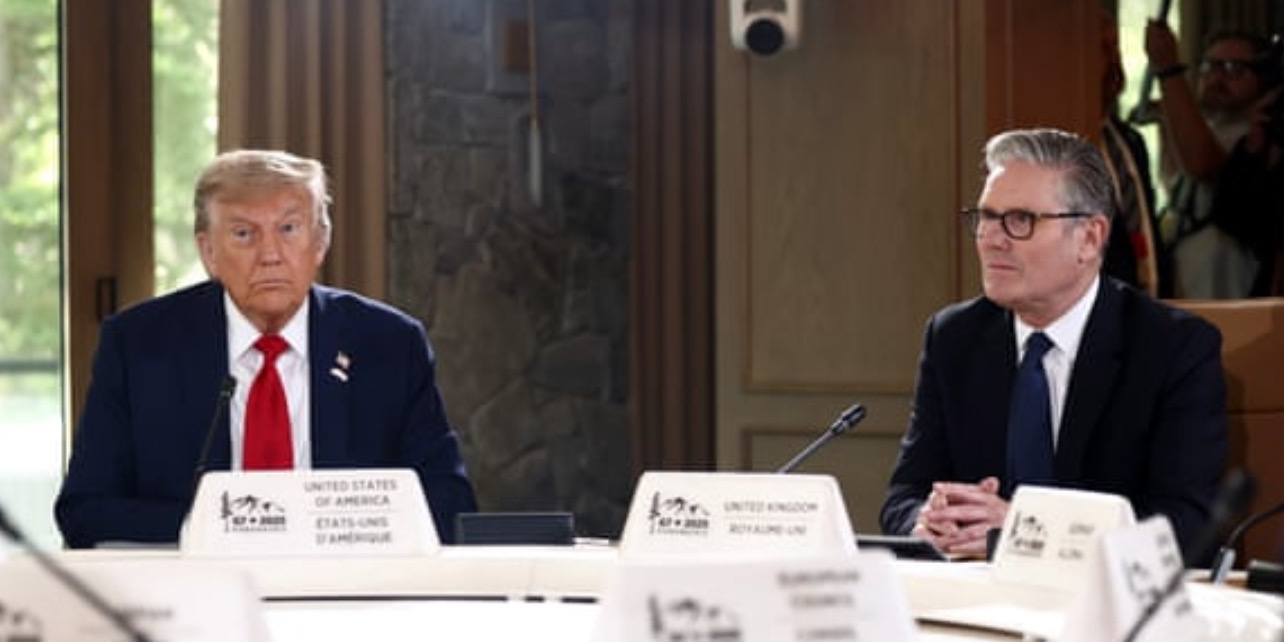
UK Labour leader Keir Starmer has thrown his support behind US airstrikes on Iranian nuclear facilities, describing Tehran’s nuclear ambitions as a “grave threat to international security”.
Sir Keir called on Iran to re-engage with diplomatic efforts following US President Donald Trump’s announcement that American forces had targeted three nuclear sites in Iran, aligning with earlier Israeli military action against the Tehran regime.
The UK was not involved in the strikes, but the government has expressed continued concern over regional stability.
Starmer, speaking on Sunday morning, reinforced the need for a diplomatic solution: “Iran’s nuclear programme is a grave threat to international security. Iran must never be permitted to develop a nuclear weapon, and the US has acted to reduce that risk. Stability in the Middle East remains critical, and we urge Iran to return to the negotiating table to avoid further escalation.”
Earlier in the week at the G7 summit, Starmer had said there was no indication the US planned military involvement, although he later warned of the “real risk of escalation” and stressed that the UK had been in close communication with Washington throughout the crisis.
UK Emphasises Diplomacy and Preparedness
Foreign Secretary David Lammy, who had recently travelled to Washington and Geneva for talks with US and European allies, also pushed for a diplomatic route before military action was taken.
Business Secretary Jonathan Reynolds confirmed the UK had not been asked to grant access to its Diego Garcia base in the Indian Ocean.
Reynolds told Sky News: “We support efforts to prevent Iran from obtaining a nuclear weapon. The UK had proposed a diplomatic pathway, which Iran rejected. While the UK was not part of these strikes, we are prepared for all outcomes, including evacuation plans for British nationals and protection of UK personnel and infrastructure.”
He added that the Iranian regime still posed a “clear and present threat” to the UK, but clarified that regime change was not Britain’s objective.
“This is not a repeat of Iraq. Our priority is regional stability, and that can only be achieved if Iran acknowledges it cannot be trusted with nuclear capabilities.”
Iran Vows Retaliation as Tensions Escalate
In a fiery response, Iran’s ambassador to the UK, Seyed Ali Mousavi, said Tehran is assessing the “quantity and quality” of its retaliation. He refused to confirm whether Iran would cease missile attacks on Israel, maintaining it had a sovereign right to self-defence.
He also dismissed claims that Iran is a threat to Britain, despite MI5 recently linking the regime to over 20 plots within the UK.
Israeli President Isaac Herzog welcomed the US action, stating it targeted critical infrastructure linked to Iran’s nuclear programme.
“The Iranian programme has been dealt a significant blow, though the full details remain classified.”
President Trump, addressing the American public from the White House, warned Iran against retaliation, stating:
“There will either be peace, or there will be tragedy for Iran.”
In retaliation, Iran launched a ballistic missile barrage against Israel overnight, heightening fears of a broader regional war.
British Political Leaders Respond
Conservative leader Kemi Badenoch described the US strike as a “decisive action” against a regime that “fuels global terror and directly threatens the UK.” She noted that Iranian agents have previously plotted attacks on British soil and called for strong alignment with the US and Israel.
Reform UK leader Nigel Farage also backed the US intervention, declaring: “Iran must never be allowed to develop nuclear weapons. Israel’s survival depends on it.”
As the situation in the Middle East grows increasingly volatile, the UK government continues to monitor developments and prepare for any fallout that could impact British citizens or national security.
