
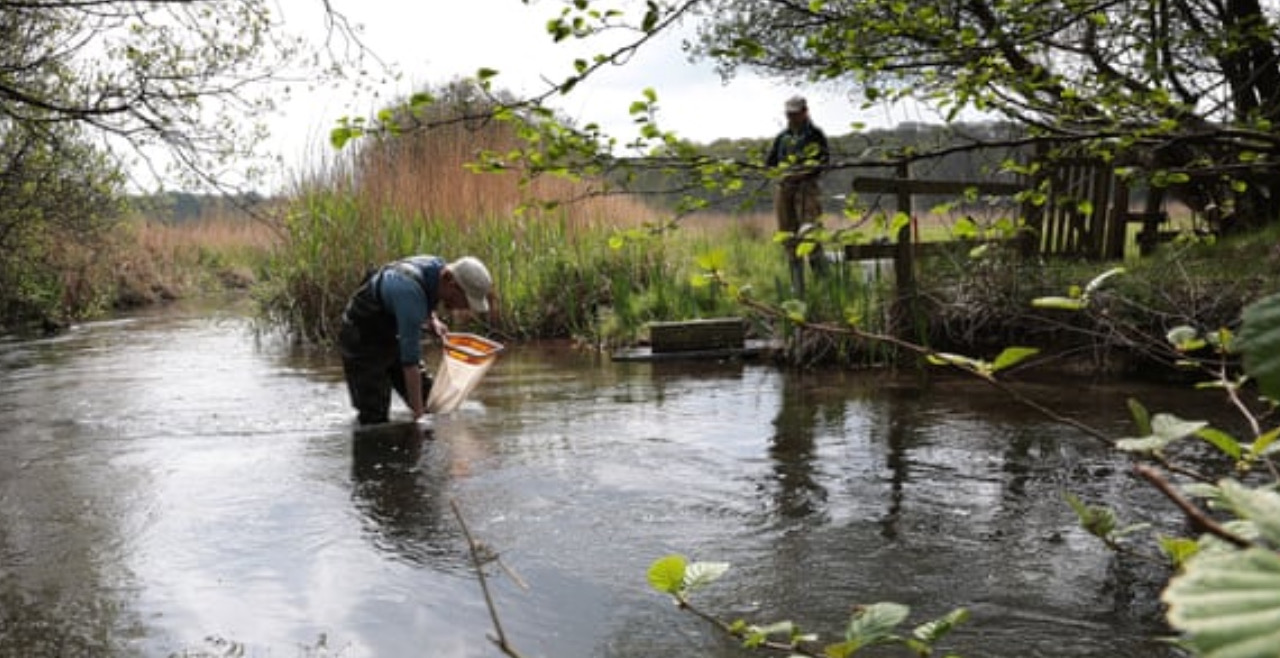
Water abstraction from England’s rivers has soared to historic highs, triggering alarm among conservationists and environmental groups over the severe threats posed to wildlife and ecosystems.
A joint investigation by Watershed Investigations and The Guardian has revealed that water extraction from rivers and lakes for industrial and public use has surged by 76% over the past two decades.
Between 2018 and 2023, 11.6 million cubic metres of water were taken annually—up from 6.6 million cubic metres in the early 2000s.
Water abstraction—the licensed removal of water from natural sources including rivers, lakes, aquifers, and tidal areas—is regulated by the Environment Agency in England and Natural Resources Wales. Any entity using more than 20 cubic metres daily must obtain a permit, which limits the amount that can be taken.
Currently, 61% of all abstracted water in England comes directly from rivers, compared to less than 40% at the start of the century.
Groundwater use has also climbed dramatically, up by 53% since 2018, while reliance on tidal water sources has dropped sharply—from nearly 50% of total abstraction to just over 25%.
Nick Measham, CEO of environmental charity WildFish, warned: “Our rivers are in crisis. We’re increasing demand when water levels are already perilously low. Even when rain does return, the runoff is often polluted, further degrading river habitats for fish, birds, and plant life.”
Although some of the rise in water use is due to long-standing activities being newly regulated, critics argue that even non-consumptive uses—such as hydropower or cooling for power stations—can damage river ecosystems. Water is lost during the process, and what is returned may be contaminated.
Over the last decade, the total volume of water licensed for abstraction from rivers and lakes has grown by 6%, now reaching 27 billion cubic metres annually. Conversely, permitted extraction from groundwater and tidal sources has decreased by 4% and 42% respectively.
One contentious site is Catfield Fen in Norfolk, where the Environment Agency has faced legal action over water extraction linked to farming. Conservationists fear that increased abstraction is pushing this sensitive wetland to the brink.
The Environment Agency has repeatedly warned that, without urgent action, England will face a water supply shortfall of 6 billion litres per day by 2055—5 billion for domestic use and 1 billion for farming and industry.
Much of this gap, officials say, must be addressed by reducing usage and fixing leaks. Shockingly, water companies still lose around 3 billion litres daily—about 19% of total supply—through outdated and damaged infrastructure.
Experts say that a lack of long-term planning is to blame. “We should have been building new reservoirs a decade ago,” one water industry insider noted, citing a lack of political will.
During droughts, water companies plan to abstract even more from rivers—exactly when they are most ecologically fragile.
Measham added: “The failure to plan ahead has been catastrophic. Once thriving ecosystems now face collapse, leaving behind dry, polluted riverbeds devoid of life.”
The impact is already visible on the River Itchen, one of England’s most iconic chalk streams. In 2022 and 2024, the number of adult salmon returning to spawn plummeted to record lows—just 133 and 187 fish respectively. Experts fear that one more drought could push the endangered species to extinction in the area.
Janina Gray of WildFish concluded: “It’s the rivers and their wildlife paying the ultimate price for our inaction. Without urgent reform, we risk losing these vital ecosystems forever.”
