
Oil and gold prices surged sharply while global stock markets tumbled following Israel’s military strikes on targets in Iran, fueling fears of a wider Middle East conflict.
The renewed instability in one of the world’s most vital oil-producing regions triggered a spike in Brent crude, which climbed over 10% in early trading—its highest level since January—before easing slightly to a 5.5% rise at \$73.12 per barrel. This marked the largest daily increase in oil prices since 2022.
London’s FTSE 100, which had closed at a record high just a day earlier, dropped 50 points at the open, as the impact of geopolitical risk rippled across sectors.
Airlines were hit particularly hard, with British Airways owner IAG and budget carrier easyJet both falling more than 4%, as airspace over the Middle East was rapidly cleared. Meanwhile, investors shifted towards safer assets, boosting gold prices and strengthening currencies like the Swiss franc and Japanese yen.
BAE Systems led the FTSE 100 risers with a 3% gain, driven by heightened defence concerns. Oil giants BP and Shell also saw gains of around 2% amid expectations of supply disruptions.
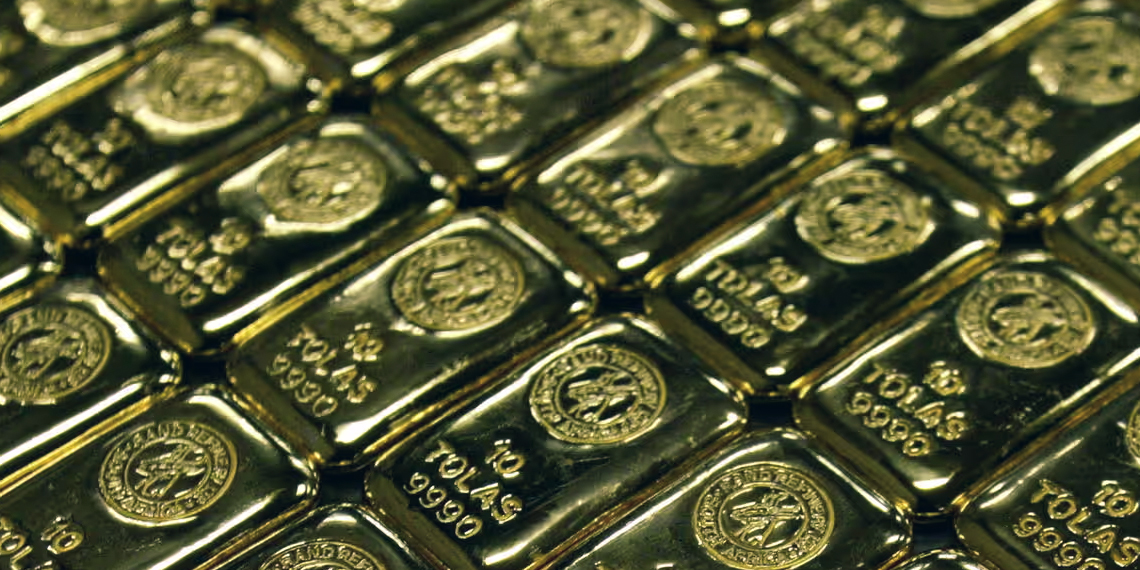
Gold rose by 1.5%, reaching \$34,434 (£25,388) an ounce—close to its all-time high in April. The Swiss franc and yen both appreciated by 0.4% against the US dollar.
Charu Chanana, chief investment strategist at Saxo, noted the situation added a fresh wave of uncertainty to already fragile global sentiment.
Stock markets across Asia were rattled, with Japan’s Nikkei falling 1.3%, South Korea’s Kospi down 1.1%, and Hong Kong’s Hang Seng slipping 0.8%. European indices in Germany, France, Italy, and Spain all dropped over 1%, while pan-European Stoxx 50 futures declined by 1.6%. US markets also braced for losses, with S\&P and Nasdaq futures down by 1.7% and 1.8% respectively.
The Israeli government declared a state of emergency following the strikes, which it described as a pre-emptive response to Iran’s nuclear ambitions. In retaliation, Tehran reportedly launched 100 drones toward Israel.
US Secretary of State Marco Rubio referred to Israel’s actions as a “unilateral strike,” confirming that the US was not directly involved.
Investor nerves led to a rush toward US Treasuries, pushing the yield on 10-year notes to a one-month low of 4.31%. Meanwhile, the US dollar index climbed 0.5%, while the euro dipped 0.4% and sterling lost 0.5%.
Derren Nathan, head of equity research at Hargreaves Lansdown, highlighted concerns not just about Iranian oil exports, but also potential disruptions in the Strait of Hormuz, a strategic chokepoint responsible for 20% of the world’s oil supply and a major hub for liquefied natural gas shipments.
Jochen Stanzl, chief market analyst at CMC Markets, said the combination of war risks and global trade tensions had triggered a widespread shift away from risk. He warned that equities could remain under pressure while gold pushes towards record territory.
