
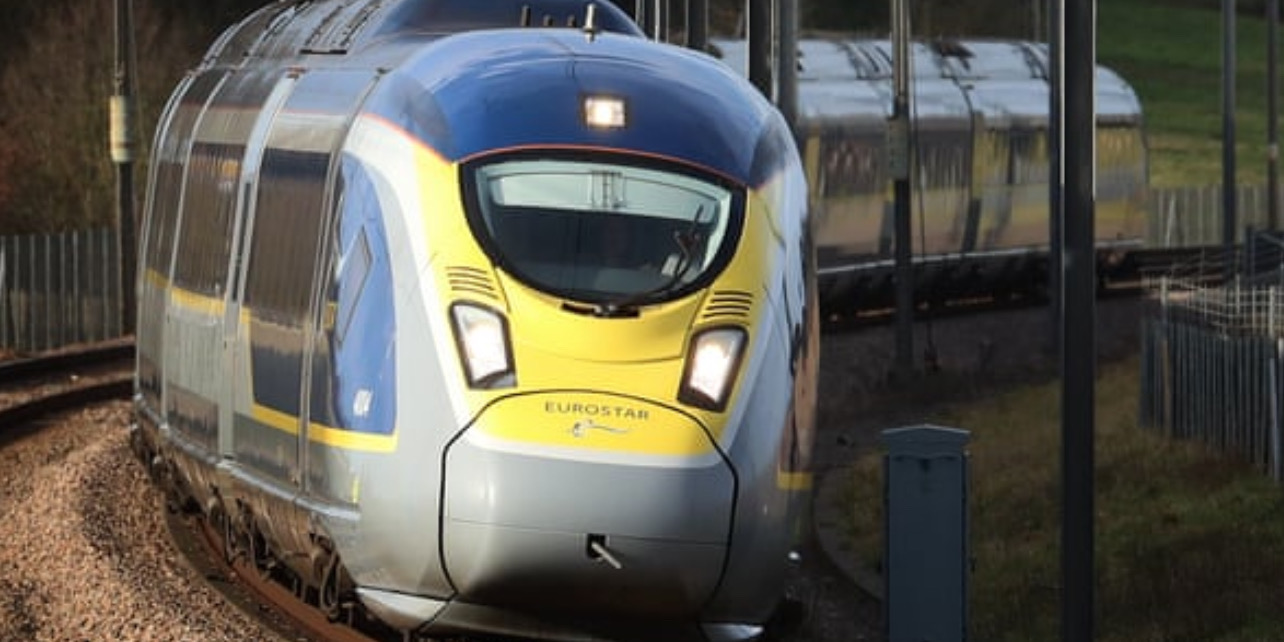
Eurostar has committed to launching direct high-speed rail services from London to Germany and Switzerland by the early 2030s, in a bold move to secure its dominance as new competitors eye its operational base in East London.
The cross-Channel train operator’s chief executive, Gwendoline Cazenave, expressed firm confidence that routes to Frankfurt and Geneva would become a reality within the next decade, despite earlier attempts to connect London with Frankfurt having failed.
According to Eurostar, conditions are now “finally right” for a fresh era of international sustainable rail travel. The firm has reiterated plans to invest in up to 50 next-generation trains as part of its long-term growth strategy.
Eurostar saw a 5% rise in total passenger numbers in 2024, but its monopoly on services between the UK and continental Europe is under pressure.
New entrants – including Virgin Group, Gemini Trains, and a joint venture between Italy’s FS and Spain’s Evolyn – are all vying for a foothold in the lucrative cross-Channel rail market.
However, the UK’s rail regulator, the Office of Rail and Road (ORR), has stated that London has space at the Temple Mills depot for just one additional operator – or for Eurostar’s planned expansion. A final decision on the depot’s allocation is expected later this year, after all parties submit their proposals.
Eurostar maintains there is no spare capacity at the depot if its own plans proceed and has suggested it is open to funding a new facility – but has urged the government to outline a clear national policy to support the future of international rail services.
The proposed direct services would cut travel times to approximately five hours from London to Frankfurt and just over five hours to Geneva. Eurostar says high passenger volumes on these air routes demonstrate strong demand, with many now seeking greener alternatives to flying.
The next generation of Eurostar trains will be equipped to manage complex cross-border systems, paving the way for longer international routes. Nonetheless, the firm acknowledges that establishing new services will require overcoming significant logistical challenges – including the implementation of border controls, upgraded station facilities, and the securing of train paths within congested timetables.
Cazenave, speaking to the PA news agency, expressed certainty that the services would go ahead due to the shared commitment from passengers, governments and Eurostar itself.
Last month, the UK and Switzerland signed a memorandum of understanding to explore direct train links between the two nations.
Eurostar reported a 2% rise in annual revenue for 2024, reaching €2 billion (£1.7 billion), with passenger numbers across its European network – spanning France, Belgium, the Netherlands and Germany – hitting 19.5 million.
The company has yet to finalise a manufacturer for its planned €2 billion fleet upgrade.
In addition, Eurostar has confirmed an increase in the frequency of its London–Amsterdam services following the completion of station upgrades in the Dutch capital. A fourth daily return journey will begin on 9 September 2025, with a fifth service to launch in mid-December.
