
Rachel Reeves could be compelled to introduce tax increases or implement spending cuts worth up to £30 billion to fulfil UK Labour’s pledge to bolster defence funding, a leading economist has warned.
Labour has committed to raising defence expenditure to 2.5% of GDP by 2027, with an aspirational – though not binding – goal to push it to 3% during the next parliament, expected post-2029.
However, pressure is mounting internationally, as NATO allies call for a more ambitious spending benchmark. NATO’s incoming Secretary-General Mark Rutte has urged member states to prepare for a “dramatic increase” in defence funding, with discussions reportedly already under way around a potential 5% target, as previously advocated by Donald Trump.
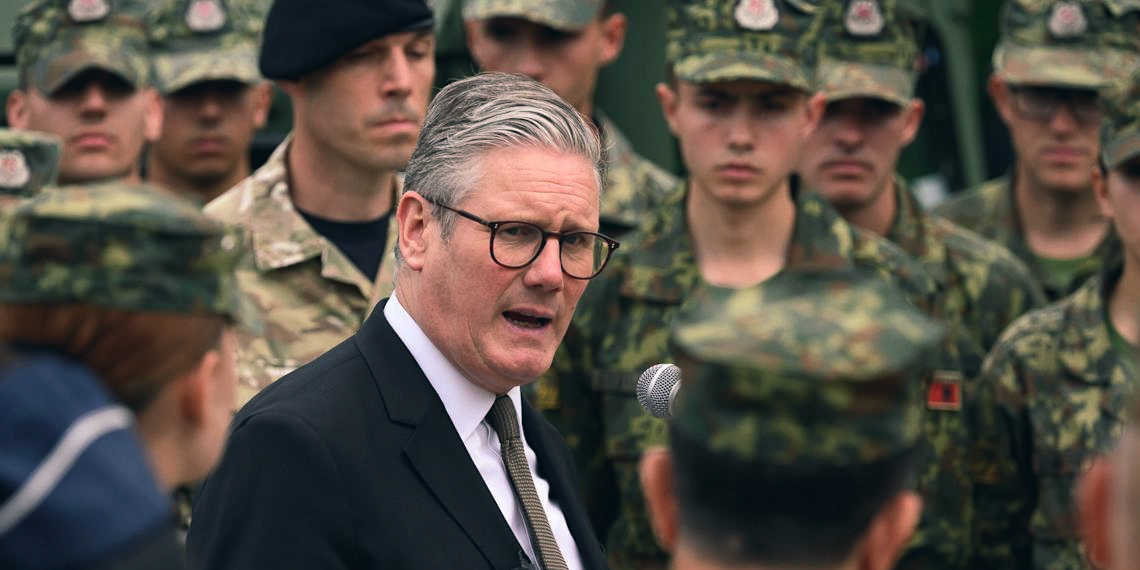
Labour leader Sir Keir Starmer this week vowed to transform Britain into a “battle-ready, armour-clad nation”, unveiling a long-awaited strategic defence review.
The review outlined major enhancements to the UK’s military capabilities, largely based on Labour’s existing spending commitments. However, it also warned that current global instability may necessitate accelerating defence investment timelines.
Michael Saunders, a senior economic adviser at Oxford Economics, said the government could take initial steps towards higher military spending in the upcoming autumn Budget.
“To chart a more credible course towards defence expenditure well above 3% of GDP in the next decade, the Chancellor may feel compelled to increase spending within the current five-year forecast window,” he told The Telegraph.
Mr Saunders added there could be a need for “fiscal tightening” in the region of £15–30 billion, which could only be achieved via significant tax hikes or deep cuts to other public services.
Paul Johnson, director of the Institute for Fiscal Studies (IFS), also voiced concern, telling Times Radio that there is no viable route to boosting defence spending without “chunky tax rises”.
He stressed the government must make hard choices, as other areas of public expenditure remain under pressure.
The IFS estimates that reaching the 3% of GDP defence spending target by 2030 would require an additional £17 billion, which is currently unaccounted for.
Sir Keir Starmer has previously stated that the 2.5% commitment alone would equate to an extra £13.4 billion annually from 2027.
Projections from the Office for Budget Responsibility suggest that hitting the 3% mark in 2029–30 would entail a further £17.3 billion in spending.
Liberal Democrat defence spokesperson Helen Maguire expressed alarm during a Commons debate, saying: “It is staggering that we still don’t have an answer to the vital question: where is the money coming from? The government has flip-flopped repeatedly on the 3% target.”
When pressed on the issue in Parliament, Defence Secretary John Healey did not rule out future tax rises, asserting he was “100% confident” that the 3% target would be achieved – though he failed to clarify how it would be funded.
Meanwhile, defence sources suggest the UK could be pushed to commit to a 3.5% target by 2035 at the upcoming NATO summit, in a move aimed at satisfying Washington’s growing demands for higher European defence contributions.
