
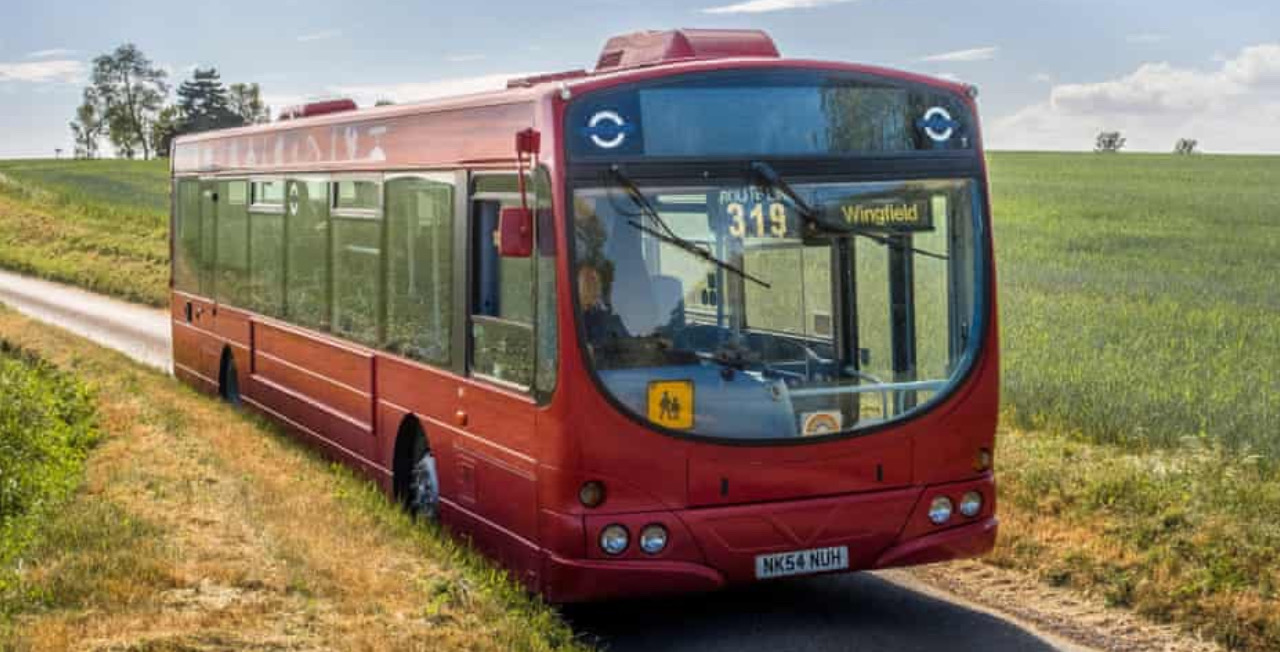
Rural bus services in England have declined by nearly a fifth over the past five years, according to new analysis, despite repeated government pledges to improve public transport across the country. The findings raise fresh concerns about transport inequality between rural and urban areas.
Analysis from the County Councils Network (CCN), which represents England’s local county authorities, reveals that rural areas have seen an 18% reduction in bus routes between 2019 and 2024. In contrast, urban regions, which already enjoy more extensive services, received nearly double the per capita funding.
The funding disparity is significant. Residents in county areas received an average of £31 per person under the government’s Bus Service Improvement Plan, compared to £58 per person in cities and large towns. The original promise of £3bn in funding, made under former Prime Minister Boris Johnson’s “Bus Back Better” strategy in 2021, was ultimately reduced to £2.1bn, with a large portion redirected for Covid-19 support.
Rural Areas Left Behind
Local councils argue that the decline in rural bus services is worsening transport poverty in less connected regions. Cllr Peter Thornton, the CCN’s transport spokesperson, said counties are “swimming against the tide” as funding favours areas already well-served by frequent and modern bus networks.
“In some cases, county areas have received up to eight times less funding than major cities,” Thornton stated. “Yet for rural residents, buses are not a luxury – they’re a vital lifeline.”
Despite efforts to reform the sector – including proposals by the Labour government to expand franchising powers nationwide – the CCN insists that without increased core funding, rural bus networks will continue to shrink.
Call for £1 Billion Boost in Annual Funding
Campaign for Better Transport estimates that four in ten council wards across England and Wales lack adequate bus service levels. Its chief executive, Ben Plowden, said that investing an extra £1bn annually could transform access to buses, tackle social exclusion, and stimulate local economies.
“Spending just half a percent of the NHS budget on buses would be a game-changer for communities and the national economy,” Plowden said.
Government Response and Future Measures
A spokesperson for the Department for Transport acknowledged the vital role buses play, especially in rural and underserved areas. They confirmed that the upcoming Buses Bill will introduce new protections and help improve services nationwide, with a focus on affordability and access.
However, county councils continue to urge for more equitable funding, warning that without a significant shift in government policy, rural England will remain at a disadvantage.
