
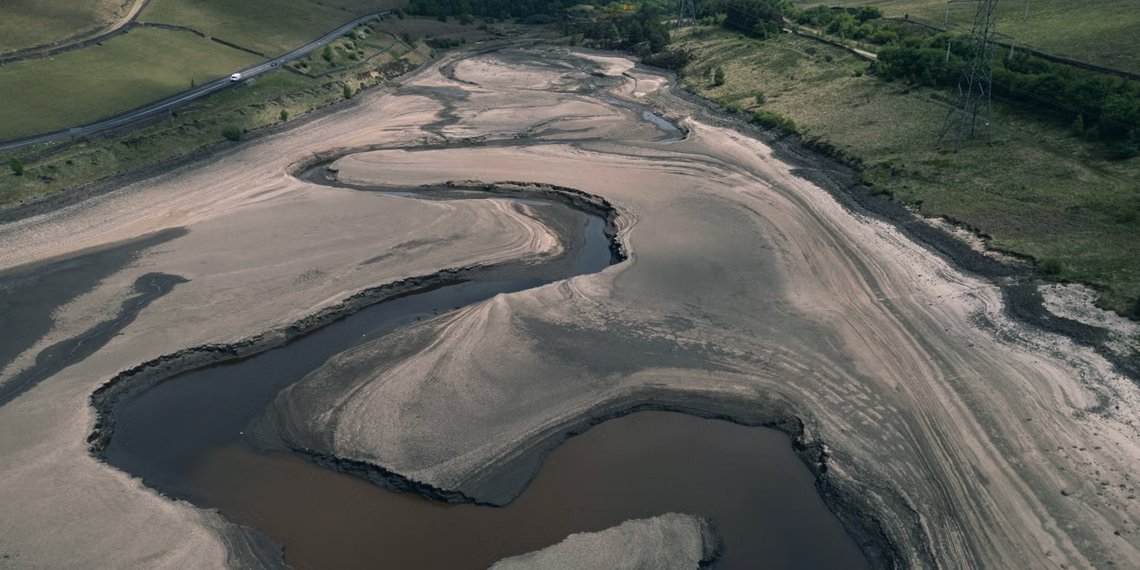
A drought has officially been declared in North West England after an exceptionally dry spring pushed reservoir and river levels to critical lows, according to the Environment Agency.
The region entered drought status on 21 May, just days after residents were urged to cut back on water usage. Reservoir levels have fallen below 60 percent capacity across the North West, raising concerns over future water availability as temperatures are forecast to rise again this week.
Earlier this month, prior to a brief period of rainfall, the Environment Agency reported that both the North West and North East had experienced their driest start to the year since 1929. Nationally, England endured its driest February to April period since 1956.
At the same time, the UK recorded its sunniest spring since 1910, logging over 630 hours of sunshine between March and late May—markedly up from just 377 hours during the same period last year.
This prolonged dry spell follows what had been the wettest 12 months on record in England between October 2023 and September 2024, which caused significant flooding and damage to farmland. Experts say these dramatic swings between extreme wet and dry conditions are a clear sign of climate change’s increasing influence on the UK’s weather patterns.
As of the end of April, overall reservoir storage across England stood at 84 percent, already lower than during the drought-hit summer of 2022. In the North West, United Utilities reported reservoir levels of just 58.9 percent—down from more than 90 percent this time last year.
The company has urged residents to continue conserving water and recycling where possible, while using its network to redistribute supplies and bring in water from other areas.
Although the company has not confirmed whether hosepipe bans are imminent, such measures are outlined in its Level 2 drought contingency plans.
Meanwhile, the Environment Secretary Steve Reed has taken control of planning two key reservoir projects in East Anglia and Lincolnshire by designating them as “nationally significant”. This move underscores rising concerns about the UK’s long-term water security, as officials warn that without new infrastructure, water demand may exceed supply by the mid-2030s.
Water shortages are already affecting new housing developments in areas like Cambridge. To address future supply challenges, water companies have committed to building nine new reservoirs by 2050 across regions including Lincolnshire, Cambridgeshire, Oxfordshire, Suffolk, Kent, East Sussex, the West Midlands and Somerset.
These projects aim to deliver an additional 670 million litres of water per day to support population growth and climate resilience.
