
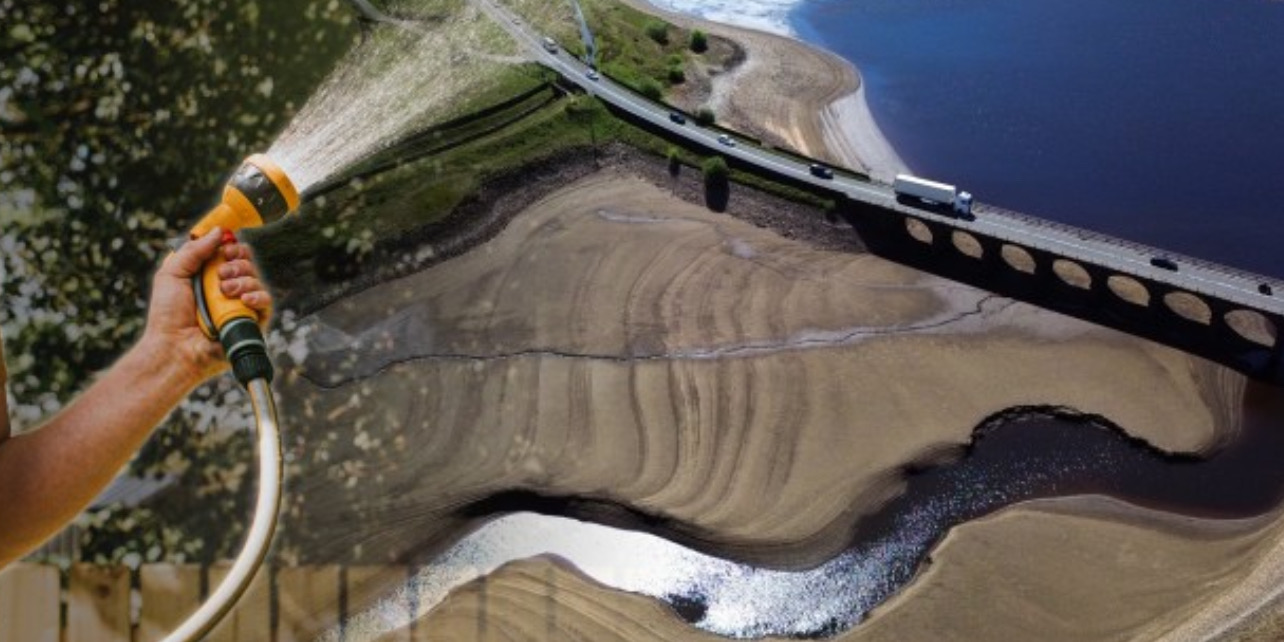
Millions of people across the UK could face water restrictions this summer as the country prepares for the possibility of drought conditions.
Thames Water, which supplies around 16 million customers, has confirmed it is taking urgent steps to prevent shortages amid a warning from the Environment Agency (EA).
Following one of the driest springs in nearly seven decades, experts say the UK could be on track for drought if sustained rainfall does not return soon.
March 2025 was the driest since 1961, and April saw only about half its usual rainfall levels, raising concerns about water availability heading into the summer.
Although no official drought has yet been declared in any region, the Environment Agency has classified the risk as medium for the months ahead. Water providers, including Thames Water, are preparing their infrastructure and operational plans to ensure supplies remain stable, but have not ruled out the possibility of temporary restrictions such as hosepipe bans.
Thames Water’s chief executive, Chris Weston, who took the helm last year, told MPs that the company narrowly avoided running out of water during the 2022 heatwave. Since then, the utility has made significant efforts to boost its drought resilience by ensuring reservoir levels are high, maintaining critical infrastructure, and preparing its assets for high summer demand.
The Environment Agency is also working with farmers to ensure crops can continue to be irrigated if conditions worsen.
While water companies have not yet announced any summer usage bans, they are closely monitoring conditions and may introduce restrictions if rainfall remains low.
The government has acknowledged that the UK’s water infrastructure has suffered from long-term underinvestment. In response, it has secured over £104 billion in private investment to upgrade critical assets, including the development of nine new reservoirs aimed at futureproofing the nation’s water supply.
Thames Water has faced growing scrutiny amid financial pressures and leadership changes. The company, currently carrying around £16 billion in debt, recently received a £3 billion bailout to maintain operations. Weston, who is the fifth CEO in five years, has defended receiving a £195,000 bonus just three months into the job, stating he made early progress in stabilising the company.
With water supplies under strain and infrastructure in urgent need of improvement, the UK may soon need to balance immediate drought responses with long-term investment to protect future generations.
