
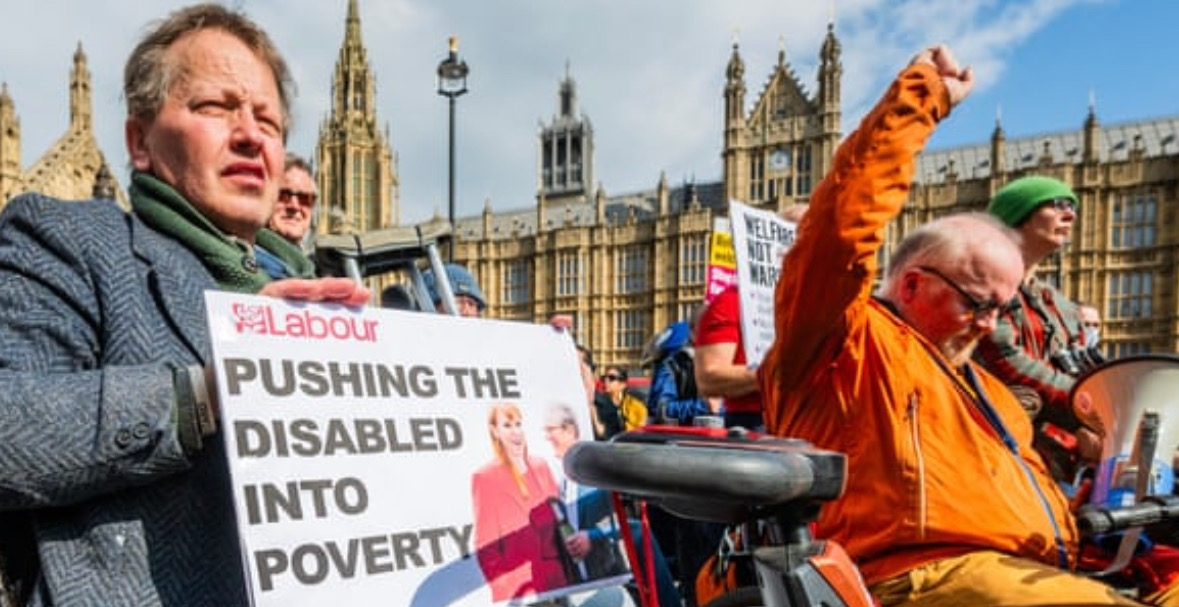
New UK government figures reveal that 700,000 families already living in poverty will be impacted by the forthcoming disability benefit cuts, intensifying concern among campaigners and MPs.
The forecasts, disclosed under the Freedom of Information Act and analysed by The Guardian, relate to planned changes to Personal Independence Payments (PIP) and other disability benefits, due to take effect by 2029/30.
In addition to these 700,000 households, another 250,000 individuals are expected to be pushed below the poverty line as a direct result of the cuts, according to a Department for Work and Pensions (DWP) impact assessment published in March.
Campaigners have described the revelations as “truly shocking”, warning that the cuts will push disabled people further from the workforce and deeper into hardship. The DWP estimates a total of 3.2 million families across Britain will be financially affected.
Changes to PIP Raise Alarms
The most controversial aspect of the reform is a tightening of eligibility criteria for PIP. Under the new rules, applicants must score at least four points in one “daily living” criterion—meaning many with significant difficulties, including those unable to wash themselves below the waist, may no longer qualify for support.
Existing claimants will not be immediately impacted, but the new rules will apply to future reassessments and new applicants.
Families losing this support could see their income fall by an average of £4,500 annually. Among those affected are an estimated 50,000 families with children.
Wider Political and Social Fallout
Labour MPs have expressed mounting concern ahead of the vote on the proposed legislation, expected next month. Critics argue that the cuts echo past Conservative-led austerity policies and risk becoming a politically explosive issue for Labour leadership, with some campaigners likening it to “Starmer’s poll tax”.
Mark Harrison of Disabled People Against Cuts called the proposals “unthinkable”, accusing Shadow Chancellor Rachel Reeves and Shadow Work and Pensions Secretary Liz Kendall of perpetuating harmful narratives against disabled people.
“This is bad politics and worse policy,” he said. “If these cuts go ahead, it could spell disaster for Keir Starmer’s credibility.”
Supporters Say Broader Reforms Offer Offsets
A government spokesperson defended the changes, saying the reforms aim to build a fairer, more sustainable welfare system. “More than 2 million families in relative poverty will be better off under our reforms,” the spokesperson said.
The government has pledged a £1 billion investment in tailored employment support for disabled people, although no clear estimate has yet been provided for how many will secure jobs as a result.
A simultaneous increase in the standard rate of Universal Credit is also expected to benefit 2.4 million low-income families—mostly non-disabled—by an average of £400 annually above inflation.
Backlash from Rights Groups
Rights organisations have slammed the approach. Katie Schmuecker of the Joseph Rowntree Foundation warned that the cuts will increase food bank reliance among disabled people already struggling to meet basic needs.
Svetlana Kotova of Inclusion London added: “Poverty costs money and places further pressure on services like the NHS. These cuts may save the government very little in the long term while causing immense suffering.”
Notably, the 700,000 figure does not account for those set to lose carer’s allowance if the individuals they support no longer qualify for PIP.
