
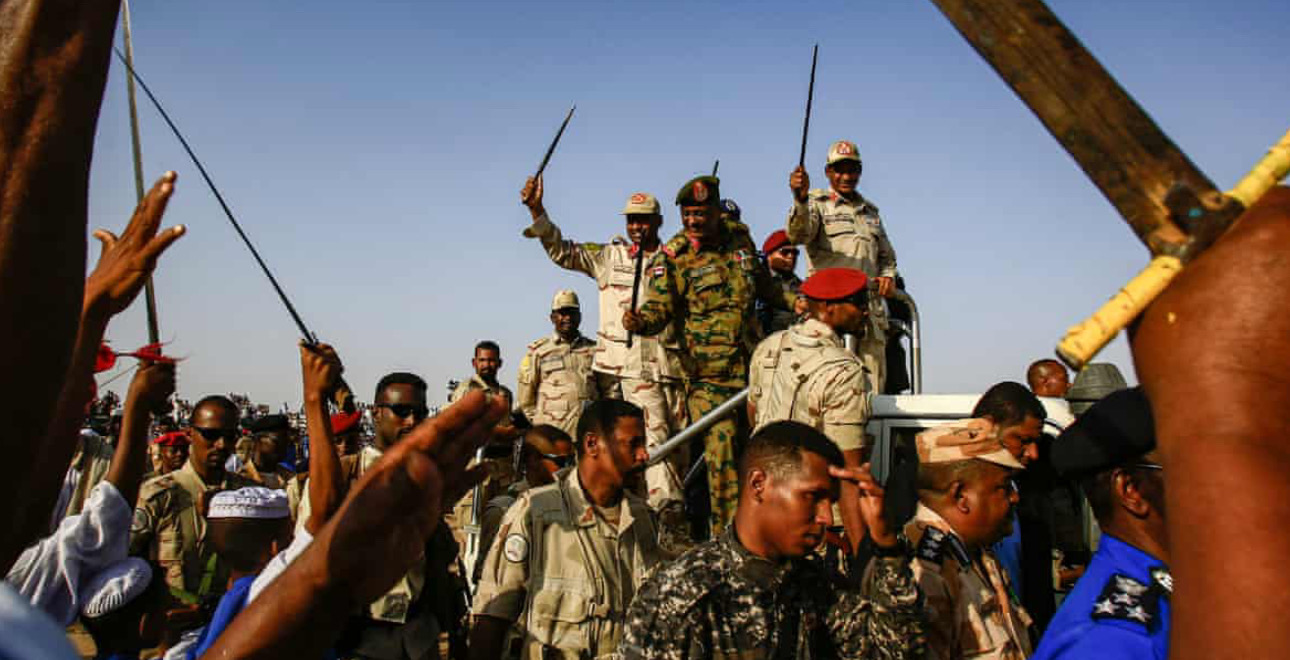
The UK has imposed sanctions on four senior commanders of Sudan’s Rapid Support Forces (RSF) accused of involvement in “heinous” atrocities committed against civilians in El Fasher—yet it has stopped short of taking action against the group’s powerful backer, the United Arab Emirates, or RSF leader Mohamed Hamdan Dagalo, known as Hemedti.
British officials said they preferred to use diplomatic leverage privately with both the UAE and Hemedti, although they acknowledged that efforts to secure a ceasefire in Sudan’s nearly three-year civil war have shown little progress. There are also growing fears that the conflict could spill into South Sudan and Eritrea, with diplomats warning that tensions between the UAE and Saudi Arabia—already visible in southern Yemen—could further destabilise Sudan.
According to the UK government, as many as 26 potential arms supply routes into Sudan have been identified, involving 10 countries. While Saudi Arabia and Egypt are broadly aligned with Sudan’s army, the RSF has been widely linked to UAE support, despite denials from Abu Dhabi. UN reports and independent investigations have repeatedly documented the alleged Emirati role.
The war between the Sudanese army and the RSF, which erupted in April 2023, has created what the UN calls the world’s worst humanitarian crisis. After an 18-month siege of El Fasher, the RSF captured the city on 26 October, leaving communities across Darfur facing famine, mass displacement and widespread violence.
The sanctions target Abdul Rahim Hamdan Dagalo, the RSF’s deputy commander and Hemedti’s brother, along with three other senior officers. All four face asset freezes and travel bans. Officials said the decision was supported by clear evidence, including videos in which some leaders appeared to glorify the killings.
The additional RSF commanders sanctioned are:
• Gedo Hamdan Ahmed, RSF commander for North Darfur
• Al-Fateh Abdullah Idris, RSF brigadier general
• Tijani Ibrahim Moussa Mohamed, RSF field commander
All four were also sanctioned by the EU last week. The UK hinted that more designations may follow, depending on how the RSF uses its current military advantage.
In a statement, the Foreign Office said the commanders were “suspected of atrocities including mass killings, sexual violence and deliberate attacks on civilians in El Fasher, Sudan”.
There is no official death toll, but British MPs have been briefed that at least 60,000 people may have been killed since the RSF took control of the city.
The UK has announced an additional £20m in aid to support food, healthcare, emergency shelter and hospital operations for 150,000 people. This brings total UK aid commitments to Sudan this year to £146m.
Foreign secretary Yvette Cooper condemned the violence, stating: “The atrocities taking place in Sudan are so horrific they scar the conscience of the world. The overwhelming evidence of heinous crimes – mass executions, starvation and the systematic and calculated use of rape as a weapon of war – cannot and will not go unpunished. The UK will not look away, and we will always stand with the people of Sudan.”
The measures have been welcomed by members of the Darfur diaspora in the UK, many of whom lost family members during RSF attacks. However, there is frustration over the government’s decision not to sanction the UAE.
Abdallah Abu Garda, chair of the UK-based Darfur Diaspora Association, said: “The UK’s sanctions on senior RSF commanders are a vital step toward justice. But ending atrocity crimes in Sudan and the genocide in Darfur requires more. All supply lines that fuel these atrocities, including those enabled by the UAE, must be cut.
“True justice demands that every party, whether a direct perpetrator or an external sponsor, faces real consequences.”
Last week, the UN Human Rights Council adopted a UK-led resolution condemning the atrocities in Sudan and mandating an urgent international inquiry into the events in El Fasher.
