
Official figures show the UK economy shrank by 0.1 per cent in October, matching the 0.1 per cent decline recorded in September.
Many economists had expected modest growth of 0.1 per cent, anticipating a manufacturing rebound as Jaguar Land Rover recovered from a major cyberattack.
However, the Office for National Statistics (ONS) said car manufacturing had only made a “slight” recovery, while the services sector was weighed down by consumers delaying spending ahead of the 26 November Budget.
The latest data means the economy has not grown since June, with GDP flat or falling for four consecutive months.
In Scotland, industry leaders urged ministers to cut business rates in next month’s Budget to help struggling firms cope with rising costs.
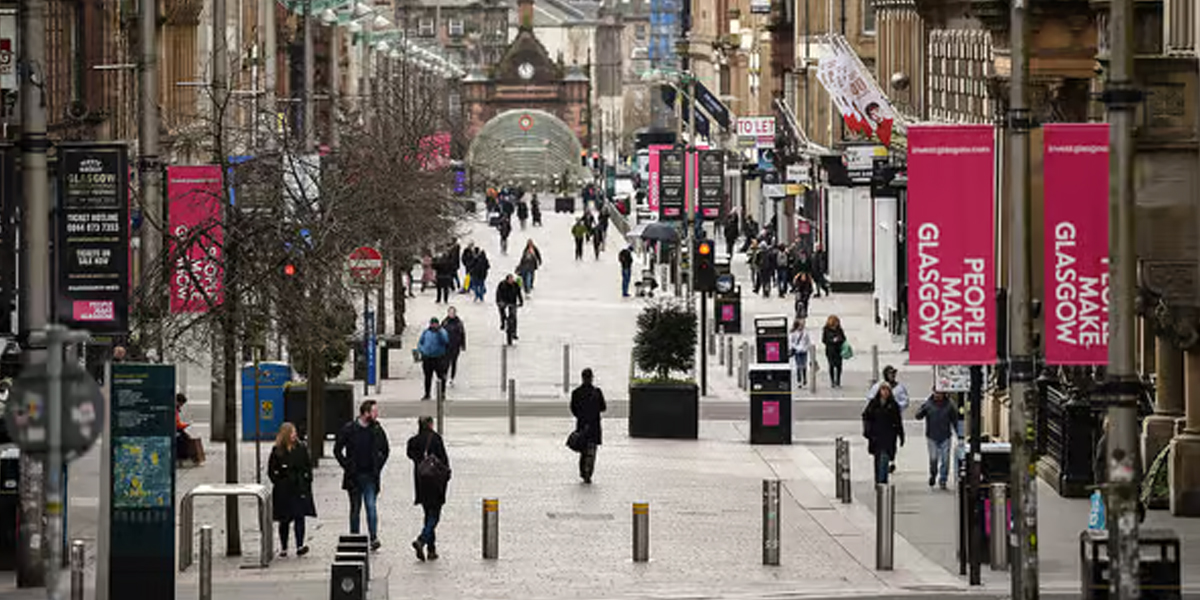
David Lonsdale, Director of the Scottish Retail Consortium, warned: “The economy remains in something of a funk with growth forecasts for the new few years underwhelming. Scotland’s retailers are straining to trade profitably against a backdrop of flatlining retail sales, flaccid levels of shopper footfall, and faltering consumer confidence.”
He stressed that without a business rates discount at least matching England’s new lower rate, “it will be a long winter for Scotland’s shopkeepers”.
Guy Hinks, Chair of the Federation of Small Businesses Scotland, said conditions were dire: “Almost one in three small businesses in Scotland tell us they expect to shrink, shut down or sell up in the coming year, with fewer than one in five predicting growth.”
He added that with £820 million extra from the UK Budget and no need to fund mitigation for the two-child benefit cap, Holyrood now had “a golden opportunity” to help revitalise high streets by lowering business rates for sectors such as retail, hospitality and leisure.
Rachel Reeves faced additional scrutiny earlier this week after complaining about “too many leaks” in the days leading up to the Budget.
Shadow chancellor Sir Mel Stride said the GDP fall was “a direct result of Labour’s economic mismanagement”, claiming Reeves had “misled the British public” about taxes and the state of the public finances.
The SNP also criticised Labour’s handling of the economy. Economy spokesperson Dave Doogan said: “Broken, Brexit Britain is lurching from crisis to crisis… our future lies in rejoining our neighbours in the EU and building a prosperous, modern country through a fresh start with independence.”
A UK Treasury spokesperson insisted the government was committed to boosting growth and improving living standards, saying: “We are determined to defy the forecasts on growth and create good jobs, so everyone is better off.”
The spokesperson highlighted measures including a £150 cut to energy bills, record infrastructure investment, major planning reforms and backing for projects such as Heathrow expansion, Gatwick growth and Sizewell C nuclear plant.
Economists say the weaker-than-expected GDP figures strengthen the case for the Bank of England to cut interest rates next week, potentially offering households a timely financial boost ahead of Christmas.
The economy shrank by 0.1 per cent in the three months to October, following 0.1 per cent growth in the previous quarter.
Barret Kupelian, chief economist at PwC, said: “Some of this weakness still reflects the cyberattack on Jaguar Land Rover… but the bigger story is that speculation around the autumn Budget kept households and businesses in wait-and-see mode.”
Former Bank of England chief economist Andy Haldane recently said prolonged Budget uncertainty had “caused businesses and consumers to hunker down”, dampening growth.
