
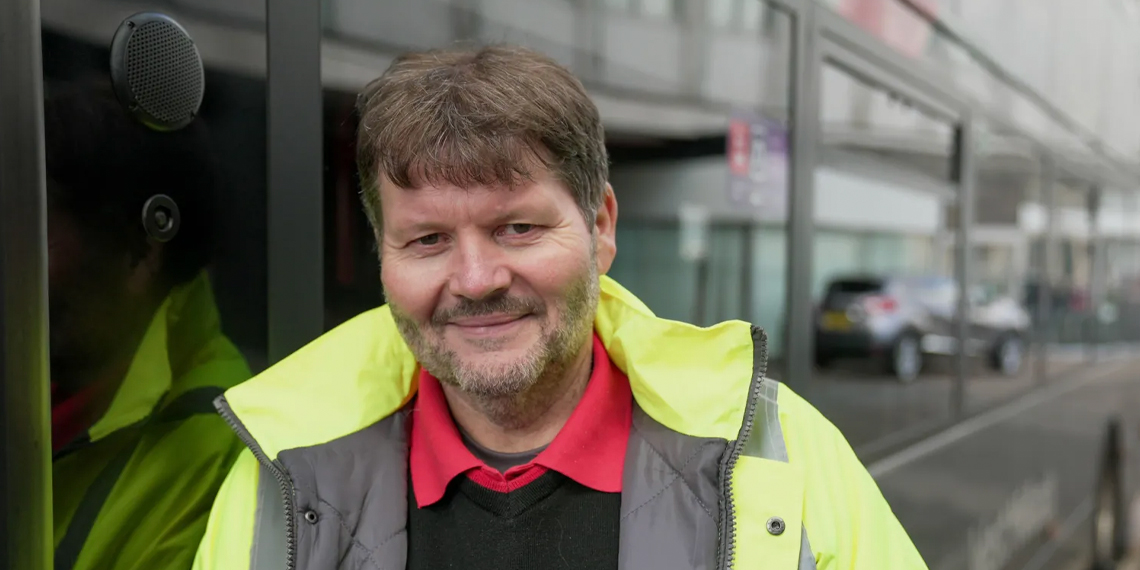
“Would I catch a bus? No, not out of choice now,” says Birmingham bus driver Andy Collett, who describes feeling safer in his own car. After nearly four decades on West Midlands routes, he says assaults, spitting, smashed windows and what he calls “lawlessness” have become routine. His experience mirrors growing concern across the UK as antisocial behaviour on public transport rises sharply.
New figures show the British Transport Police recorded 40,034 antisocial behaviour incidents on public transport in 2024–25, a 24% increase from the previous year. While buses remain the most-used mode of transport, a Transport for the North survey found passengers feel least safe on buses compared with trains and trams. The trend is prompting calls for urgent action from unions, transport authorities and local councils.
A Veteran Driver’s Experience of Violence
Collett recalls one incident that still gives him flashbacks. “I was attacked by about 30 schoolkids,” he says. They forced open the doors, bent back his fingers, and left him with cuts and bruises. Now training other drivers, he warns newcomers of the dangers and avoids certain routes when possible. Other drivers echoed similar experiences, with many saying they fear speaking openly because of possible repercussions.
Chelmsley Wood: A Hotspot for Disorder
The Chelmsley Wood interchange in the West Midlands has become a vivid example of what drivers describe nationwide. Vandalism, graffiti and threats to staff have become common. Security footage shows masked teenagers firing fireworks at buses during Halloween and Bonfire Night.
Passenger Emma Banks, who has learning difficulties, says she has witnessed frightening scenes. “Sometimes it does scare you,” she says, adding that overcrowding and smoking on board are frequent issues. Although she relies on public transport, she chose to take a taxi home instead: “I know I’ll get home safely.”
Fear Among Young Passengers
Seventeen-year-old passenger Elle Furlong says she avoids buses entirely. “They smash windows, pull the fire alarm, light lighters on the seats. It’s horrendous.” Transport for West Midlands estimates one crime happens for every 50,000 bus journeys, but perceptions of risk still deter many from travelling.
Drivers Describe Daily Abuse
One anonymous driver said they “come to work not knowing what you’re going to face,” citing harassment from teenagers, aggression from drug users, and even instances of passengers defecating on the bus. Racial abuse is common. “I go home sometimes and just want to break down and cry because it’s a horrible job,” they said.
Another driver, Neil Evans, who has worked for 33 years, says antisocial behaviour has escalated sharply. “No one cares anymore. They just walk onto the bus and do what they want.”
Transport Safety Officers Struggle With Demand
To address rising disorder, Transport Safety Officers (TSOs) were introduced in 2019. They patrol buses and interchanges, but they are not police officers and have limited enforcement powers. On the 94 bus, TSO Esha Sheemar warns a group of schoolchildren about their behaviour, while her colleague identifies a teenager wanted for vandalising a shelter.
TSOs are part of the Safer Travel Partnership, which includes West Midlands Police, British Transport Police, and local transport companies. Despite access to more than 5,000 cameras and a control room monitoring hundreds of feeds, staff say they capture around 30 incidents daily across the network.
Violent Incidents Fuel Calls for More Support
Recent cases highlight the severity of the problem. Last summer, a teenager was filmed brandishing a machete at Chelmsley Wood bus station and was later sentenced to juvenile custody. Firework attack footage has been handed to police as investigations continue.
Bus driver Bryan Cook says he has called police four times in three months after being threatened while driving the 72 route. He confronted TSOs, asking why patrols do not match the times when vandalism is worst. The officers urged drivers to keep reporting incidents so resources can be allocated more effectively.
Debate Over Effectiveness and Staffing Levels
The number of TSOs doubled last year and is expected to rise to 25, but drivers say this is still insufficient. Some regional transport networks do not have TSO teams at all and must rely solely on police. “Management know what goes on,” one driver said, “but do they care? Doesn’t feel like it.”
National Express West Midlands says all reports of antisocial behaviour are fully investigated and insists perpetrators are held accountable. The UK government’s Bus Services Act now allows local authorities to seek extra powers to address smoking, vaping and fare evasion. It also requires drivers to receive training in handling antisocial behaviour and recognising abuse, particularly towards women and girls.
The Department for Transport says all abuse of passengers and staff is “unacceptable” and highlights new powers that will help tackle the issue. Transport for West Midlands plans wider use of drones, AI-assisted surveillance, and enhanced campaigns focused on women’s safety.
Fragile Confidence Despite New Measures
Despite the advanced surveillance systems, many drivers and passengers remain unconvinced. “Two weeks ago I had two windows broken and got threatened with a knife,” Cook says. “And that’s all in a day’s work.”
The West Midlands Safer Travel Partnership is considered a model of good practice, but the sharp rise in incidents underscores the pressure on a small workforce and the complex challenge of restoring public confidence in UK bus travel.
