
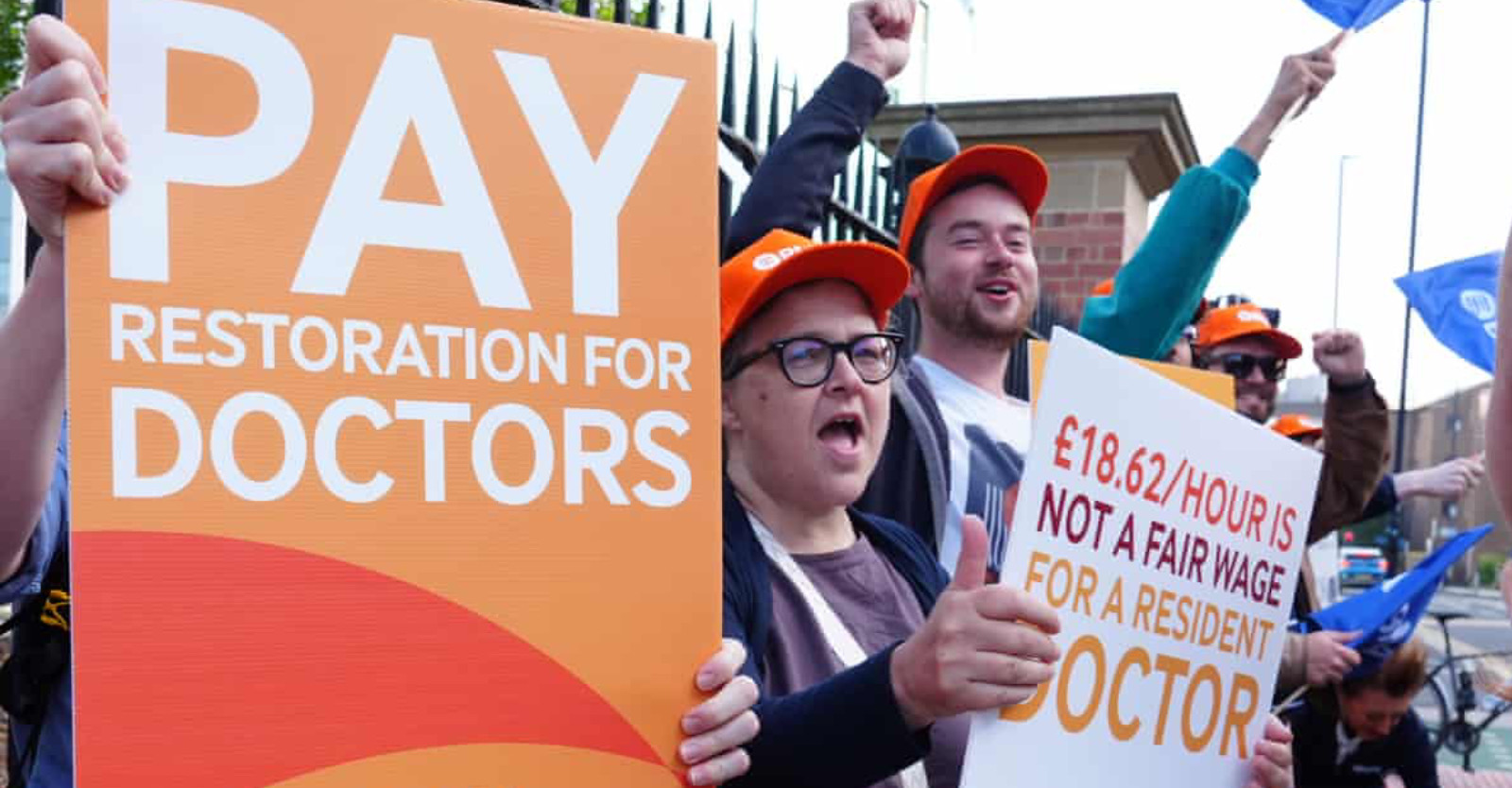
Resident doctors in England will press ahead with a five-day strike this week after overwhelmingly rejecting the government’s latest offer to resolve a long-running dispute over pay and training posts.
The British Medical Association confirmed that resident doctors, previously known as junior doctors, voted against the deal proposed by the health secretary, Wes Streeting. The industrial action will begin at 7am on Wednesday and run until 7am next Monday.
In a ballot of BMA members, 83 per cent voted to reject the offer on a turnout of 65 per cent. A total of 35,107 doctors took part in the survey, out of around 55,000 represented by the union.
The government’s proposal focused on increasing the number of speciality training places to help early-career doctors progress, but it did not include a pay rise for the current financial year. The union said this fell far short of what was needed to end the dispute, describing the offer as “too little, too late”.
The strike comes at a particularly difficult moment for the NHS, which is already under intense pressure from an early winter crisis driven by a surge in flu cases. It will be the 14th strike by resident doctors since industrial action began in March 2023.
Reacting angrily to the vote, Streeting said the decision to strike was “self-indulgent, irresponsible and dangerous” and warned it would hit patients and NHS staff at what he called the service’s “moment of maximum danger”. He also dismissed the doctors’ demand for a further 26 per cent pay rise as a “fantasy demand”.
In an article written for the Guardian, the prime minister, Keir Starmer, said it was “frankly beyond belief” that the strike would go ahead while the health service was under such severe strain. Streeting added that the walkout risked being “the Jenga piece” that could cause the NHS to collapse when it was needed most.
Dr Jack Fletcher, chair of the BMA’s resident doctors committee, defended the decision to strike. He said: “Our members have considered the government’s offer, and their resounding response should leave the health secretary in no doubt about how badly he has just fumbled his opportunity to end industrial action. Tens of thousands of frontline doctors have come together to say ‘no’ to what is clearly too little, too late.”
He added that the offer failed to address both pay and jobs, saying: “There are no new jobs in this offer… Neither was there anything on what Mr Streeting has said is a journey to restoring our pay – that has clearly hit the buffers.”
Resident doctors’ pay has increased by almost 29 per cent over the past three years, but the BMA is seeking further rises to restore salaries to their real-terms value in 2008-09. Fletcher acknowledged that public support had waned but insisted doctors remained committed to achieving “full pay restoration”.
“This week’s strike is still entirely avoidable,” he said. “The health secretary should now work with us in the short time we have left to come up with a credible offer to end this jobs crisis and avert the real-terms pay cuts he is pushing in 2026.”
Streeting accused the union of refusing to postpone the strike until January, arguing that Christmas action would cause unnecessary harm. He said: “The BMA has chosen Christmas strikes to inflict damage on the NHS at the moment of maximum danger… These strikes are self-indulgent, irresponsible and dangerous.”
Fletcher rejected claims that the BMA was putting patients at risk, accusing the government of “scaremongering the public” and of failing to engage seriously with doctors outside periods of industrial action.
With talks at an impasse and hospitals bracing for further disruption, the strike represents a major setback for both the government and an NHS already struggling to cope with winter pressures.
