
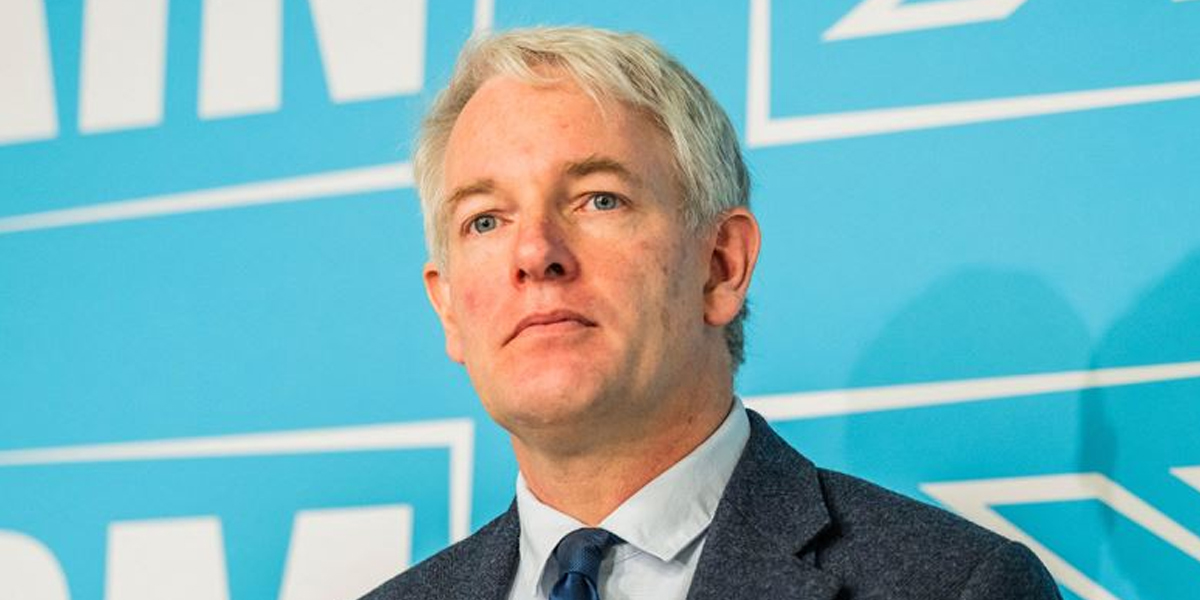
Trade unions have condemned proposals from Reform UK to cut 68,500 civil service jobs and replace permanent secretaries with external appointments, warning the plans would undermine effective government and damage public services.
The proposals were outlined by Danny Kruger, Reform UK’s efficiency tsar, who set out further details in a speech on reforming Whitehall. He said the party would reduce pension entitlements in favour of performance-related pay, increase office-based working and bring in outsiders to senior leadership roles.
The plans build on an earlier speech in October, in which Kruger said Reform UK would “dramatically” reduce the size of the civil service, introduce political appointments and “restore the civil service to the street called Whitehall”.
During a question-and-answer session following his latest speech, Kruger criticised the “permanent secretary class” when asked whether existing civil service leaders could deliver the party’s agenda.
He acknowledged there were “very good people” in the civil service and “real institutional knowledge”, but said he expected “quite significant change at the top of the civil service”.
“It is quite unacceptable that the permanent secretary class that has run our country for so many years, through all these changes of government, can have presided over a collapse in productivity and in the terrible outcomes and the waste that we’ve been seeing,” he said.
“So I think there is real change coming at that level and part of that will be bringing in people from outside to take those roles and to give ministers more authority to appoint and dismiss the people that advise them.”
Kruger added that it had been “seriously unacceptable, the way the civil service has been run for decades”.
Unions representing civil servants reacted angrily to the proposals. Dave Penman, general secretary of the FDA, which represents senior civil servants, said the rhetoric weakened Reform UK’s credibility.
“Sweeping accusations about senior civil servants only undermines Reform UK’s attempt to set themselves out as a government in waiting,” Penman said.
“Surrounding ministers only with those who agree with them and whose livelihood is in their hands will not deliver better government. It will lead to yes-men, groupthink and chaos as entire leadership teams change with every ministerial reshuffle.”
Kruger said Reform UK would reduce the civil service headcount by 68,500 full-time equivalent roles, cutting the salary bill by 17% and saving £5.2bn a year.
He said the cuts would apply to core civil service departments rather than arm’s-length bodies and would not affect frontline services. Border control staff, DWP assessors, Home Office caseworkers, HMRC tax investigators and prison officers would be protected.
Instead, the party would target management and back-office functions, which Kruger described as “the professions that don’t do actual delivery”.
Under the plans, policy and property audit roles would be cut by 50%, communications roles by 60%, human resources roles by 67%, and digital, finance, legal, commercial and project delivery functions by 25%, with a focus on senior grades.
“And there’s a whole load of other poorly defined, other unknown roles which we’re going to cut as well,” he added.
Fran Heathcote, general secretary of PCS, the civil service’s largest union, said the job losses would backfire.
“Cutting 68,500 FTE jobs would be a sure-fire way to reduce efficiency and load the taxpayer with the hidden costs of social failure,” she said.
“Reform’s plan in October was to slash 100,000 jobs. Today’s reduced figure is just another wild pledge demonstrating zero understanding of the civil service and how it works.”
Mike Clancy, general secretary of Prospect, said the proposals lacked consistency.
“This is the third Reform policy pledge on slashing the civil service in as many months and the numbers change every time,” he said.
“It is clear that they are making it up this policy as they go with no real plan, and no consideration of what the impact will be and what vital services will suffer as a result.”
He added that treating civil servants as a political target was irresponsible, warning: “Cuts of the scale being mooted would result in a less effective government that is less able to deliver for the public.”
Kruger also said Reform UK would reduce pension benefits while increasing pay for high performers, arguing this would make Whitehall more attractive.
“Rather than earning a comparatively low salary but earning a massive pension contribution, we will look at reducing pension entitlements in favor of higher wages for high-performing colleagues,” he said.
He added that civil servants would be “expected to work in the office unless there is a very good reason not to do so”.
Kruger also announced a survey inviting civil servants to share productivity concerns, saying Reform UK respected the principle of an impartial civil service and was not seeking confidential information.
“We want your help so that we can help you to do your job better, because the civil service needs reform,” he said.