
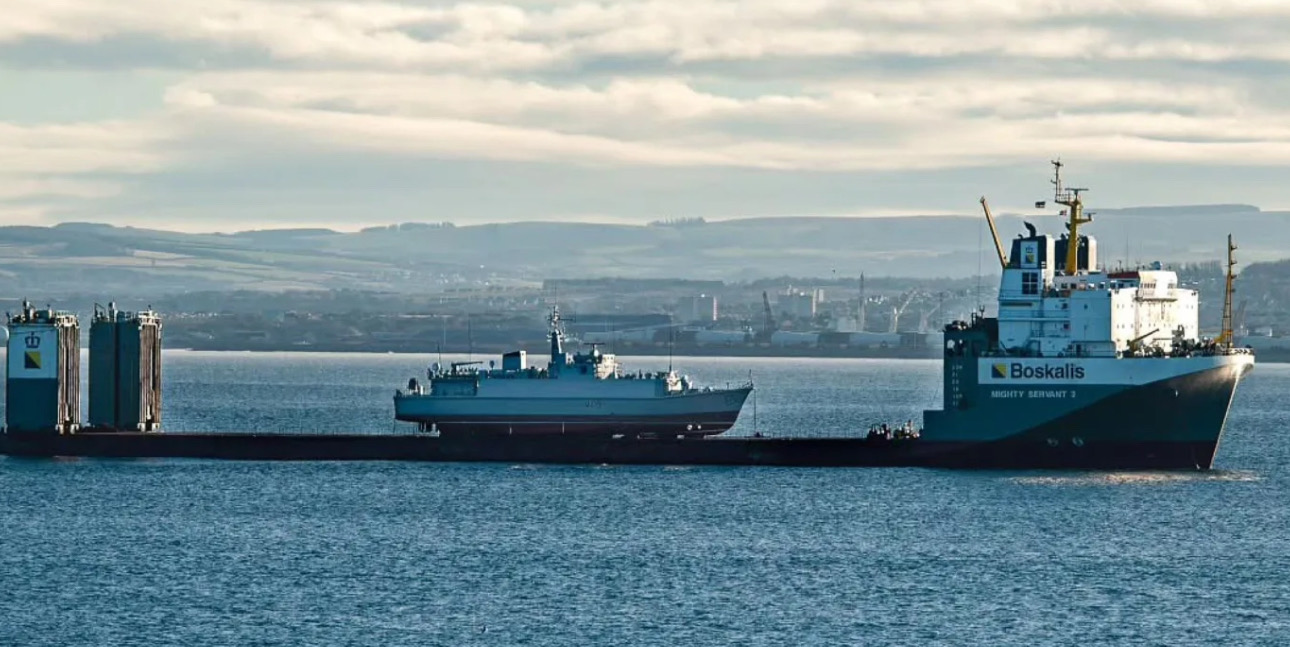
The Royal Navy’s mine countermeasures capability is entering a turbulent transition period, with the decision to retain HMS Bangor for an additional five years highlighting both strategic necessity and years of misjudged planning, according to former minehunter officer Tony Carruthers.
Carruthers, who spent eight years serving on Royal Navy minehunters, argues that the move is “the right one but one made from necessity”, rooted in “poor choices and overly optimistic autonomous ambitions which have not been realised.” He says the Navy has fallen behind its allies in delivering modern, autonomous mine countermeasures systems despite recognising their advantages a decade ago.
As a result, deep-water minehunting — vital to protecting the UK’s strategic nuclear deterrent and underwater infrastructure — will rely on a single crewed ship for at least the next five years.
HMS Bangor is the Royal Navy’s final Single Role Minehunter (SRMH) still in service. These vessels were designed specifically to support deep-water mine countermeasures, particularly around Faslane and the Clyde, where submarine activity has increased as Russian operations intensify across the North Atlantic and the GIUK Gap.
Carruthers notes that the growing threat to underwater infrastructure also makes it clear that “one vessel, RFA Proteus, cannot alone deliver the capabilities we now need.”
The original plan to retire all SRMH vessels by 2025 and move rapidly to autonomous systems was, Carruthers says, “always a gamble”. The decision was made despite clear evidence of escalating tensions with Russia and ongoing submarine activity near UK waters.
However, the shift to autonomy proved more complex, expensive and slower than anticipated — leaving the Navy without the minehunting capacity needed during the transition.
Although retaining HMS Bangor is strategically sensible, Carruthers warns it carries significant operational drawbacks. With only one platform remaining:
• Crew rotations become more difficult
• Training pipelines risk decay
• A single maintenance period can leave the capability entirely unavailable
“It only takes one incident to seriously impact on availability and capability,” he notes. HMS Bangor has already been out of the water for two years, highlighting the fragility of relying on a single ship.
Fortunately, Babcock’s shipyard in Rosyth still supports Estonian SRMHs and ex-RN vessels, which may ease logistical pressures.
The Royal Navy will now need to reassign crews from Hunt-class minehunters — the remainder of the fleet — and retrain them for Bangor’s unique systems. Carruthers warns this will require crews to “re-learn and then maintain skills” that have not been used in over two years, and certainly not in the colder, deeper waters off Scotland.
Maintaining Bangor will also require a sustained logistics chain for a ship more than 25 years old. Ex-HMS Ramsey and HMS Penzance, still in Rosyth, may serve as essential sources of spare parts — provided they are not sold to other NATO fleets.
Carruthers argues it “would have been better still perhaps to have maintained two or three SRMH in service, or at least in extended readiness,” ensuring continuity during the shift towards autonomous systems.
While the UK grapples with capability gaps and the fallout of the abandoned RFA-crewed Stirling Castle experiment, other NATO navies are commissioning purpose-built mine countermeasure motherships to modern naval standards. Carruthers says these nations “have now overtaken the RN’s once dominant position as NATO’s premier MCM force.”
A recent announcement of deeper naval cooperation with Norway could mark a turning point. The agreement is expected to lead to the Royal Navy receiving at least three dedicated MCM motherships similar to the Belgian-Dutch design.
Until then, the ageing Hunt-class fleet continues to operate — though only five remain fully active, with HMS Chiddingfold moved to extended readiness and HMS Brocklesby still in a lengthy refit.
Carruthers concludes by urging the Navy to learn from past mistakes: the UK must avoid further capability gaps “before the motherships from the collaborative Norwegian programme are delivered and operational.”
