
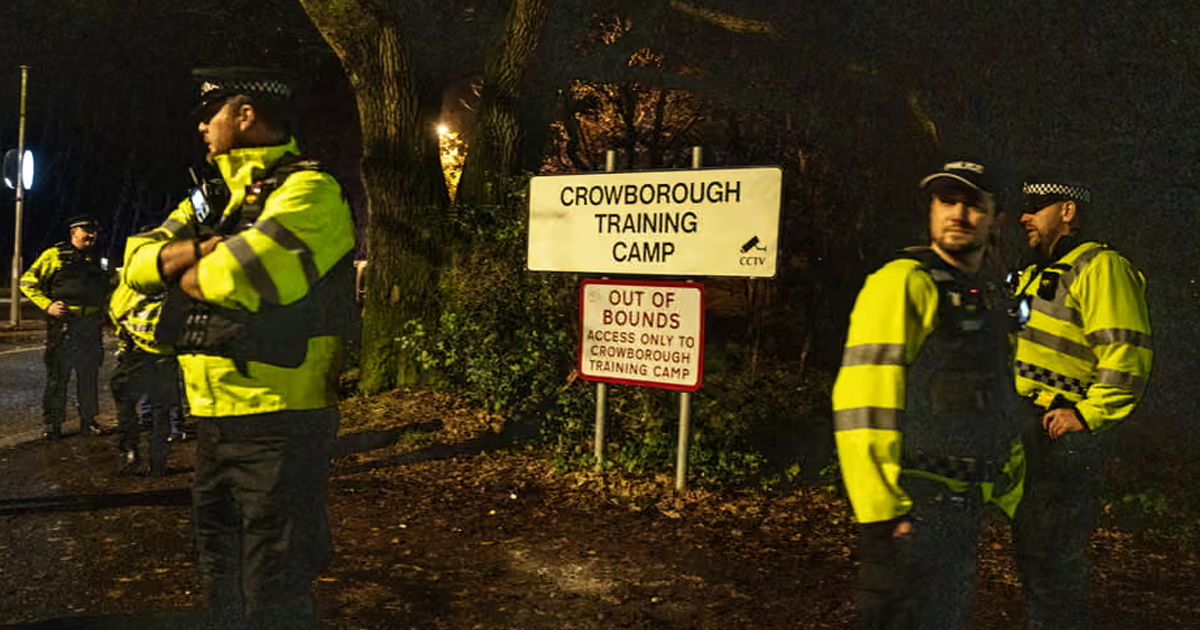
A legal challenge has been filed in the High Court over government plans to move hundreds of asylum seekers into a military camp in east Sussex. It is believed to be the first High Court test of a large-scale asylum accommodation site since Labour took office. The government recently confirmed proposals to place asylum seekers at two military bases: Crowborough training camp in east Sussex and Cameron Barracks in Inverness, following weeks of local speculation and media reports.
Crowborough has become a focal point for local unrest, with demonstrations taking place over the past five weekends. Protests have included anti-asylum groups such as the Pink Ladies alongside local residents concerned about transparency, community impact, and environmental risks. Many say they were unaware of what was being planned, despite visible construction activity and the circulation of job advertisements relating to work with asylum seekers on the site.
Community Organisation Challenges Government Secrecy
Crowborough Shield, a community interest company formed by residents, has brought the High Court challenge. It accuses the government of making a “secret decision” to redevelop the military camp into accommodation for 540 asylum seekers without public consultation or disclosure. The group argues that ministers acted unlawfully by proceeding without planning permission, community engagement, or proper assessment of the site’s proximity to the Ashdown Forest special protection area and conservation zone.
Alleged Breaches of Planning Law and Human Rights
The legal claim states that the project breaches common law rights to fairness and justice. It cites article 6 of the European Convention on Human Rights, which guarantees the right to a fair hearing, arguing that residents were denied any opportunity to understand or challenge the decision-making process. Lawyers say the government overstepped its powers by relying on “emergency” measures to bypass normal procedures.
Kim Bailey, director of Crowborough Shield, said residents were “frustrated” at being excluded from the process. She warned that the barracks location is unsuitable for people fleeing war and trauma and said placing hundreds of asylum seekers beside a protected environmental site could cause “significant environmental harm.” Bailey said the absence of clear information had fuelled fear and uncertainty throughout the town.
Legal Team: A Test of Government Power
Solicitor Polly Glynn of Deighton Pierce Glynn, who represents Crowborough Shield, said the case will test the boundaries of government authority. She argued that emergency powers cannot be used to sidestep transparency or community rights. “This is an important case that tests the limits of government power. It is about a community’s right to be heard,” she said.
The legal fight comes as the government accelerates efforts to reduce the reliance on hotels for asylum accommodation—a costly system that has drawn criticism from both Labour and the previous Conservative government. Ministers have explored military camps, barges and repurposed facilities to meet rising demand. Labour pledged a more controlled approach to asylum housing but is facing early tests over how quickly and decisively it moves asylum seekers into large-scale accommodation sites.
As of late 2025, the UK asylum backlog remains historically high, and local authorities across the country have warned that they are being left out of decisions that directly impact communities. Environmental groups have also raised concerns about the siting of mass accommodation facilities near protected land.
The Home Office has been approached for comment.