
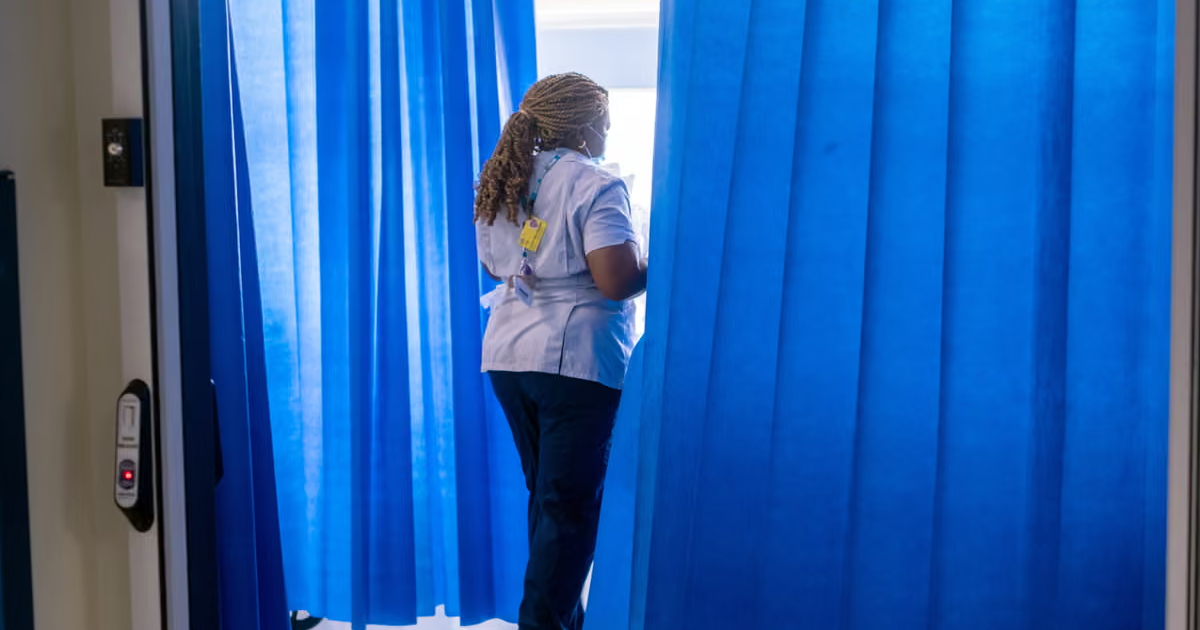
Up to 50,000 nurses could leave the UK as a result of the government’s proposed immigration reforms, according to new research – a shift that could push the NHS into its most severe staffing crisis to date.
Keir Starmer has pledged to cut net migration, with plans to extend the wait for settlement from five years to as long as a decade. The proposals also include raising the skills threshold for foreign workers to degree level and introducing stricter English-language requirements for all visa categories. The move is widely viewed as a response to pressure from Nigel Farage’s Reform UK party, with a public consultation expected to open shortly.
Nursing leaders warned that the plans were “immoral” and that highly trained migrant professionals were being used as “political footballs”. They cautioned that a mass departure of nurses would threaten patient safety, worsen already severe staff shortages and undermine efforts to reduce record waiting lists.
A survey by the Royal College of Nursing (RCN), seen by the Guardian, revealed widespread fear and distress among internationally educated NHS and social care staff. Around 200,000 nurses in the UK trained overseas, making up roughly a quarter of the entire workforce. Many now face significant uncertainty around their futures.
Government figures show that 76,876 nurses who arrived since 2021 would normally become eligible for settlement after five years. Under the proposed plans, they may have to wait ten years – a shift that has caused deep concern.
In the RCN survey of more than 5,000 migrant nurses, 60% of those without indefinite leave to remain (ILR) said the changes were “very likely” to affect their decision to stay in the UK. This indicates that more than 46,000 nurses could consider leaving permanently.
Prof Nicola Ranger, the RCN general secretary and chief executive, said: “These proposals are not just immoral, they would be dangerous for our patients. No minister who has any interest in the success of our health and social care system would press ahead with extending the qualifying period for ILR.”
She added that the plans risked worsening the NHS workforce crisis at a time when domestic recruitment remains insufficient. Ranger described the proposals as a “betrayal” of the many migrant nurses who came to the UK during the Covid-19 pandemic, often making major personal sacrifices.
Without ILR, migrant nurses remain tied to specific employers, limiting their ability to move roles and increasing the risk of exploitation in the social care sector. They would also be unable to claim state benefits, including child benefit and disability support, for a decade despite paying taxes.
The RCN survey highlighted significant anxiety within the workforce. It found that 53% were “extremely concerned” about financial security, 52% about the impact on their families and 49% about the long-term effect on their careers. The proposals could also deter future recruitment: only 11% of respondents said they would still have moved to the UK under a 10-year settlement route.
The RCN called on the government to reduce ILR application fees, which stand at £3,029 per person despite an estimated processing cost of £523.
A government spokesperson said: “We are grateful to our overseas frontline healthcare workers, who bring compassion, deliver high-quality care and strengthen our health service, but net migration must come down.” They added that the new settlement model would allow individuals to shorten the qualifying period by contributing to the UK economy and society.
The consultation is expected to launch soon, with ministers encouraging healthcare workers to take part.