
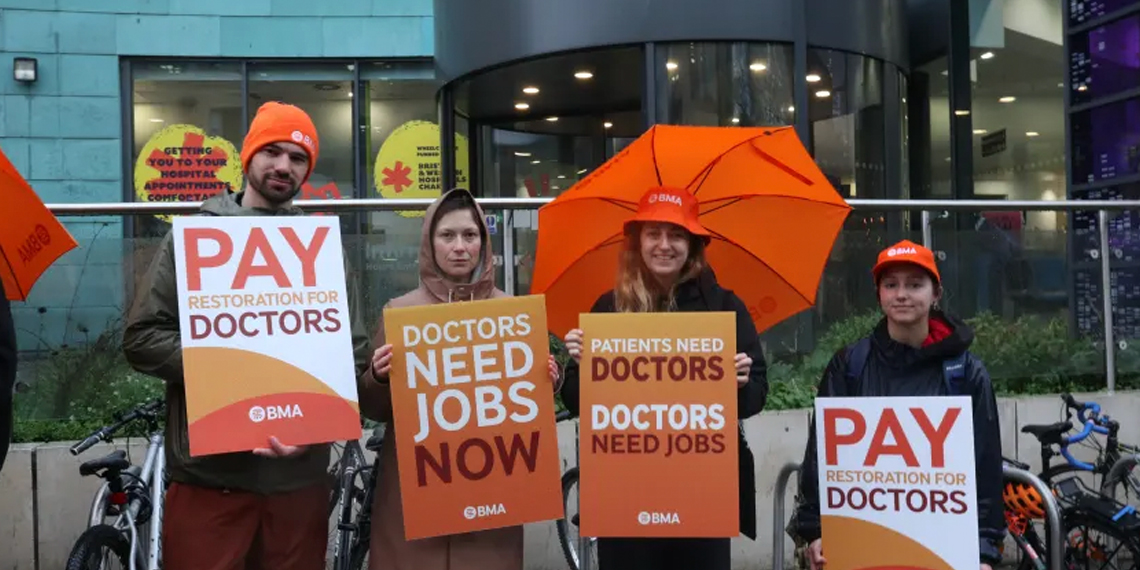
The NHS has confirmed it maintained more than 95% of planned care during last week’s resident doctor strikes, outperforming previous periods of industrial action even though more doctors walked out. New data shows the health service delivered 25,000 additional appointments compared with the last strike period, marking one of its strongest performances since the dispute began.
Figures released today reveal that more than 850,000 patients received elective treatment over the five-day strike, surpassing the NHS’s goal of maintaining 95% of planned activity. This marks a significant improvement on the 93% delivered during July’s walkouts. Critical services, including maternity care and urgent cancer treatment, continued without major disruption, despite added strain from Storm Claudia and an early surge in flu cases.
Higher Strike Participation But Better Outcomes
An average of 17,236 resident doctors were absent each day—higher than the 16,162 seen during the summer strikes. NHS England says the increase reflects the higher number of doctors scheduled to work during winter, traditionally the most pressured period for hospitals.
Despite the heavier disruption, hospitals managed to keep services running more effectively, which NHS leaders say is the result of round-the-clock efforts by staff across the system.
Government Offer Rejected by BMA Committee
The latest strike followed a government offer to the BMA’s resident doctors committee, which the committee chose not to put to a vote among its members. Ministers say the proposed package would have expanded training places, improved working conditions, and offset training costs—on top of the 29% cumulative pay rise resident doctors have received over the past three years.
Alongside this, the NHS’s 10-point plan aims to improve resident doctors’ working lives by fixing payroll errors, streamlining training requirements, improving leave systems, and guaranteeing rest spaces and hot food out of hours.
Leadership Actions to Support Resident Doctors
Almost all NHS trusts—95%—now have a board-level director responsible for resident doctor issues, as well as a resident doctor peer lead to ensure concerns are elevated directly to leadership. NHS chief executive Sir James Mackey said the service had “safely kept the show on the road” during one of the most challenging weeks of the year.
He warned, however, that the ongoing dispute continues to divert staff energy from clearing the elective backlog. Mackey urged the BMA to engage seriously with efforts to resolve the dispute, saying continued strikes would harm patients, undermine staff morale, and slow progress on recovery plans.
Government: Strikes Caused ‘Unnecessary Harm’ to Patients
Health and Social Care Secretary Wes Streeting said the NHS “weathered the storm better than ever before” but insisted that thousands of patients still experienced avoidable disruption. He said polling indicated strong support among resident doctors for the government’s offer and urged the BMA to “get serious” about ending the dispute.
There are 79,000 resident doctors across the NHS—half of all doctors—covering up to eight years of hospital experience or up to three years in general practice.
Longest NHS Industrial Dispute in UK History
Resident doctor strikes have become the longest-running industrial action in NHS history, with disputes over pay, training, and working conditions continuing into a second year. The action has contributed to sustained pressures on the NHS, which is already balancing record waiting lists, rising winter admissions, a growing flu wave, and severe staffing shortages in emergency care.
Despite these pressures, the latest figures suggest hospitals are becoming more resilient in managing strike days, with enhanced planning and reallocation of resources helping preserve activity.