
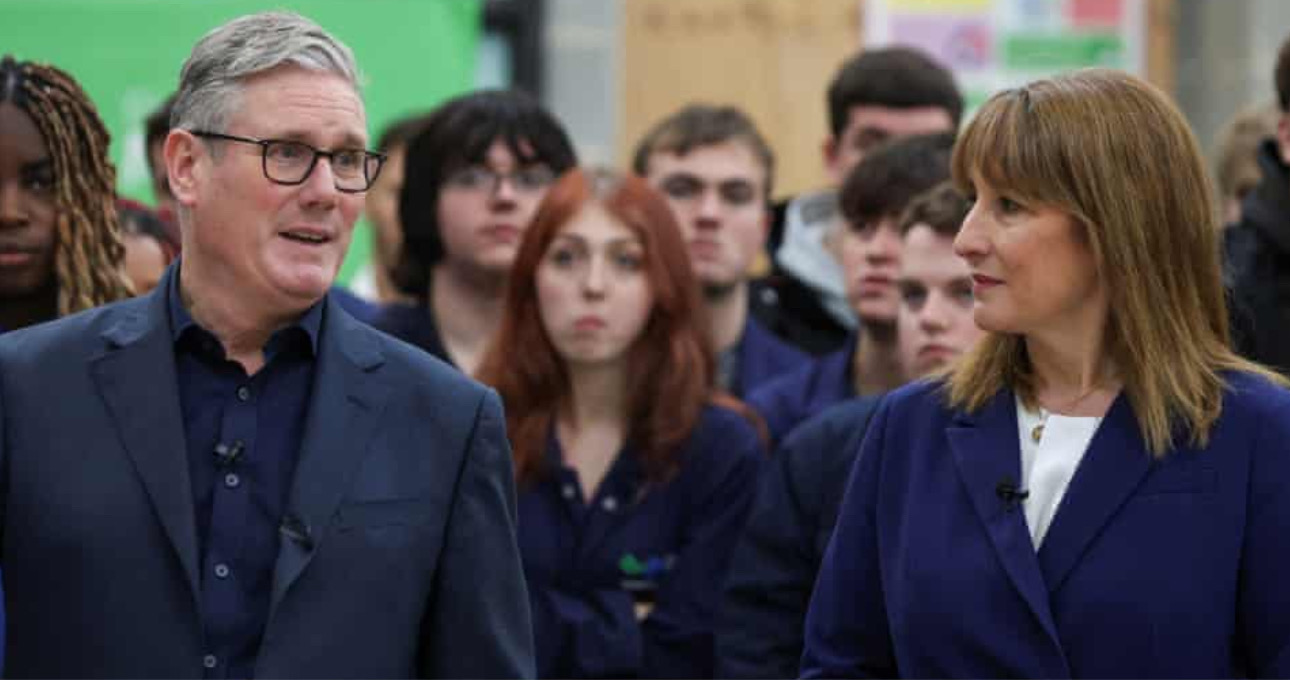
Rachel Reeves is preparing to centre her upcoming budget on a £7.5bn tax rise after abandoning a separate proposal to increase income tax rates only days before the announcement.
According to government sources, the chancellor has opted to freeze income tax thresholds for two years rather than break a manifesto pledge by raising rates.
The U-turn follows a difficult week for the government and mounting pressure from senior Labour MPs, triggering market turbulence that pushed up borrowing costs and caused the pound to fall.
Downing Street said: “The chancellor has been clear on the need to deliver stability in the public finances. As she said last week, one of the objectives of the budget is to build more resilient public finances with the headroom to withstand global turbulence.”
Treasury officials declined to comment on the developing plans. However, insiders said Reeves made the final decision on Wednesday after discussions with Keir Starmer. Updated forecasts indicated the fiscal gap was closer to £20bn rather than £30bn, giving the chancellor room to avoid more drastic measures.
Economists estimate that freezing income tax thresholds for two years will generate around £7.5bn. The decision comes despite Reeves stating in her 2024 budget speech that “Extending the threshold freeze would hurt working people, it would take more money out of their payslips.”
Additional tax increases expected in the budget include ending tax breaks for salary sacrifice pension schemes, which could raise roughly £2bn, and introducing a new tax on electric vehicles, also projected to raise around £2bn.
The reversal on income tax rates follows weeks of preparation for the original plan, with Labour MPs previously briefed on why difficult tax choices might be required. The change was confirmed on the same day the prime minister denied claims that his aides had briefed against health secretary Wes Streeting.
Streeting welcomed the decision, reiterating his view that breaking promises risked damaging political trust. He told LBC Radio: “I’m not in favour of breaking manifesto pledges. I think that trust in politics and politicians is low and it’s part of our responsibility to not only rebuild our economy and rebuild our public services but to rebuild trust in politics itself.”
While some cabinet members expressed concern about the political risks of raising income tax, several Labour MPs criticised the late reversal. One senior MP warned that Reeves “will end up having to go after this debacle of a budget” and said any further U-turns, particularly on the two-child benefit limit, would “lead to a complete revolt.”
Another MP said Starmer had been warned repeatedly that he was losing support within the parliamentary party but “refused to listen to criticism.” They added: “They don’t know what they are doing and there is 10 days left of this mess.”
Market reaction reflected this turmoil. UK government bonds suffered their worst day since early July, while the pound weakened against the dollar. Kathleen Brooks of the brokerage XTB said the volatility was a warning to the government.
She explained: “Essentially, the bond market is warning the chancellor that she cannot merely tax the ‘rich’ to fund her lavish spending pledges. Either she broadens the tax base or she cuts spending.”
Ruth Curtice, chief executive of the Resolution Foundation and a former Treasury official, said shifting forecasts from the OBR were normal before a budget but warned that “excessive levels of kite flying” were unnerving markets.
She added: “It is not normal for so much of that to be laid bare in public. The market moves this morning and in recent weeks suggest a serious look should be taken at the approach to market-sensitive forecast information.”
