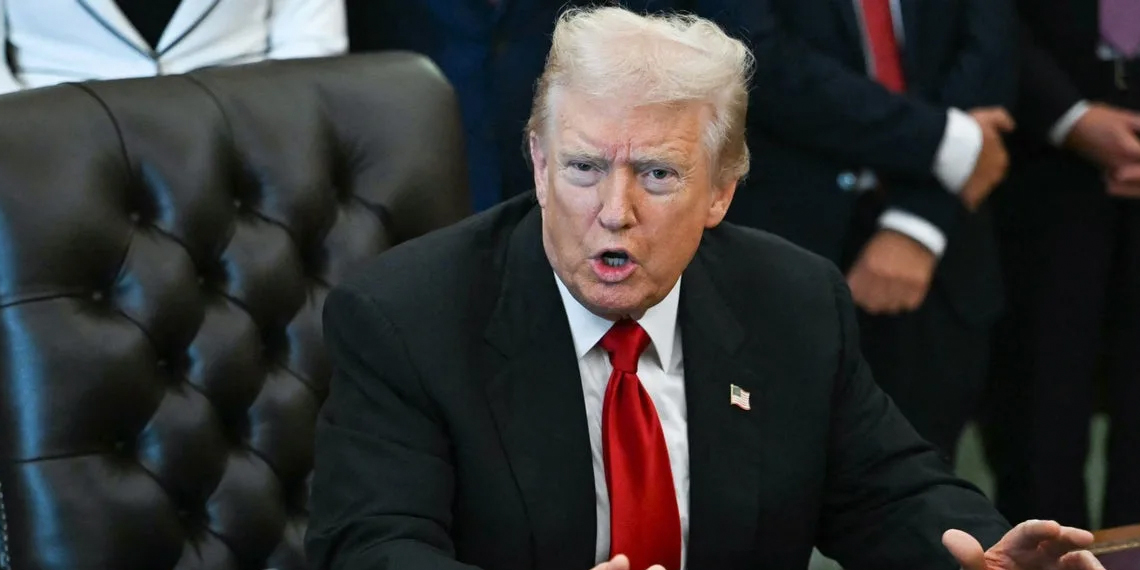
The BBC is preparing to apologise for editing a speech by former US President Donald Trump in a Panorama episode following widespread criticism.
The controversy erupted after a leaked memo revealed that the broadcaster’s footage had selectively cut Trump’s words during his address before the Capitol riots in 2021.
The Panorama clip reportedly showed Trump urging supporters to “fight like hell” but omitted his call for them “to peacefully and patriotically make your voices heard.” The edit has prompted accusations that the BBC misled viewers by portraying the former president’s remarks unfairly.
BBC chairman Samir Shah is expected to issue a formal apology on Monday in response to a request from the Culture, Media and Sport Committee, which said there were “serious questions to answer.” A BBC spokesperson confirmed, “The BBC chairman will provide a full response to the Culture, Media and Sport Committee on Monday.”
The leaked memo criticised the edit, stating, “It was completely misleading to edit the clip in the way Panorama aired it. The fact that he did not explicitly exhort supporters to go down and fight at Capitol Hill was one of the reasons there were no federal charges for incitement to riot.”
Dame Caroline Dinenage, chair of the culture committee, urged the BBC to uphold its reputation for fairness and impartiality. “The corporation must set the benchmark for accurate and fair reporting,” she wrote. “The committee needs to be reassured that those at the very top of the BBC are treating these issues with the seriousness they deserve.”
A BBC spokesperson said previously, “While we don’t comment on leaked documents, when the BBC receives feedback it takes it seriously and considers it carefully.”
The Trump administration’s first response came from Karoline Leavitt, who called the BBC “100 per cent fake news” and a “leftist propaganda machine.”
Culture Secretary Lisa Nandy also criticised inconsistencies within the broadcaster’s editorial standards. Speaking on BBC’s *Sunday with Laura Kuenssberg*, she said: “Decisions about editorial standards, editorial guidelines, the sort of language that is used in reporting is entirely inconsistent. It doesn’t always meet the highest standards. It’s not always well thought through, and often it’s left to individual journalists or news readers to make decisions.”
She added that the blurring of news and opinion in modern media is creating “a very dangerous environment” where people struggle to trust what they see.
The issue comes amid wider tensions between the BBC and political figures. Former Prime Minister Boris Johnson recently accused the broadcaster of “arrogance,” prompting presenter Nick Robinson to respond on X: “Hands up all those who think Boris Johnson is well placed to lecture anyone else on upholding standards and admitting mistakes.”
This latest controversy places renewed pressure on the BBC to defend its editorial integrity as political scrutiny over impartiality intensifies.