
Passengers travelling in the UK have been told to expect only minimal disruption this weekend after a global software alert affecting thousands of Airbus A320-family aircraft forced airlines to carry out urgent system updates overnight. The UK Civil Aviation Authority (CAA) confirmed on Saturday that British carriers had already completed the required fixes on most aircraft, ensuring the impact on UK travel would remain “limited.”
Airbus issued the safety alert on Friday after discovering that intense solar radiation may corrupt data used by flight-control computers on A320 aircraft. The warning followed an incident involving a JetBlue flight from Cancun to Newark on 30 October, during which the aircraft suffered a flight control malfunction and dropped sharply, injuring at least 15 passengers. The plane diverted to Tampa International Airport, prompting an immediate investigation.
Airbus said its software change affects up to 6,000 planes worldwide. Most aircraft will revert to an earlier software version, a process taking two to three hours, but an estimated 1,000 jets require additional hardware changes that could keep them grounded for longer.
UK Airlines Move Quickly to Update Systems
The CAA said UK carriers worked overnight to implement updates where required, significantly reducing the risk of widespread disruption. Gatwick Airport confirmed a “small number” of its airlines had been affected, warning passengers to check with their carrier, while Heathrow and Luton airports said they were not expecting any disruption.
Transport Secretary Heidi Alexander welcomed the swift response, calling it “heartening that the issue has been identified and addressed so quickly.” She added that the impact on UK fleets appeared limited due to fewer aircraft needing complex hardware modifications.
Cause Identified in Aircraft’s ELAC Flight-Control Computer
Airbus traced the issue to the ELAC (Elevator and Aileron Computer) system, which sends critical commands to the tail elevators that control an aircraft’s pitch. A failure in this system could result in serious instability. Aviation analyst Simon Calder described the situation as “very concerning,” but emphasised that aviation remains “extraordinarily safe.” He also noted that passengers may not qualify for compensation, as the problem is outside airline control.
Airlines Respond as Global Fleet Undergoes Fixes
EasyJet said most of its updates were already complete and it expected to operate normally, although some schedule tweaks were possible. British Airways confirmed only three of its aircraft were affected and no disruption was expected. Jet2 also reported no schedule impact.
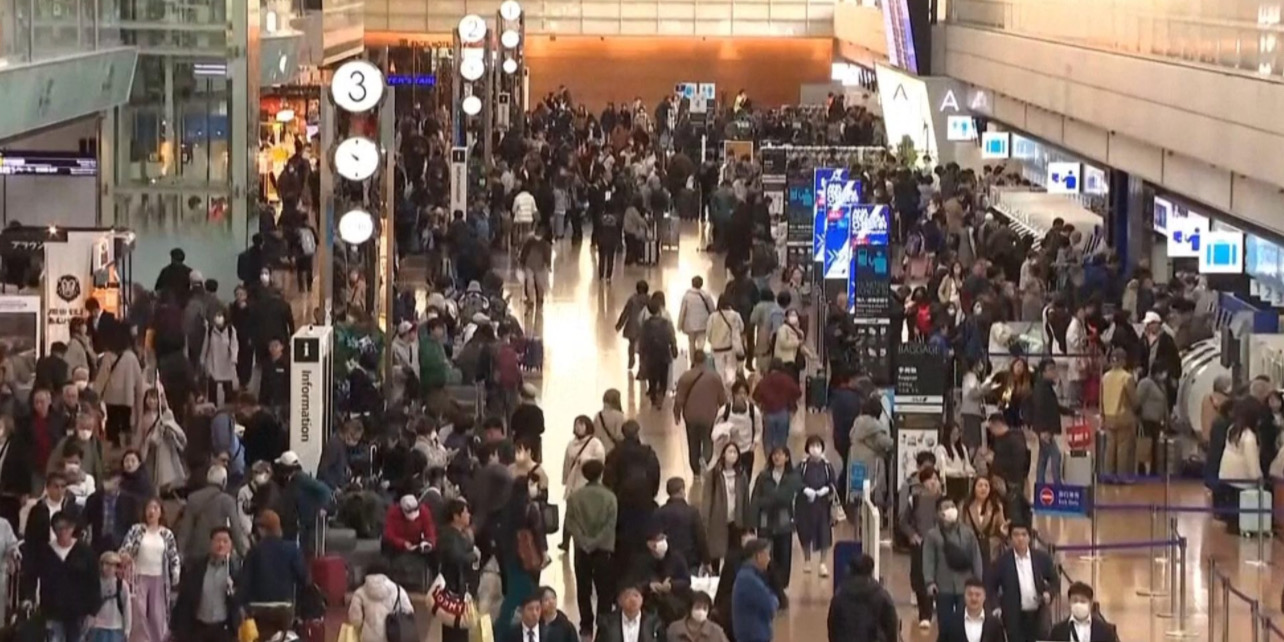
Other global carriers have been more heavily hit. American Airlines, the world’s largest A320 operator, said 209 of its 480 aircraft required updates during one of the busiest US travel weekends after Thanksgiving. Air France cancelled 35 flights, All Nippon Airways scrapped 65 domestic flights, and Air India confirmed 113 affected aircraft, with software already installed on 42 of them. Lufthansa expects a small number of cancellations or delays, while Aer Lingus and Wizz Air reported limited disruption.
Aviation Safety Under Increased Scrutiny
The incident comes during a period of heightened attention on aviation software reliability, following several global alerts over the past two years involving Boeing and Airbus aircraft systems. Regulators in the UK, Europe and the US have increased focus on the resilience of onboard systems, especially those vulnerable to solar radiation, cyber interference or data corruption.
Both the US Federal Aviation Administration (FAA) and the European Union Aviation Safety Agency (EASA) issued emergency orders requiring airlines to apply the Airbus fix immediately. The A320 family—one of the most widely used fleets in Europe—is the world’s bestselling single-aisle aircraft and a mainstay of UK short-haul travel.
