
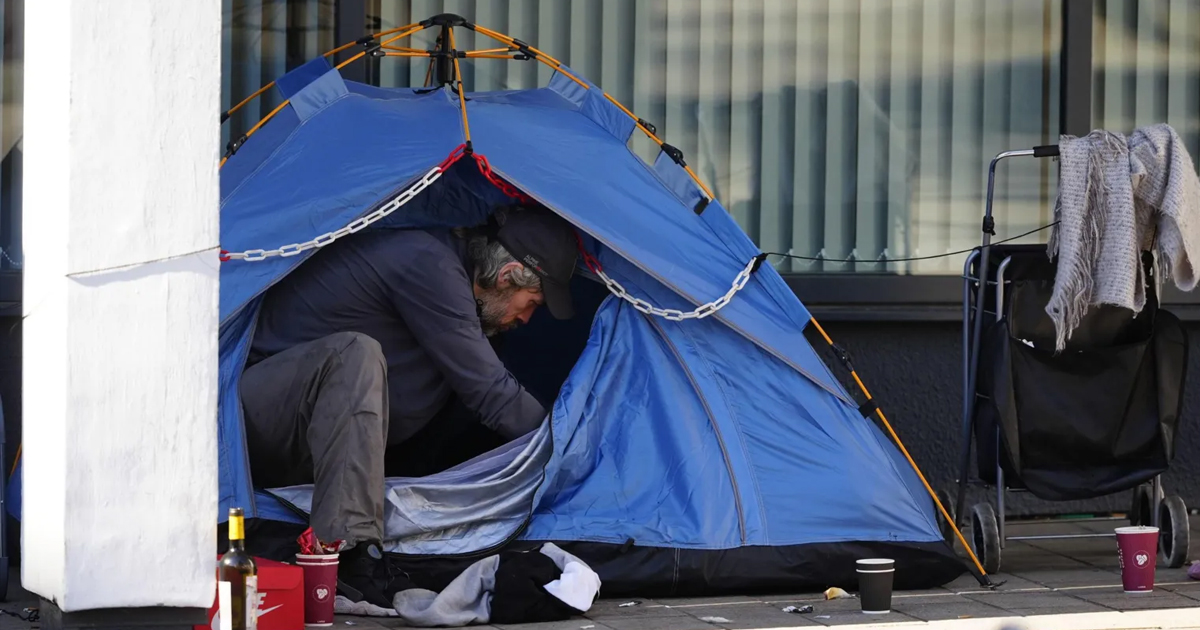
New research from the charity Crisis reveals that the number of families and individuals experiencing the most extreme forms of homelessness in England is substantially higher than government figures suggest. The charity estimates that around 189,000 people facing rough sleeping, sofa-surfing and living in tents were not captured by official statistics.
Official data in England is based on individuals who declare themselves homeless to a local authority—a step that many avoid or are unable to take, according to Crisis. This methodological gap means the scale of crisis-level homelessness is likely being significantly underestimated.
Worst-case homelessness up by one-fifth since 2022
Crisis’s findings further estimate that the number of people experiencing the worst kinds of homelessness has grown by approximately 20% since 2022, bringing the figure to about 300,000. Among the key drivers cited are the sharp rise in people housed in unsuitable temporary accommodation and those living in what the charity describes as “unconventional accommodation” such as cars, sheds and tents.
Surge in unsuitable temporary accommodation recorded
The study—conducted in partnership with Heriot‑Watt University—points to a major uptick in households placed in unsuitable temporary accommodation, such as unsafe B&Bs or properties far from support networks. The number of such households rose from 19,200 in 2020 to 46,700 in 2024.
On top of that, an additional 18,600 families are estimated to be living in cars, tents or sheds. These figures illustrate how the problem has shifted away from simply rough sleeping to a broader housing-precarity challenge.
Why official data misses large numbers
According to Crisis, many of the people included in their research do not meet the threshold set by government and councils for statutory homelessness support. Those sleeping on friends’ sofas, staying temporarily with family, or tent-dwelling often fall outside eligibility—even though their housing situations are precarious and may rapidly deteriorate. Government data released last month indicated that almost 330,000 households were at risk of homelessness in 2024, but that figure included many in suitable temporary accommodation and others who ultimately did not lose their current home.
First-hand testimony highlights the human cost
The research includes personal testimony from individuals like Isra, who arrived in the UK as a child refugee from Iraq and spent much of her childhood moving between more than ten temporary accommodation locations around London. She describes sleeping four to a room, living in rat-infested buildings, and experiencing constant disruption to schooling and social life. Her story underlines the hidden trauma behind the numbers.
Government response: funding boost amid ongoing pressure
In response, the UK government says it is investing £1 billion in homelessness services in 2025/26—a £316 million increase on the previous year. A further £84 million cash boost was announced late last year specifically to tackle homelessness this winter. The government also says it is working on a new cross-government homelessness strategy and moving to abolish Section 21 “no-fault” evictions, expanding access to safe accommodation for the most vulnerable.
However, housing sector analysts argue that while funding has risen, systemic challenges remain. For example, the total number of households in temporary accommodation reached a record 131,140 in England at the end of March 2025—up nearly 12% year-on-year. Of these, 63% included dependent children. In London alone, the rate of temporary-accommodation households remains over 19 per 1,000 households, compared with 2.8 per 1,000 in the rest of England.
Why the crisis is intensifying
Multiple intersecting factors are driving this worsening crisis:
•A chronic shortage of affordable social housing and rising private rents.
•Many households being placed out of area in temporary accommodation, far from education, support and family networks.
•Policy thresholds that mean many precariously housed people do not register in official statistics or receive full support.
•The flow of new rough sleepers and temporary-accommodation households continuing to rise, including people leaving institutions such as prisons or asylum-hotel accommodation.
What’s next and implications for policy
Crisis is urging a “rapid response” from government, warning that nobody should be forced to live in unsafe conditions—whether children in sub-standard B&Bs or adults forced to sleep on streets, in tents or squats. The charity recommends adopting “Housing First” models, boosting Local Housing Allowance to cover the bottom third of local rents, and accelerating delivery of genuinely affordable social homes.
The government’s upcoming homelessness strategy is expected to set out long-term actions, but campaigners caution that without addressing root causes and closing gaps in statutory support, the crisis will continue to deepen.