
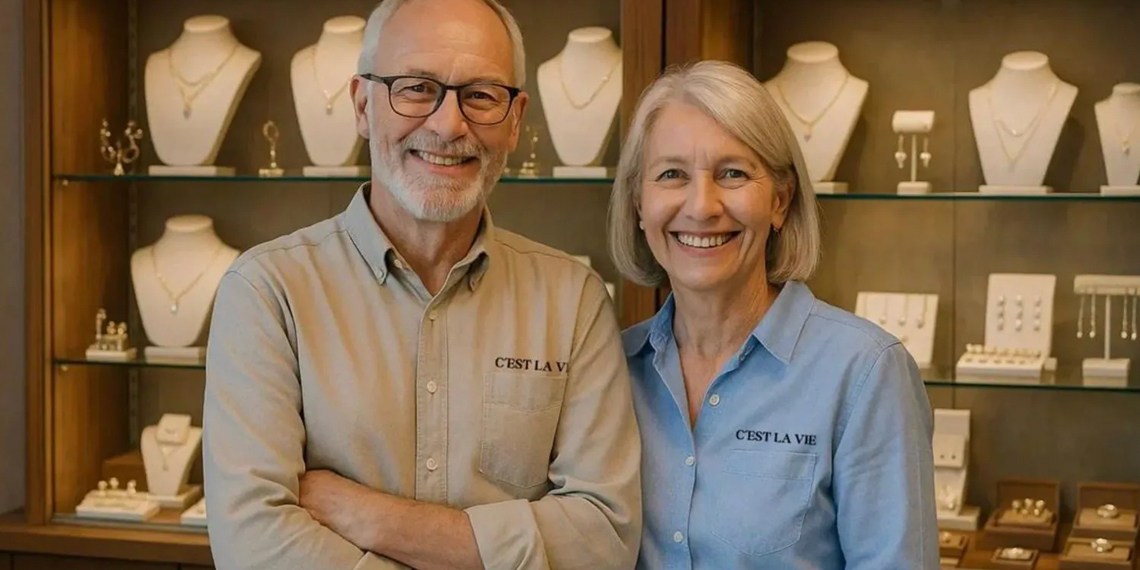
Unscrupulous foreign companies are using AI-generated images and fabricated backstories to pose as family-run UK businesses, deceiving British shoppers into buying cheap goods shipped from Asia, consumer watchdogs have warned. The focus keyword is AI-generated UK boutique scams.
Consumer group Which? revealed that scammers are exploiting advanced artificial intelligence tools to create convincing but fake online storefronts, a trend growing at what the organization called an “unprecedented scale.”
Websites such as C’est La Vie and Mabel & Daisy appear to be long-standing, family-run boutiques based in Birmingham and Bristol. In reality, both have connections to warehouses in China and Hong Kong. Customers say they were misled by false narratives and “AI-generated” photos of shop owners that were “too perfect to be real.”
AI-Generated Faces and False Stories
The website C’est La Vie claimed to be run by “Eileen and Patrick,” a couple operating in Birmingham’s historic Jewellery Quarter for 29 years. But its return address led to China. Ads even claimed Eileen’s husband had died, prompting an “80% off clearance sale” to close the shop — a fabricated tragedy that drew emotional responses from shoppers.
Buyers who placed orders say they received “plastic junk” and “cheap metal rubbish” instead of handcrafted jewellery. One angry reviewer wrote: “Complete scam. No such company in Birmingham.”
AI expert Prof. Mark Lee from the University of Birmingham confirmed the photos were “too perfect,” noting that artificial intelligence has become increasingly capable of creating realistic images.
Social Media and Platform Responsibility
Victims say they discovered the shops through Facebook ads, which presented the businesses as small local brands. The Advertising Standards Authority (ASA) recently banned similar ads from Marble Muse, a Chinese clothing firm pretending to operate in London.
The ASA said social media platforms like Facebook “must take responsibility” for policing fraudulent advertising. Meta, Facebook’s parent company, has been contacted for comment.
Customers Deceived by ‘Mabel & Daisy’
Another fraudulent website, Mabel & Daisy, posed as a “mother and daughter” clothing brand from Bristol. Hundreds of reviews on Trustpilot describe poor-quality products, long shipping times, and high return fees.
Customer Justyne Gough said she paid £40 for a floral dress that arrived weeks later in “awful material.” Another buyer from Birmingham reported that after realizing the site was linked to Hong Kong, she refused to pay extra for an exchange.
Both C’est La Vie and Mabel & Daisy stopped responding to customer complaints.
Regulators Warn of Rising AI-Driven Deception
The ASA and Which? have urged consumers to stay alert as AI makes scams more convincing. Sue Davies from Which? warned that under-resourced trading standards teams struggle to investigate these sites, allowing many to go unchecked.
Experts recommend checking a company’s terms and conditions to confirm its physical location, reviewing online feedback, and looking for signs of AI — such as flawless faces, repetitive backgrounds, or lack of identifiable landmarks.
Prof. Lee cautioned that “AI is improving every day,” warning that the next challenge may be determining “whether there’s a real human involved at all.”