
Prime Minister Keir Starmer has defended Britain’s contribution to the Gaza peace agreement, reaffirming the UK’s commitment to future efforts by pledging an additional £20 million in humanitarian aid.
Speaking in the House of Commons after returning from talks in Egypt, Starmer described the breakthrough as a crucial moment for both Israelis and Palestinians, saying: “This has been two years of living hell.”
While acknowledging that “none of this would be possible without Donald Trump – this is his peace deal,” the prime minister outlined Britain’s behind-the-scenes involvement in facilitating the agreement. “We worked behind the scenes for months with the US, Arab and European nations to help deliver a ceasefire, get the hostages out, get aid in and secure a better future for Israel, Gaza and the West Bank,” he said. “I am proud of our contribution.”
Starmer highlighted three key areas where the UK plans to contribute further: rebuilding Gaza, supporting transitional governance in the territory, and helping to ensure ceasefire security. Drawing a parallel to Britain’s role in the Northern Ireland peace process, he said the UK stood ready to assist in the decommissioning of Hamas’s weapons. “This is the first real chance we’ve had on a two-state solution since the Oslo Accords over three decades ago,” he added. “A safe and secure Israel alongside a viable Palestinian state is the only path to lasting peace in the Middle East.”
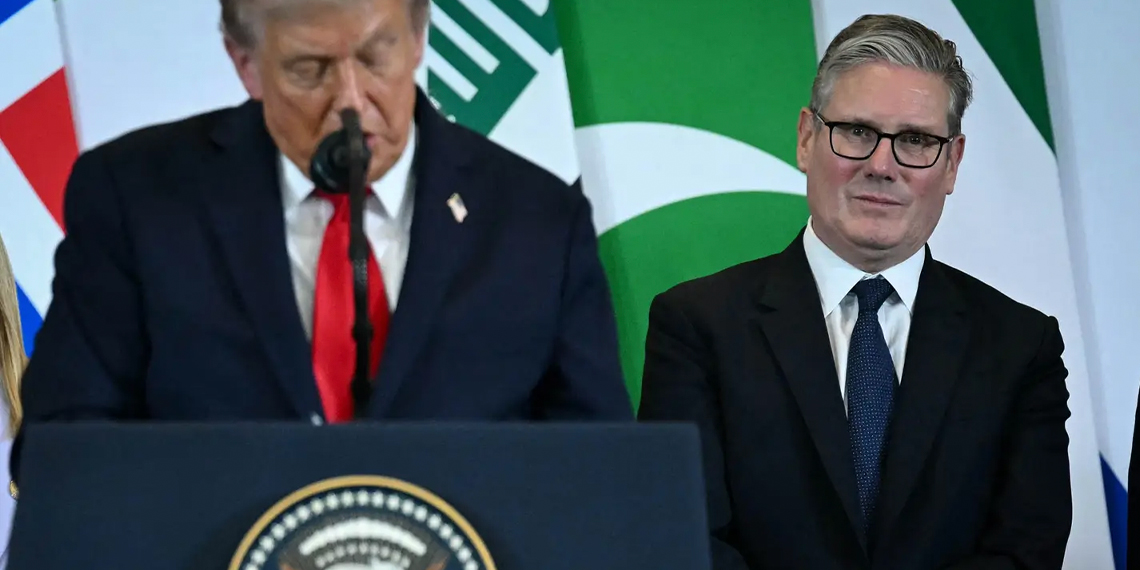
However, Britain’s involvement appears to have been overshadowed by a series of diplomatic snubs from Washington. At a press conference on Monday, former US president Donald Trump praised several nations – including Norway, Saudi Arabia, and the United Arab Emirates – before belatedly mentioning the UK. As Starmer moved towards the lectern, Trump reportedly ushered him back.
The tension was further underlined when US ambassador to Israel, Mike Huckabee, called Education Secretary Bridget Phillipson “delusional” after she claimed that the UK had played “a key role behind the scenes in shaping this.” Starmer echoed her remarks in parliament, stressing that Britain had taken “a typical UK role – quiet behind the scenes, diplomatic but bringing round really helpful steps towards the desired end.”
In a move that appeared to smooth relations, Trump’s Middle East envoy, Steve Witkoff, later posted on social media recognising Britain’s contribution. He praised the “vital role of the United Kingdom” and singled out national security adviser Jonathan Powell for his “incredible input and tireless efforts.”
The diplomatic rift follows earlier criticism from the Trump administration over Labour’s decision to recognise Palestinian statehood. US Secretary of State Marco Rubio had previously argued that such recognition risked emboldening Hamas rather than advancing peace.
Responding to these criticisms, Starmer said: “We are in a position to play this role precisely because of the approach this government takes, and that does include our decision to recognise the state of Palestine.”
