
A major cyber-attack on Jaguar Land Rover this August has dealt a staggering blow to the UK economy, with losses estimated at £1.9 billion (about US $2.55 billion). The breach, which disrupted manufacturing operations and impacted some 5,000+ UK organisations, came via the independent Cyber Monitoring Centre (CMC) report published on 22 October 2025.
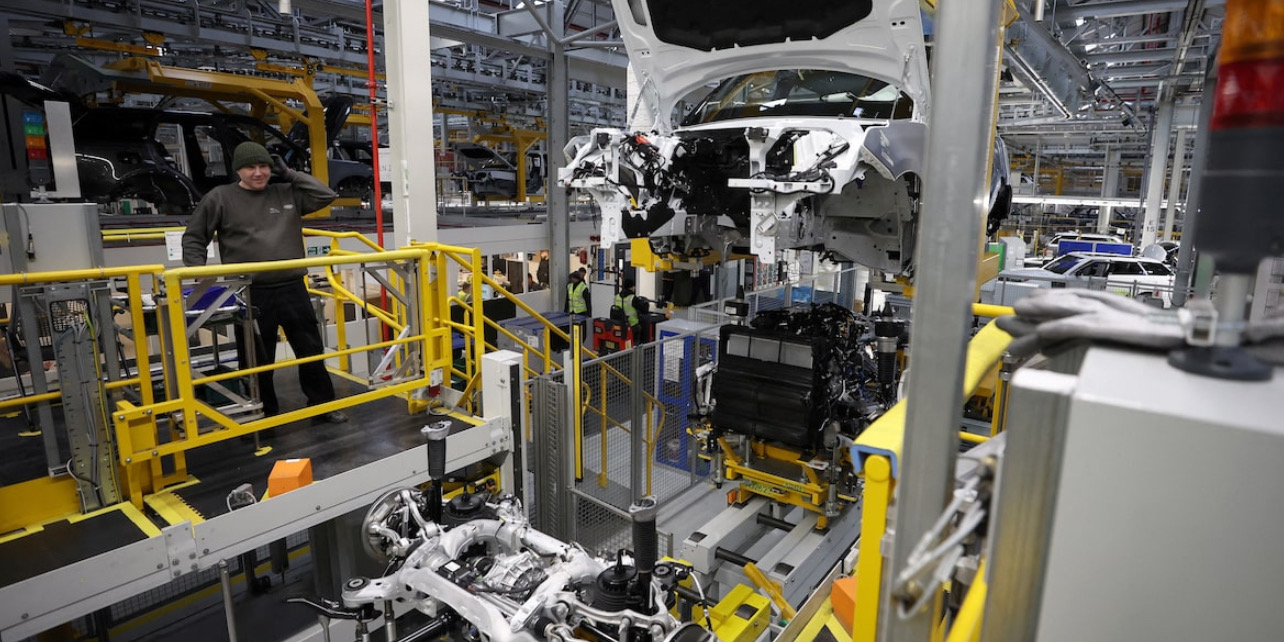
The CMC’s analysis shows that the bulk of the loss stemmed from production stoppages at Jaguar Land Rover’s UK factories — including its sites in Solihull, Halewood and Wolverhampton — which together produce around 1,000 cars per day. The automaker, owned by India’s Tata Motors, was forced into an almost six-week shutdown in September–October.
Because of the stoppage, thousands of suppliers and dealerships were affected. The report emphasises that this became a systemic event: the disruption wasn’t limited to one factory, but rippled through the automotive manufacturing ecosystem.
Government intervention and financial relief measures
In response to the crisis, the UK government stepped in with a £1.5 billion loan guarantee to support Jaguar Land Rover’s liquidity and protect its supplier network. The move reflects the recognition that the company’s recovery is connected to the wider health of the UK manufacturing sector and regional economies such as the West Midlands and Merseyside.
Why this event marks a new kind of cyber-risk
According to Ciaran Martin, former head of the UK’s National Cyber Security Centre and chair of the CMC’s technical committee, the incident “looks to have been, by some distance, the single most financially damaging cyber event ever to hit the UK”. The report identifies that operational disruption — production lines stopping, supply chains choking — is now more damaging than traditional data-breach costs. The CMC classified the hack as a Category 3 systemic event on its five-point impact scale.
Broader context: Rising UK cyber threats and automotive exposure
The JLR hack forms part of a growing pattern of severe cyber-incidents in the UK. According to the NCSC, the country averaged four “nationally significant” cyber-attacks per week in the period from September 2024 to August 2025. In the automotive sector, dependencies on complex supply networks and digitalised operations make manufacturers especially vulnerable. Analysts say that JLR’s case demonstrates how a cyber-attack on a single manufacturer can propagate via tier-1, tier-2 suppliers, logistics providers, dealerships and regional economies.
Recovery path and risks ahead
Partial production at JLR has resumed, following a phased restart strategy starting in early October. Yet the CMC warns that full recovery may not be achieved until early 2026, as repair of IT and operational technology (OT) systems, supplier reintegration and backlog catching-up remain complex. The report also notes that the cost estimate excludes potential ransom payments or data-theft losses, suggesting the true financial impact could yet rise.
Implications for businesses and policymakers
•Boards and manufacturing executives must now treat cyber-resilience as a core strategic priority — not just data-protection. The JLR event shows that failure to safeguard operations can have macro-economic consequences.
•Supply-chain mapping and financial resilience (especially for smaller suppliers) are critical. Some JLR vendors reportedly took personally backed loans to stay afloat.
•Government and insurance frameworks may need to evolve: how to underwrite and support large-scale incidents, how to allocate state aid, how to incentivise private cyber-defence investment.
•The shift is underway: from defending against data leaks to defending industrial output. The automotive sector offers a cautionary model for other heavy-industry and manufacturing ecosystems.
