
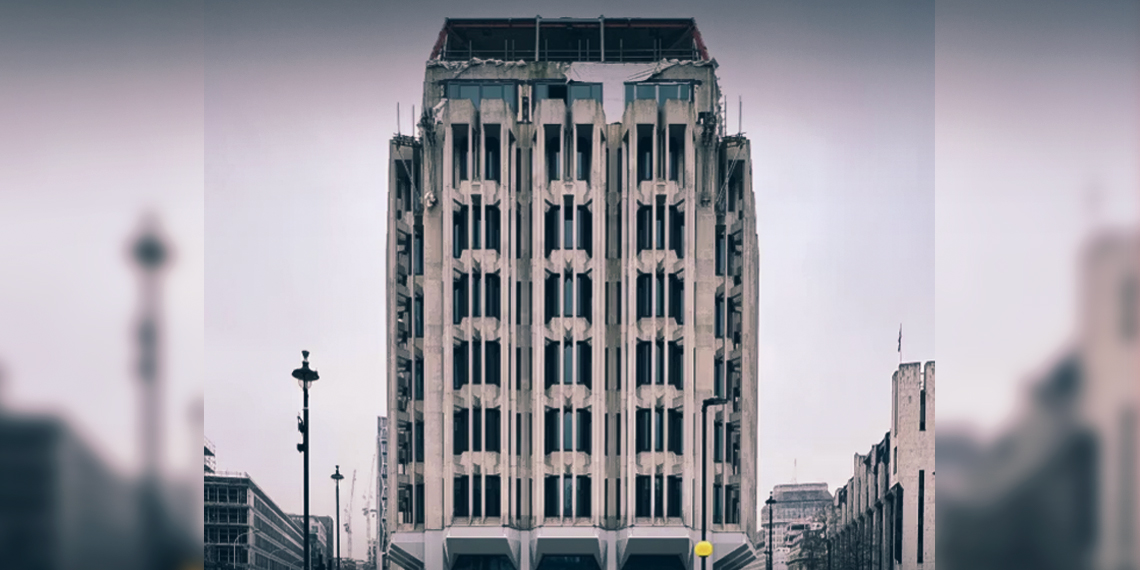
A British appeals court has upheld an earlier ruling allowing the seizure of a London property owned by the National Iranian Oil Company (NIOC) to help satisfy a $2.4 billion arbitration award in favour of the Emirati energy firm Crescent Petroleum, Iranian media reported on Monday.
The property, known as NIOC House, sits close to the Houses of Parliament and has been owned by Iran for nearly half a century. Built in 1975 under the rule of Iran’s former Shah, the Brutalist-style building was designed as the oil company’s European headquarters and features architectural elements inspired by Westminster Abbey across the street.
The legal battle stems from a long-running dispute between NIOC and Crescent Petroleum that dates back to 2001. The two companies had signed an agreement to supply 500 million cubic feet of natural gas per day from Iran’s Salman field. However, the deal collapsed after internal political opposition in Tehran, sparking more than two decades of arbitration and court proceedings.
Crescent Petroleum accused NIOC of breaching the contract, and international arbitration panels later ordered Iran’s state energy firm to pay billions in compensation. In its filings, Crescent claimed that NIOC transferred ownership of the London property to the Oil Industry Pension and Welfare Fund after the arbitration ruling in an attempt to keep the asset out of creditors’ reach.
A lower UK court had already voided that transfer, describing it as a deliberate move to obstruct debt recovery. NIOC and the pension fund appealed the decision, but the Court of Appeal dismissed their objections, confirming that the building could be seized to partially satisfy the debt.
Judges ruled that the documents provided by NIOC to prove the pension fund’s ownership did not meet the required legal standards, leaving the property under UK judicial control. The court said the asset would remain under British jurisdiction to help offset damages owed to Crescent Petroleum.
IRNA, Iran’s state news agency, reported that lawyers representing the Islamic Republic have appealed the ruling. If the appeal is rejected, the case could be taken to the UK Supreme Court for further review — a process expected to take up to two years.
The NIOC House, valued at nearly £100 million ($125 million), is one of Iran’s most significant overseas assets. Its loss follows a similar enforcement case in Rotterdam, where NIOC lost another office linked to the Crescent Petroleum dispute.
The Iranian newspaper Iran Daily blamed the loss of the company’s foreign assets on “political interference by those who cancelled the Crescent deal,” calling it a costly mistake that continues to burden the country’s energy sector.
The case comes as Iran faces renewed diplomatic isolation amid Western sanctions and growing tensions over its nuclear programme. However, observers say the Crescent Petroleum dispute is largely independent of the current geopolitical climate and reflects long-standing contractual and legal challenges that have dogged Iran’s oil industry for decades.
